





Table of Contents
Welcome, sir. I see that taking out Life insurance has caught your attention! What a wonderful idea. With our policies, you can enjoy a death filled with luxury and reap the rewards of a hard-working life.
Orzhov is not dedicated to tragedy, but to luxury, since we don’t simply die, but retire. The afterlife will be shrouded in luxury acquired with all the things we did in life. Were you a fair and kind soul? Or perhaps you were an ambitious and ruthless person? Either way, I want to tell you about our exclusive plans! By simply letting us use your soul, you can enjoy even more benefits! Death is not the end, it is simply a transaction.
Your battle is long over, your sword has grown dull, and the cheers have faded into memory. Here, in these black and gold halls of our syndicate, your legacy accumulates compound dividends. This is not heaven, nor is it hell. It is better. It is the afterlife with taste.
Playing both white and black means we will have access to premium removals and neat recursion tricks, as well as some other really useful tools, just take a look.
- Mass removals — Damn | Merciless eviction | Kaya's wrath
- Reanimation — Lurrus of the Dream-Den | Carmen, Cruel Skymarcher | Liesa, Forgotten Archangel
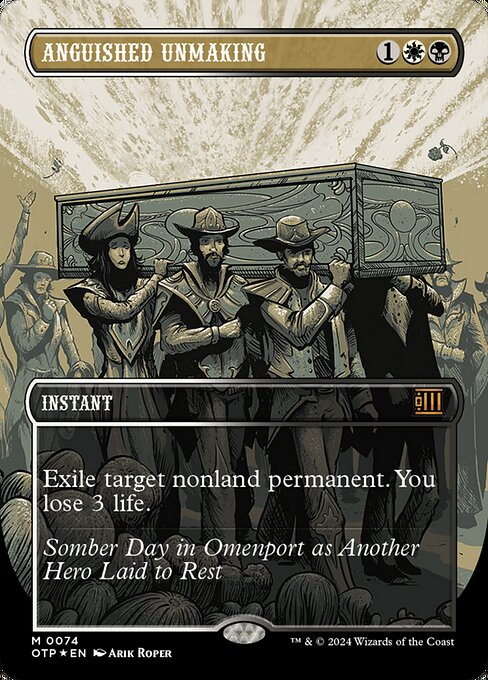
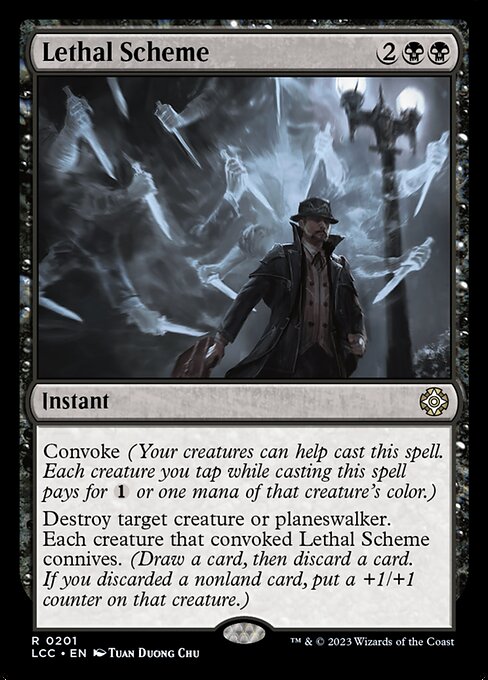
- Single targets — Legions to Ashes | Despark | Dire Tactics | Fracture | Anguished Unmaking
- Utility — Lotho, Corrupt Shirriff | Tymna the Weaver | Inkshield | Blind Obedience
Black ambitiously seeks overwhelming power at any cost, while White methodically works to contain explosive players with seemingly fair spells. Together, they manage to create a rather paradoxical combination. Interestingly, despite the fact that their objectives have very different foundations, in practice they have similar tools.
This color combination promises you the following: everlasting power, an eternal legacy, and pleasure without remorse. Because after all the blood and gold you’ve shed to get here, don’t you deserve a little comfort? Now come in, take a seat, and let me show you what eternity is like when you’ve truly earned it.
Ardbert, Champion of darkness
Ardbert, Warrior of Darkness, commands not with fire or faith, but with his heart. His battlefield is not filled with pawns or knights, but with the greatest warlords; his battlefield is haunted by a purpose. He does not seek redemption. He earned it the moment he accepted who he had become. There is a strange serenity in his stride, the gaze of a man who knows he has done enough, but who still chooses to act, simply because it seems like the right thing to do.
“Always we took the burden of fighting upon ourselves. That’s what heroes do, isn’t it?”
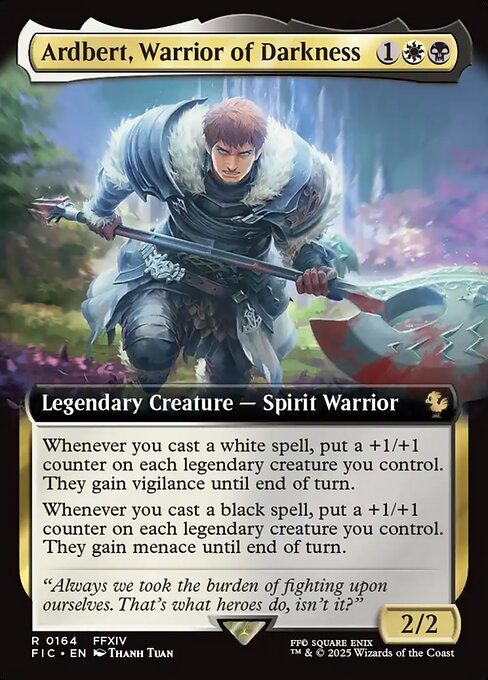
Ardbert synergizes with legendary creatures, giving him an identity unlike any other Orzhov commander. While others manipulate life and death for profit or control, Ardbert wields the legacy of his actions with his axe, and when you build your deck around him, you’ll notice how quickly all your creatures become threats thanks to the large number of +1/+1 counters.
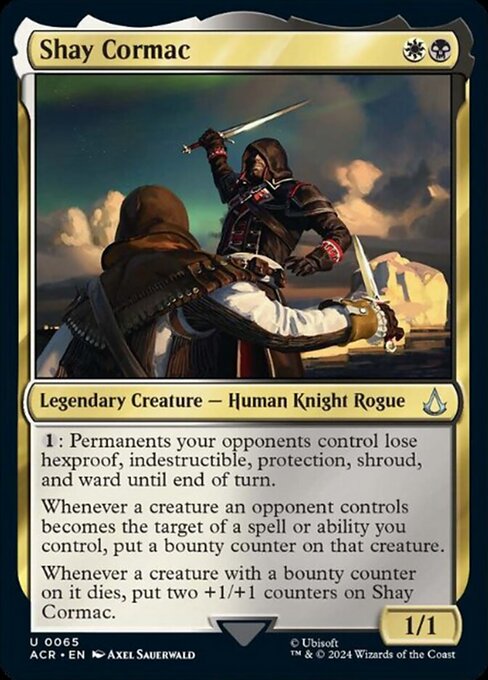

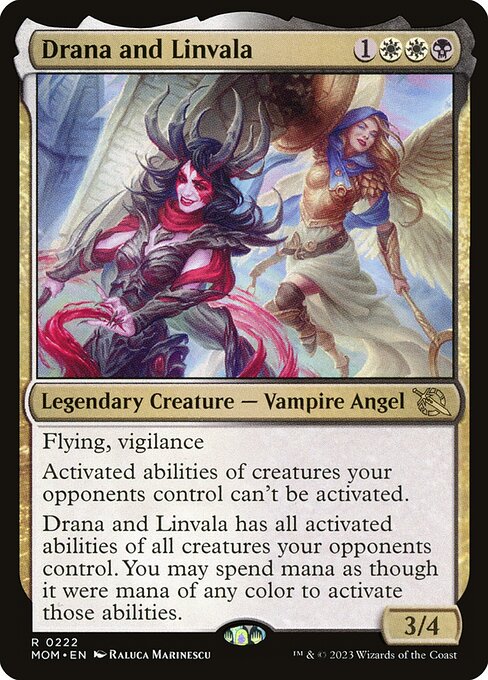

We’re going to be running a moderate amount of removals for creatures that don’t want to engage in combat with us or against others that might be temporarily larger than ours, although come on, this assumption will only last a couple of turns before it ceases to be true.


As always, when we focus on keeping our creatures alive, we will have to take meticulous care of them so that they can win the game for us. Using cards such as Righteous War, you will cloak your spectral nobility in divine purpose, bathing your forces in a glow that is both sacred and profane, protecting them from virtually every single-target removal spell in the game
We will also include some board protection spells, such as Flawless Maneuver and a personal choice of mine, a card that I have always liked despite being considerably slower than other similar cards, but in this deck it SEEMS to be the home I always wanted to give it. Take a look at this bad boy, Cauldron of Souls. this artifact will give our board persistence, which means that even when we fail to save them from a board wipe, they will return, not as shiny but nothing our commander can’t fix.
With a single spell to activate Ardbert’s +1/+1 ability, the -1/-1 counter that our cauldron gave our army will be removed, meaning we can keep using the cauldron over and over again. Protection, authority, and the unspoken truth that luxury is simply another form of domination.


That is the essence of Orzhov: refusing to fade away, believing that legacy and dignity can survive even death. Remember that you do not pursue victory; it is your allies, guided by a true hero, who go forth and seize it. So raise your glass, my friend. To the eternal and the unrepentant.
Karlov, The Banker’s Blade
With that, we have visualized what our organization sees as valuable souls. Now let’s look at an example of who we would send to bring something as valuable as Ardbert.
Karlov of the Ghost Council transcended the petty politics of mortality long ago. Now he is a ghost wrapped in chains of gold, the fury of Orzhov made a debt collector, the part of the contract written in ink that only the damned can see. Some debts can be paid with gold. Others… require a soul. Karlov of the Ghost Council, does not send reminders. He sends warnings. And if these are ignored, he collects in person.

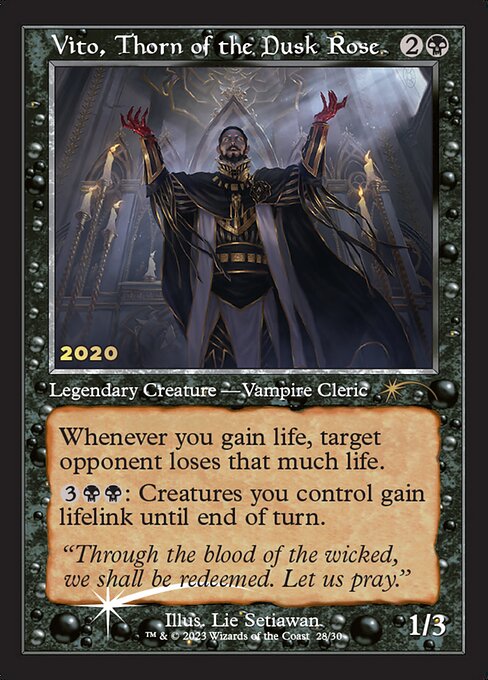
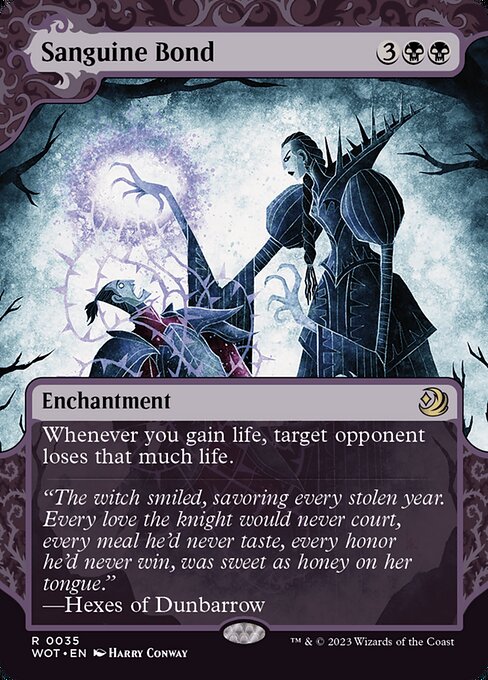
Let’s look at a fairly simple strategy: the more life, the better, right? Every extra point of life isn’t just insurance, it’s profit. It’s the empire reinvesting in itself. With every point of life gained, Karlov becomes stronger with conviction, harder to ignore, and infinitely more dangerous. You can feel the anxiety rising like a distressed man being buried alive.
This is where our life gain lures come into play. We don’t unleash chaos like the reds, but what we do is turn our commander into something as big as a green dinosaur with individual life gain triggers.


We’ll be lurking, calculating, until one of our opponents’ excesses generate such a high debt that we have to go after it… and then we’ll collect with our second ability! It’s clean, precise, and silent. The kind of violence that comes with a price tag. No graveyard policies. No mercy. Karlov removes you from existence effectively and permanently. Our deck thrives on small advantages that make our opponents think we want to Smother them, but no, we’re tricking them so we can win with one of our alternative win-cons.


When your opponents fail to stabilize, Karlov simply lies back, recovering health and adding counters with the patience of an immortal accountant. He is neither hero nor villain. He is a principle. A reminder that everything has a price, and that THEY will pay it sooner rather than later.
“You should have read the fine print”


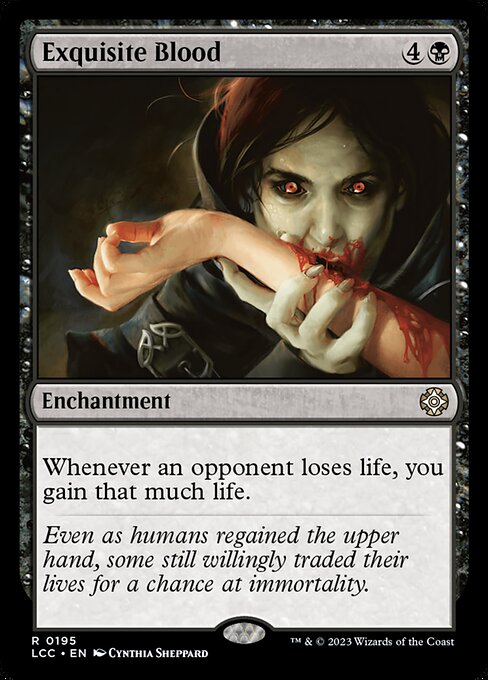
Sometimes Karlov will become so powerful that he will take the life of one of your opponents with his own hands, and they will understand that this was not a duel. It was a foreclosure. He simply adjusts his cufflinks, adds another counter, and eliminates you from existence with the casual indifference of a man checking his watch.
Teysa, The Heiress of Death’s Dividends.
There is also the possibility that physical labor is not your thing and you want to take part in the duties of an office worker like our next commander. I don’t judge you, most of the times boring jobs are the ones that pay the best.
Teysa, Orzhov scion, is a wealthy and ambitious sorceress who processes spirit tokens for our insurance company. What sets her apart from other commanders is that, unlike other token decks, we won’t use these tokens to attack blindly, but as valuable assets for our macabre purposes.

She does not waste energy because she does not need to. Her strength lies in conversion: turning loss into advantage. This aristocrat exploits all creatures who voluntarily sacrifice themselves to perfect the machinery of her empire; each donation of flesh is another step toward our hard-earned victory.

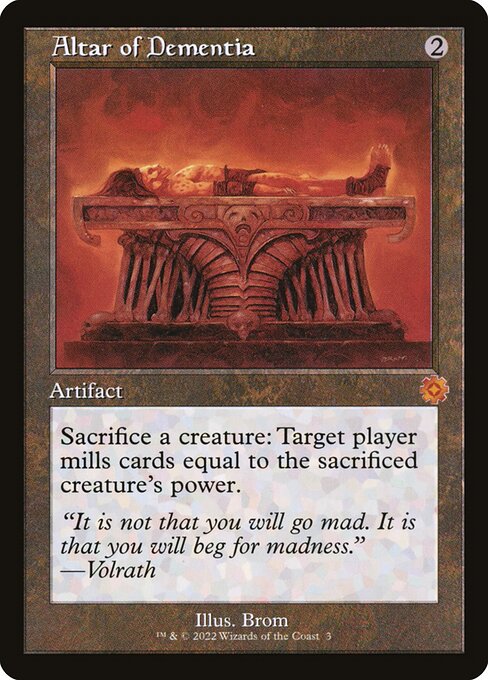

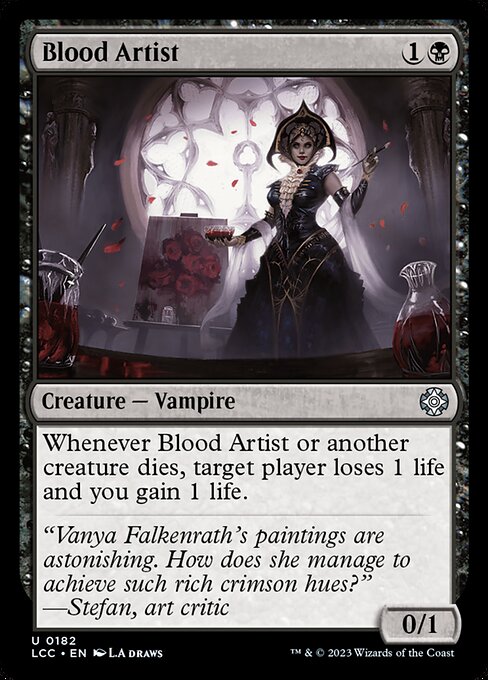
There is something eerie about her duties. When your opponents launch their attacks, draw a million cards, or simply spill their hearts all over the board, we will watch, serene, as every drop of their excess carefully sifts into her coffers.
Let’s get straight to the point: we want to build a highway with the corpses of our own minions to fuel our sacrifice engines, it’s that simple. For this very reason, we will be playing a lot of cards that will gladly die for our own benefit and leave their souls on the battlefield as white spirit tokens.

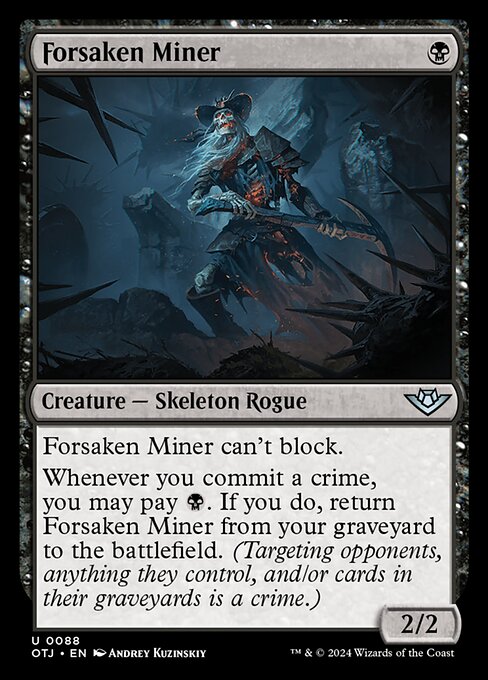

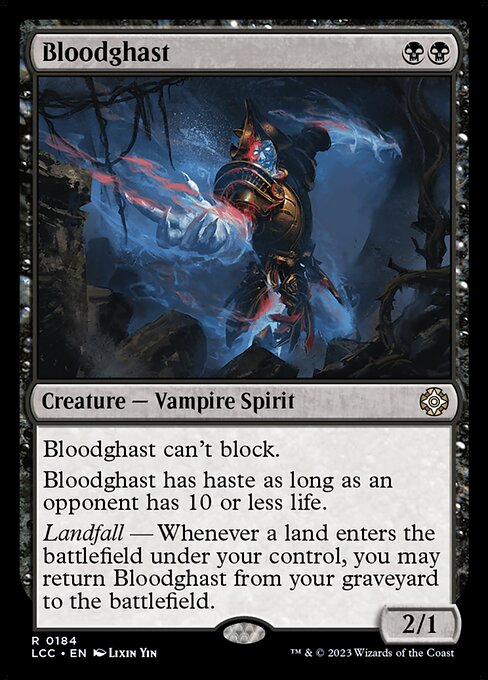
You can almost feel it when you play with her: the satisfaction of knowing that every trade, every exchange, every death, whether yours or your opponent’s, will ultimately work in your favor.
After building a perpetual killing machine, we still have another ace up our sleeve. We know that we can generate a large number of spirits over the course of a few turns, but our dark spark pushes us to go above and beyond, to not stop at hundreds when we can have millions. If we turn all creatures black, each spirit will give us another spirit. That sounds like infinity, doesn’t it?


Teysa doesn’t demand loyalty. She buys it, after all, her 9-to-5 job made her a millionaire (unlike me…). When the dust settles and the living look up at the great cathedral of her design, they will exhale, hoping to feel relief, and realize that it will never come.
Ketramose, the New Dawn
Is there a true ending within the Orzhov colors, or are we all doomed? lets find out that with Ketramose, the New Dawn. He rises with the brilliance of revelation! the kind that sears away lies, shadows, and false comfort. His followers call him the New Dawn, not because he brings peace, but because he brings clarity as he does not trade in souls nor profit from pain.
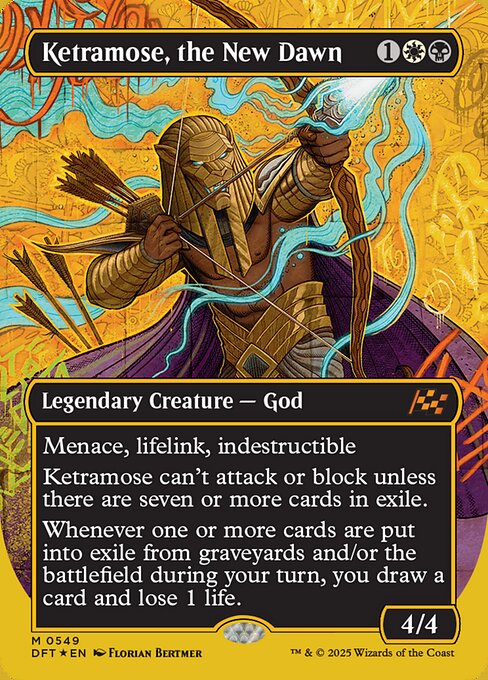
This deck stands out for its control strategy and flickering creatures. We won’t destroy what’s broken, we’ll just isolate it, perfect it, and bring it back better than before. Creatures appear and disappear at our command, each game is a purifying flame, and each comeback is a second wind with a brand-new attitude.
Piloting Ketramose means mastering the rhythm of divine interference. Each exile gets us cards, and if that triggers an “enter the battlefield” effect, it’s very rewarding, especially when you have followers that are a complete tool-box, Keep in mind that sending your opponent’s cards into exile will also activate our commander. Your hand guides destiny, and the game will unfold according to your will.


Our colors combine perfectly and give us access to all the “wrath” effects in the game, so why settle for one of the best colors for clearing the board when we can have both? The Wrath of God and Damnation are “opposites,” but they serve the same purpose.
What about indestructible creatures? No problem, take care of them with Toxic Deluge or Blasphemous Edict.
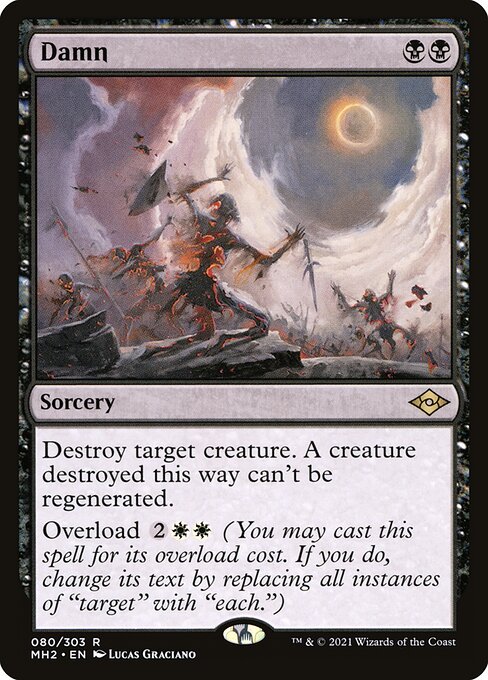

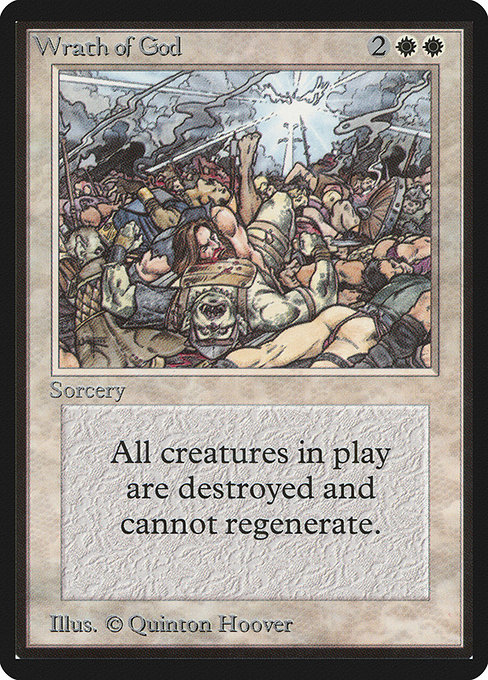
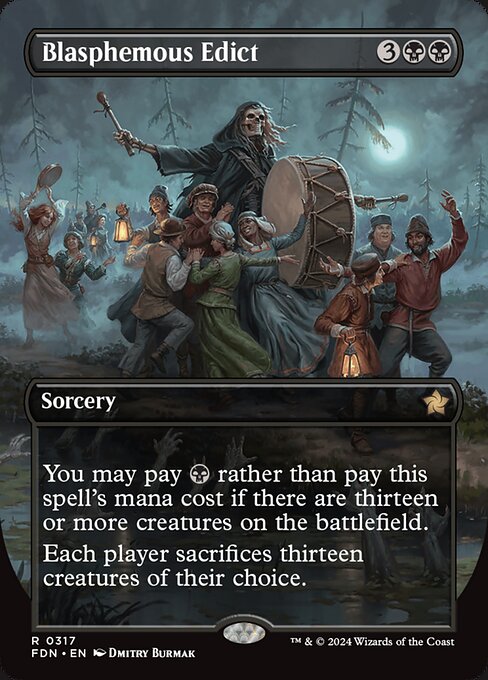
When you play Ketramose, you’re not just controlling the board. You’re handpicking who gets to stay in existence. You become the silent voice that decides what deserves to remain and what must be reborn. After all, perfection must be maintained.
The Ledger That Never Closes
Playing Orzhov is learning the art of endurance. Not loud, proud endurance, but patient, deliberate endurance. It’s knowing that power and peace rarely share the same table… and sitting down anyway, silver in hand and scars beneath the silk.
Each of our commanders (Karlov, Ketramose, Teysa, Ardbert) shows you one of the paths that this colorful ideology follows. The small detail about each of these paths is that they will inevitably lead you to the same destination. Death is so sure of winning that it gives you a lifetime advantage.
Beneath all that gold, beneath the marble masks and gilded scriptures, there is something painfully human. A silent truth that whispers through the vaults: we all want our story to matter. Whether told with coins, prayers, or blood, we want it to be remembered. so when you shuffle your deck and the lights flicker above you, remember this: you’re not summoning monsters or spirits. You’re reclaiming everything you’ve sacrificed.
And if you win?
Well. That’s just good business.