



There are some collaborations that make you stop and wonder how they could possibly work in Magic: The Gathering. Then there is Warhammer 40K, a universe where ancient gods, absurdly powerful monsters, psychic powers, undead armies, and soldiers carrying weapons the size of small cars are already fighting an endless war across the galaxy. If anything, it was almost surprising that it took this long for the two worlds to meet after Wizards starting doing Universes Beyond.
In 2022, Magic finally made that meeting happen with Warhammer 40,000 Commander. Rather than being a small collection of crossover cards, Wizards went all in: four complete Commander preconstructed decks, each representing one of the setting’s major factions. Forces of the Imperium, Necron Dynasties, Tyranid Swarm, and The Ruinous Powers each came with its own commanders, mechanics, artwork, and collection of new cards designed specifically around Warhammer’s factions.
The reception to the collaboration was interesting because it had to satisfy two very different audiences. Magic players were being asked to embrace characters and factions from a completely different universe, while Warhammer fans were getting to see their armies and characters translated into a game with an entirely different mechanical language. Wizards itself described one of the major advantages of Universes Beyond as the opportunity to introduce Magic to new audiences, while the Warhammer decks were deliberately designed to give each faction a distinct mechanical identity.
And, importantly, the decks weren’t simply four versions of the same Commander strategy with different artwork pasted over them. Wizards specifically wanted each deck to have its own central color identity and play style. The Imperium became a white-blue-black deck built around creating large armies, while the Necrons went in the opposite direction with a mono-black artifact and reanimation strategy.
That difference is especially apparent when looking at these first two decks.
Forces of the Imperium: Humanity Against the Galaxy
If there is one faction that absolutely had to receive a deck in a Warhammer 40,000 crossover, it was the Imperium of Man.
The Imperium is not just one army. It is an enormous collection of organizations, worlds, military branches, religious institutions, and specialized forces all operating under the same enormous banner. Space Marines are probably the most recognizable part of the setting, but they are only one piece of the puzzle. The Imperial Guard, Sisters of Battle, Inquisition, Adeptus Mechanicus, Grey Knights, Custodes, and countless other groups all contribute to humanity’s endless war.
That gave Wizards an enormous amount of material to work with.
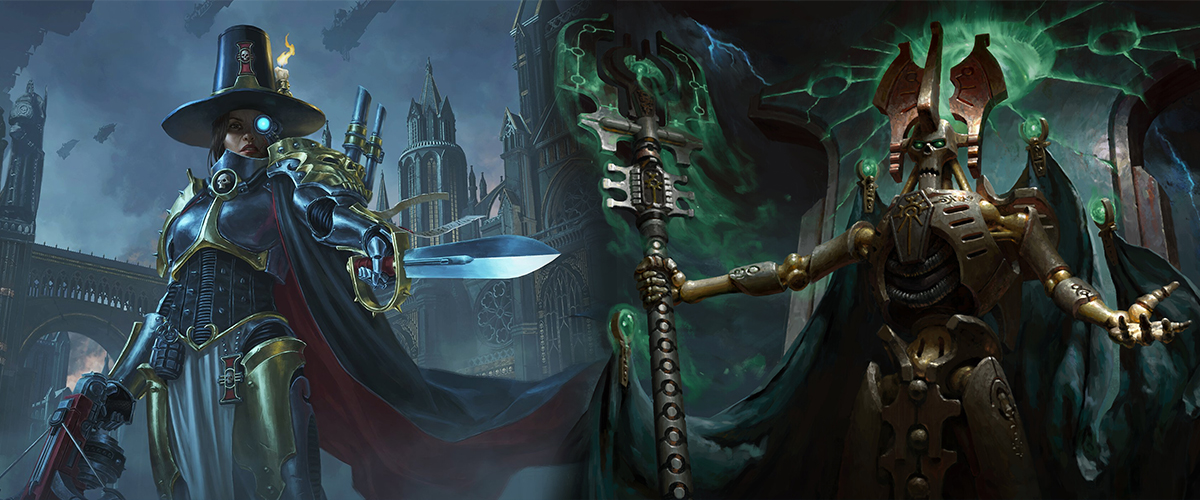
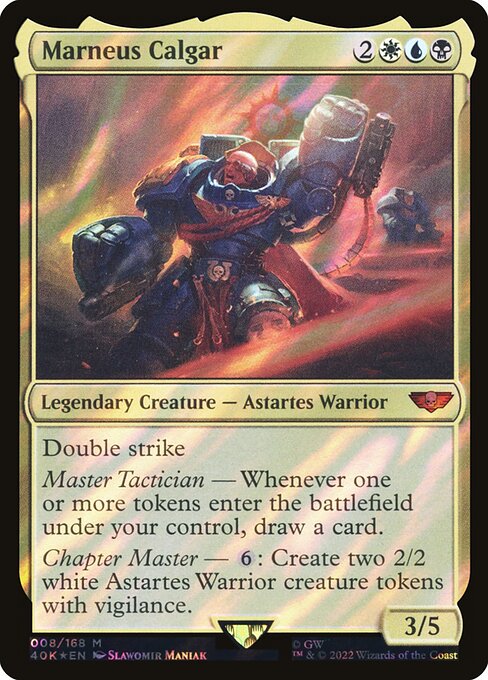
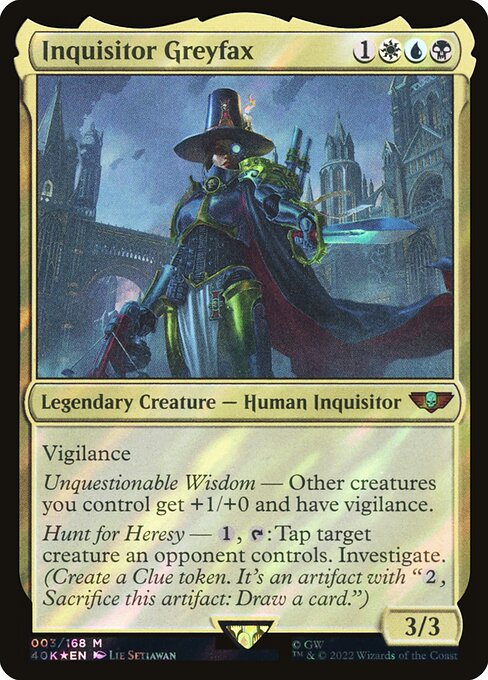
Forces of the Imperium is an Esper (White, Blue, and Black) deck, with Inquisitor Greyfax as its face commander and Marneus Calgar as its alternate commander. The deck is fundamentally about building an army, with Wizards specifically describing the Imperium as a faction that could naturally support cards that “built up big armies of soldiers” and rewarded you for having a large army.
And the deck absolutely sells that fantasy.
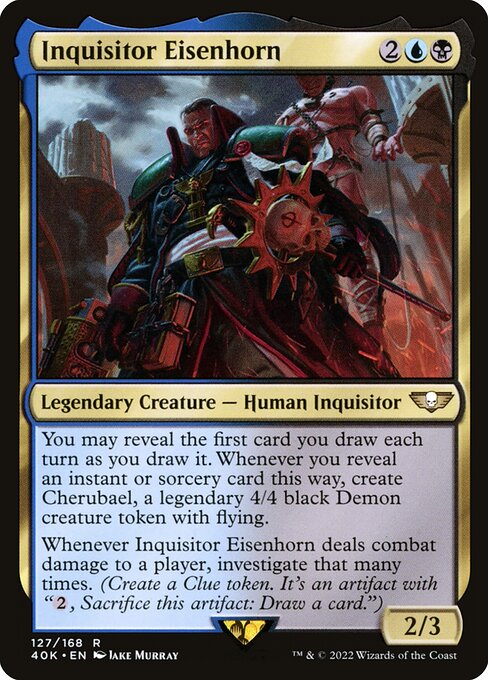
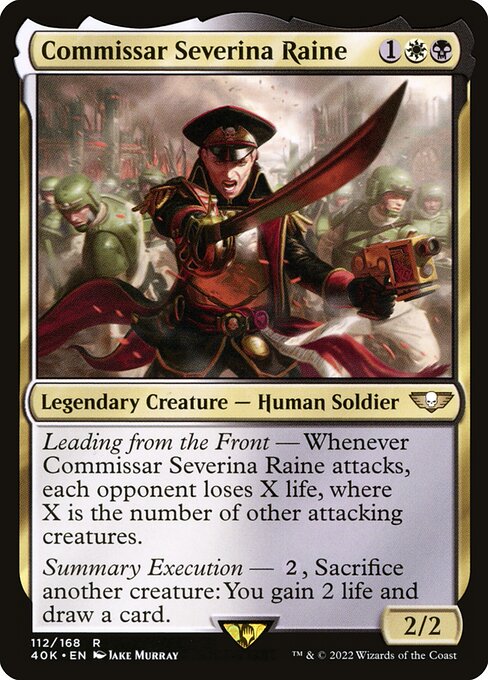
Rather than making the deck exclusively about Space Marines, Wizards filled it with representatives from across the Imperium. Celestine, the Living Saint, Triumph of Saint Katherine, Sister of Silence, and Sister Repentia bring the Adepta Sororitas into the deck. Belisarius Cawl represents the Adeptus Mechanicus. Inquisitor Eisenhorn and Commissar Severina Raine give the Inquisition and Imperial command structure a presence.

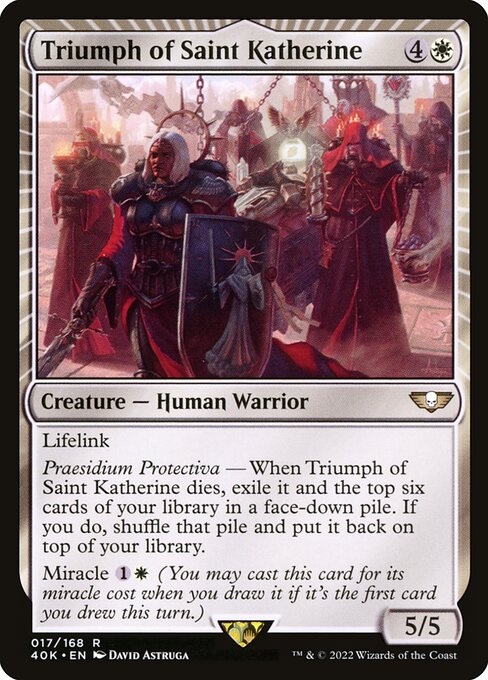
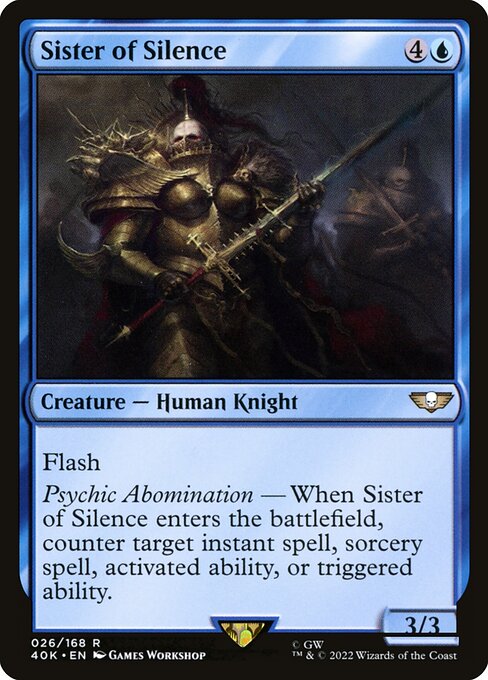
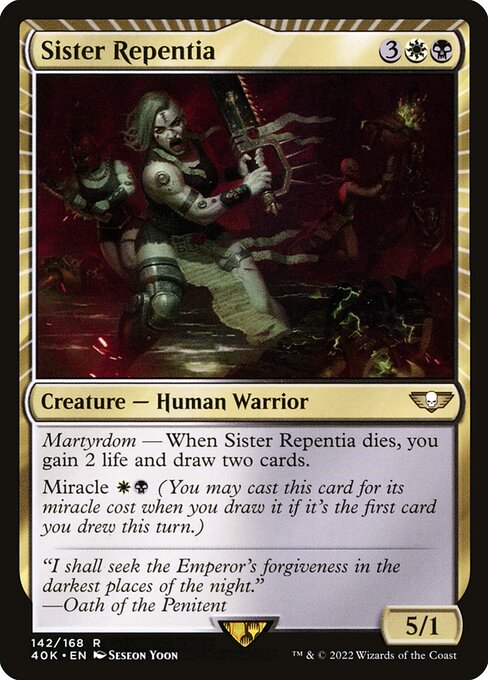
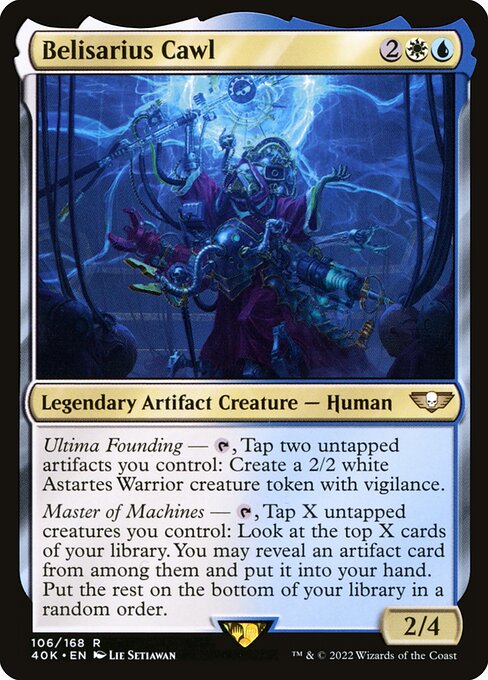
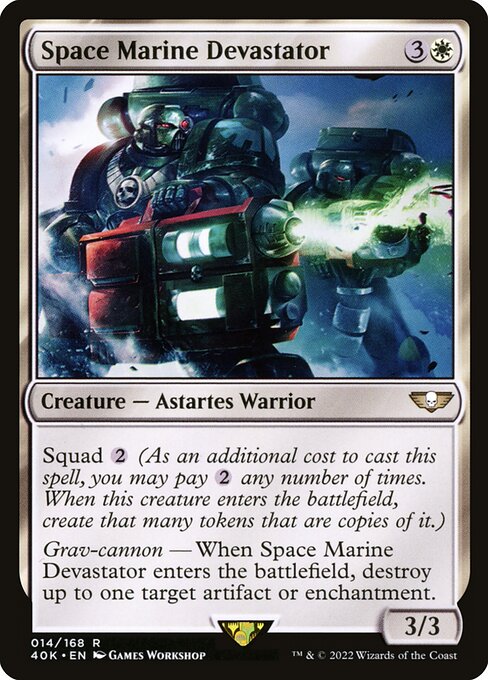
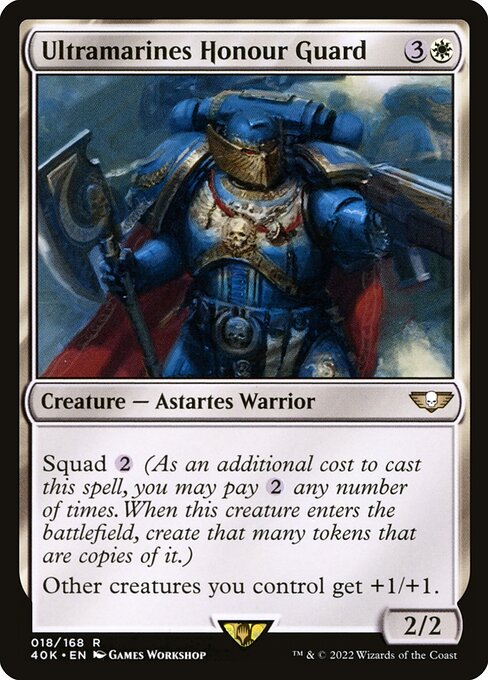
Then, of course, there are Space Marines ranging from Space Marine Devastator and Ultramarines Honour Guard to Primaris Chaplain, Redemptor Dreadnought, and Grey Knight Paragon.
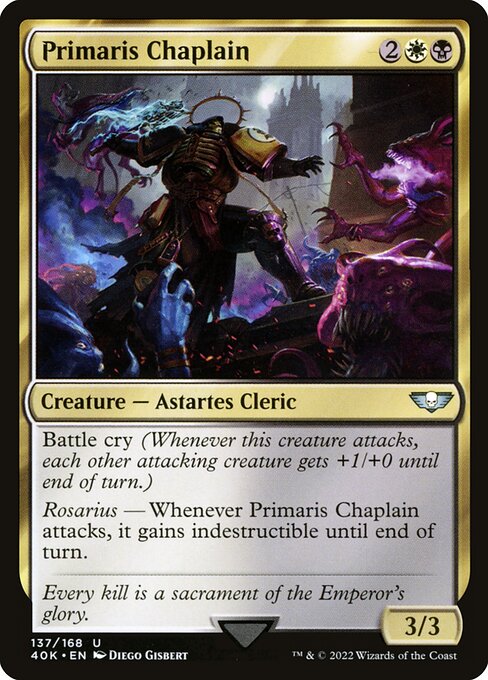
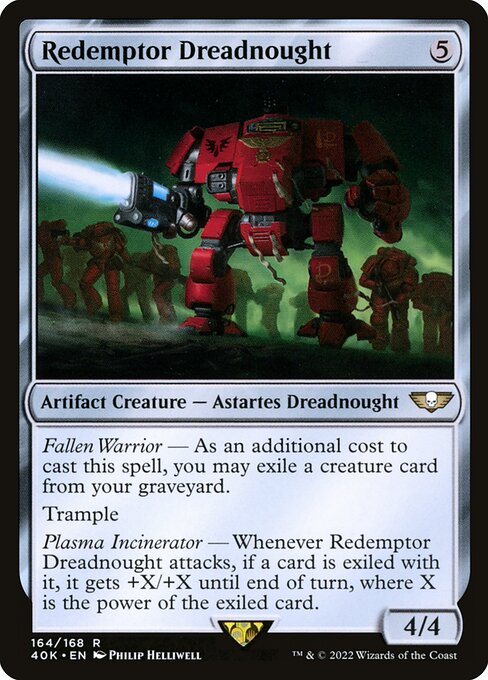
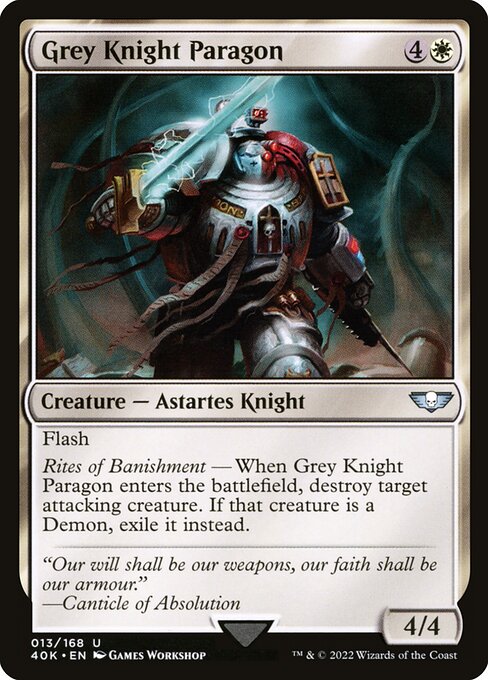
That variety is probably the most appealing part of the deck.
You don’t simply feel like you’re playing “the Space Marine deck.” You’re playing the Imperium. The battlefield can contain a Space Marine alongside a Sister of Battle, an Inquisitor, a Custodes representative, an Imperial commander, and a giant Dreadnought, all working toward the same objective.
Mechanically, that translates into the deck’s emphasis on going wide and turning a growing army into an increasingly dangerous board. Marneus Calgar is particularly representative of that idea. He rewards the creation of tokens by turning your growing army into more cards and more resources, creating the sense that the larger the Imperium becomes, the more difficult it is to stop.
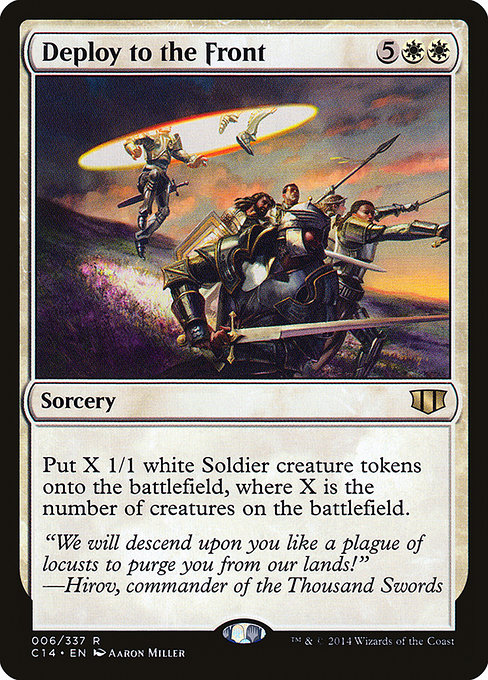
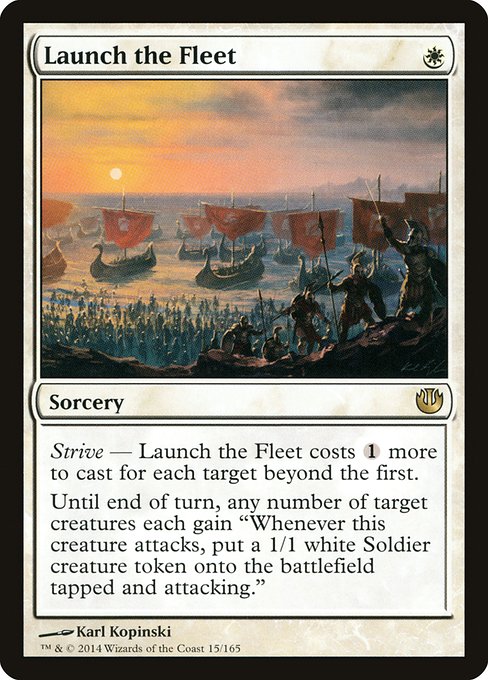
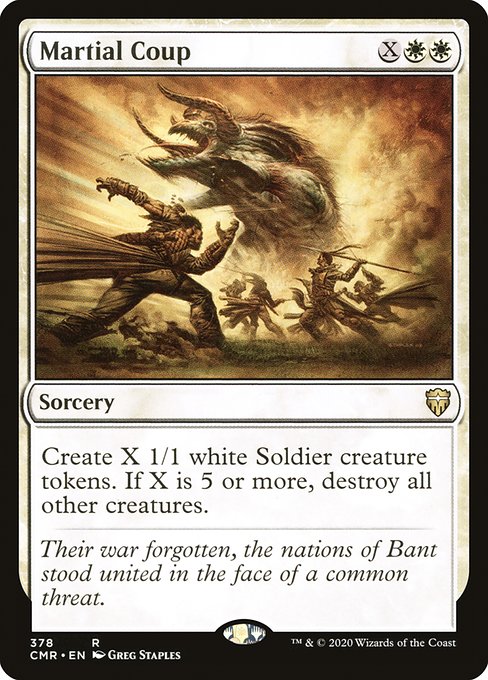
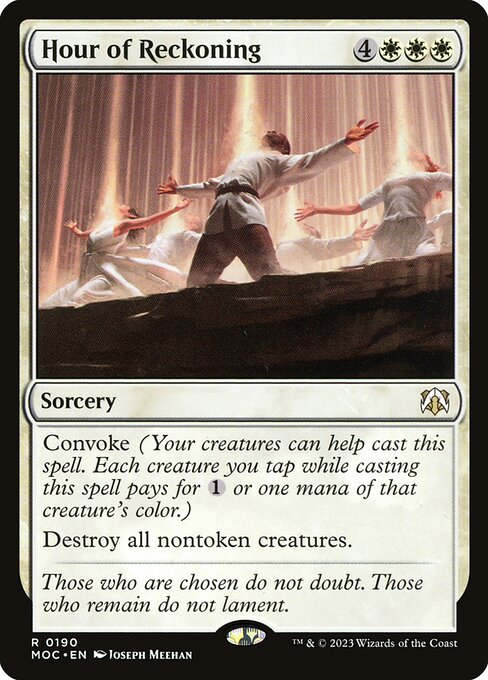
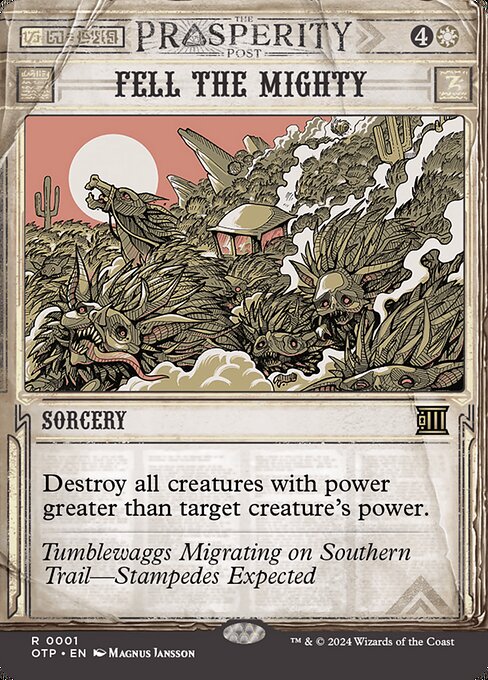
The deck also has a healthy selection of effects that reinforce the feeling of an enormous military machine. Deploy to the Front, Launch the Fleet, and Martial Coup can dramatically increase the number of bodies on the battlefield, while Hour of Reckoning and Fell the Mighty provide ways for the army to survive or exploit the enormous board states that it creates.
Even the tokens themselves contribute to the fantasy. The deck doesn’t simply produce generic 1/1 Soldiers and call it a day. Its token cards represent different Imperial forces, including Space Marine Devastators, Zephyrim, Ultramarines Honour Guard, Sicarian Infiltrators, Vanguard Suppressors, and Arco-Flagellants.
That attention to detail is what makes the deck work particularly well as a crossover product.
A player familiar with Magic can look at the deck and immediately understand its basic identity: build an army, make the army bigger, and overwhelm the battlefield with numbers. A Warhammer player, meanwhile, can recognize the individual units and factions being represented and understand why they are all fighting together.
The deck’s commanders also offer two slightly different perspectives on that army.
Inquisitor Greyfax feels like the commander standing above the battlefield, coordinating the various forces of the Imperium and making sure nothing goes unnoticed. Marneus Calgar, meanwhile, feels much more like the embodiment of the military machine itself. Put them together with the enormous range of Imperial units in the 99 and you get a deck that feels less like a single regiment and more like an entire war effort.
That is exactly what the Imperium should feel like.
You can check the original decklist here:
Commander
Creatures (31)
Instants (6)
Sorceries (8)
Artifacts (14)
Enchantments (4)
Lands (37)
100 Cards
$300.36
Necron Dynasties: The Army That Refuses to Die
The Necrons are ancient machine beings who have awakened after millennia of dormancy, and the mechanical identity Wizards chose for them fits that concept remarkably well. Instead of giving them multiple colors to represent different aspects of their faction, Wizards deliberately made Necron Dynasties mono-black, combining a strong artifact theme with reanimation and graveyard recursion. The design team specifically identified the Necrons as a faction that could support a compelling mono-black Commander deck built around those ideas.
The result is perhaps the most cohesive of these two decks from a pure thematic perspective.
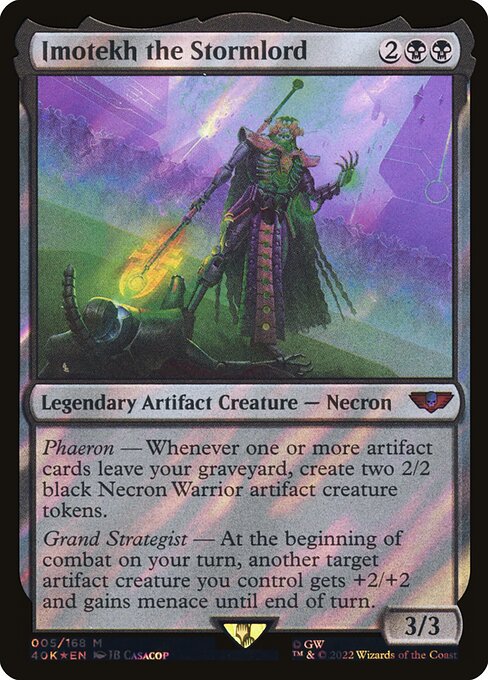
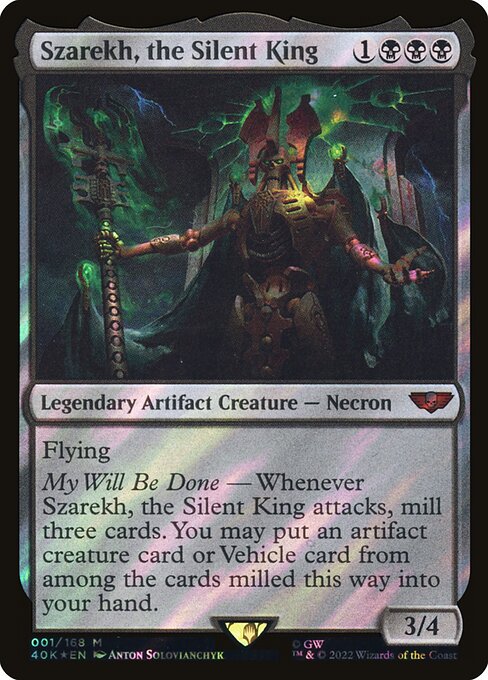
Szarekh, the Silent King is the face commander, while Imotekh the Stormlord is the alternative. Szarekh’s presence ties the deck to the larger Necron civilization, while Imotekh offers a commander that directly embraces the deck’s tendency to repeatedly bring artifacts and creatures back into the fight. Wizards’ own product description sums up the intended fantasy rather nicely: build an army of ancient, seemingly mindless androids and grind your opponents into dust.
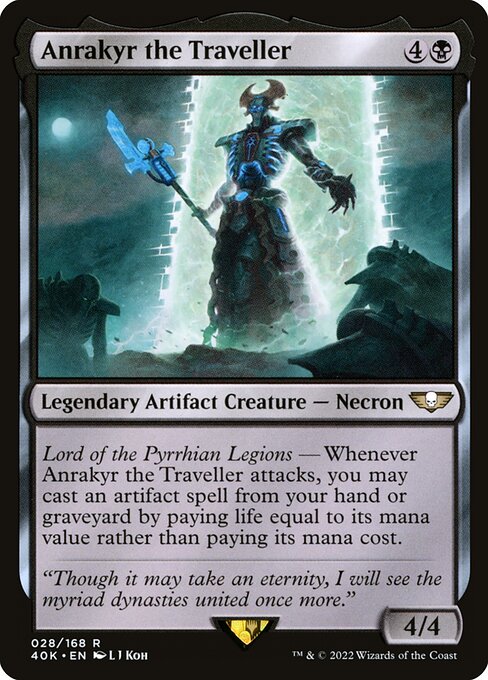
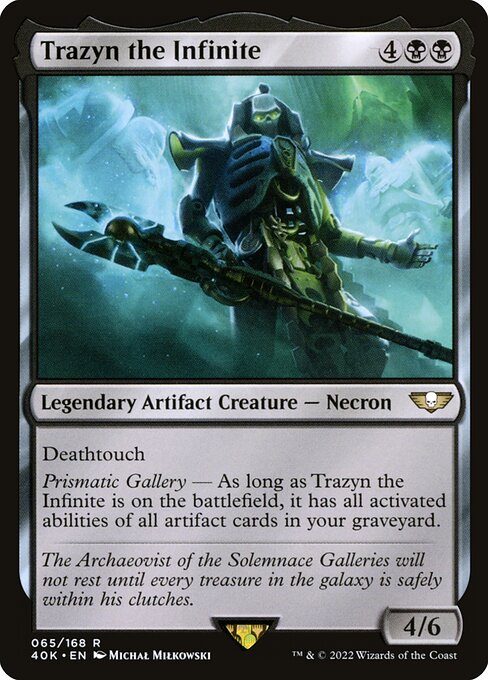
The deck is filled almost entirely with things that look like they belong to the same army. Anrakyr the Traveller, Trazyn the Infinite, Technomancer, Cryptek, Necron Overlord, Lychguard, Skorpekh Destroyer, Canoptek Wraith, Canoptek Spyder, and the various Destroyers and constructs all contribute to the same mechanical and visual identity.
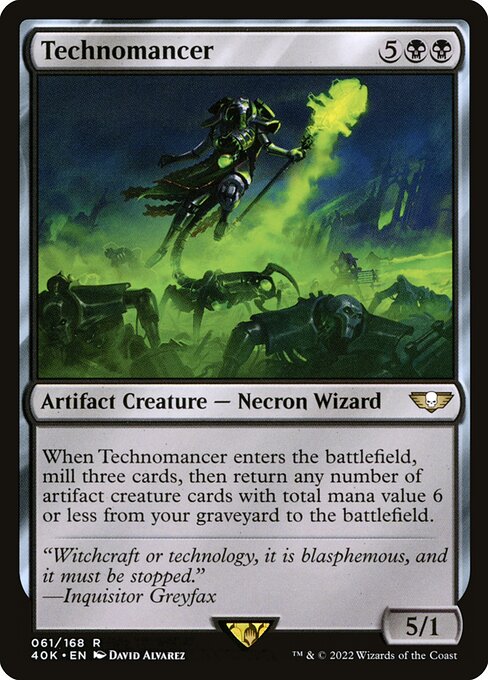
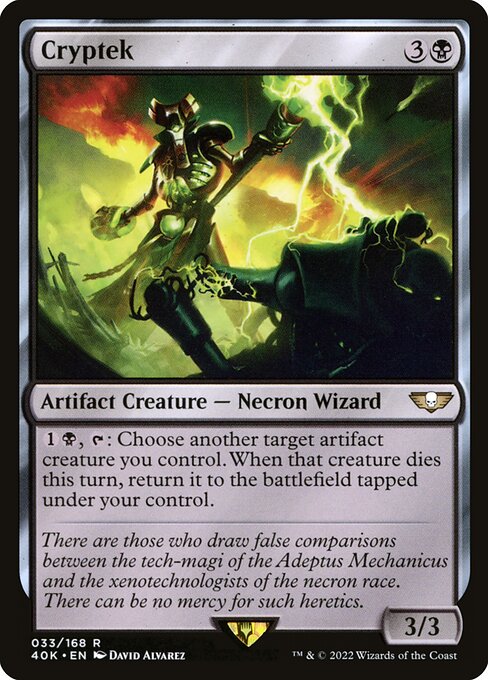
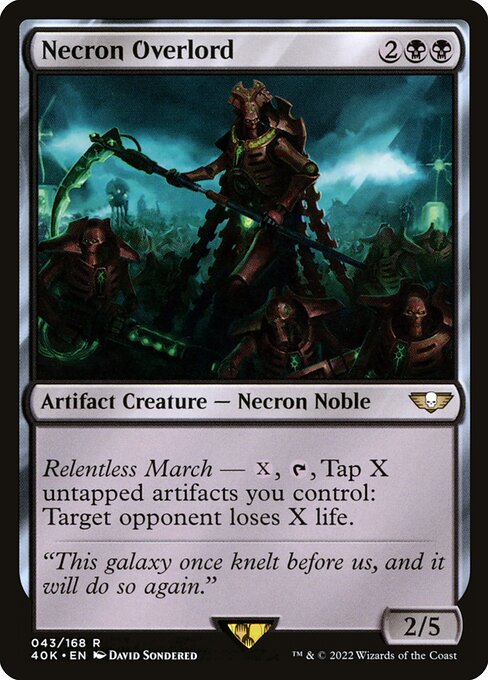
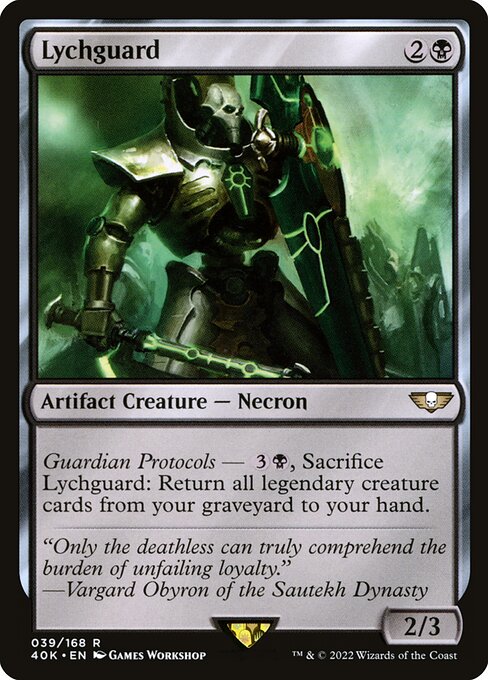
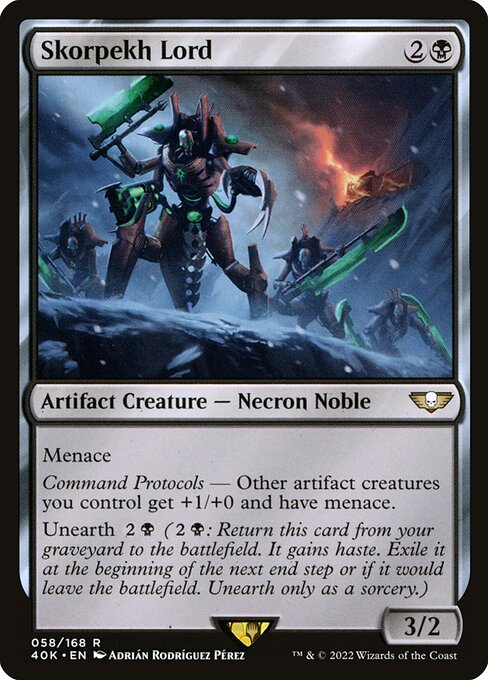
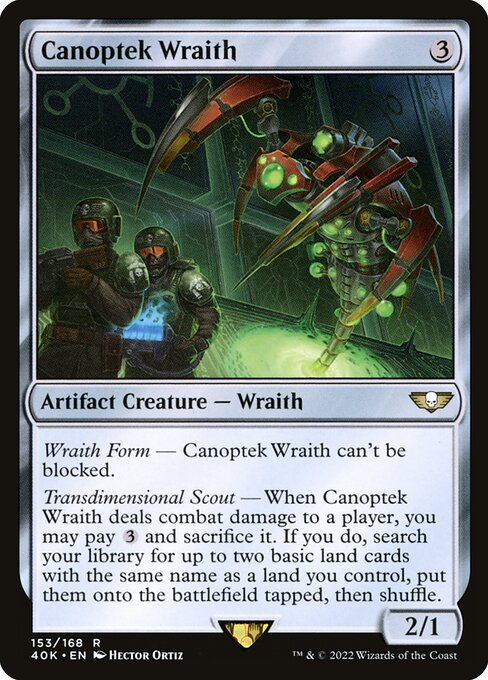
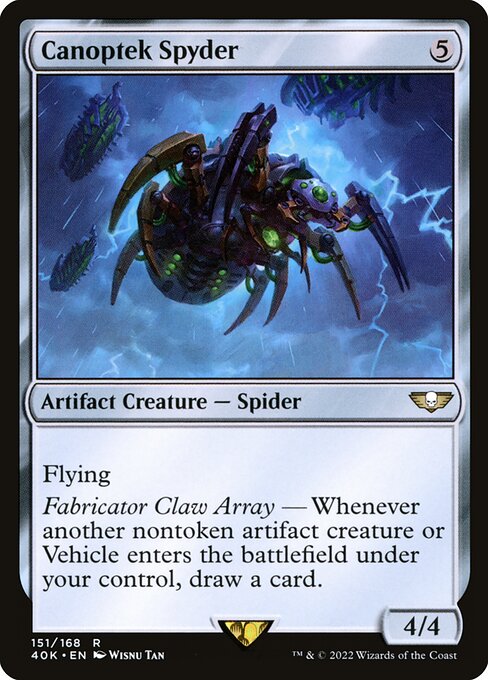
There is something satisfying about opening the decklist and seeing just how relentlessly committed it is to the Necron aesthetic.
Where the Imperium’s creature base is intentionally diverse because the faction itself is diverse, the Necrons are almost the opposite. You are looking at variations of the same ancient machine civilization over and over again.
And then the graveyard gets involved.
Reanimation is one of the clearest ways Magic could have translated the Necron concept into gameplay. A Necron being destroyed doesn’t necessarily mean it is gone. It can be repaired, reconstructed, resurrected, or simply replaced by another machine waiting to rise from beneath the battlefield.
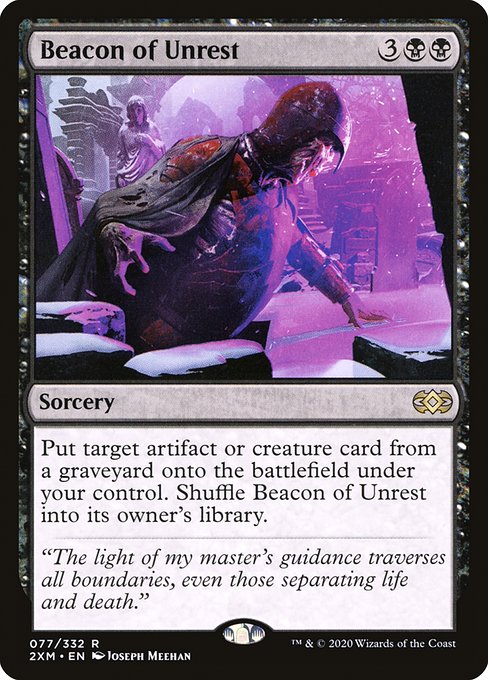
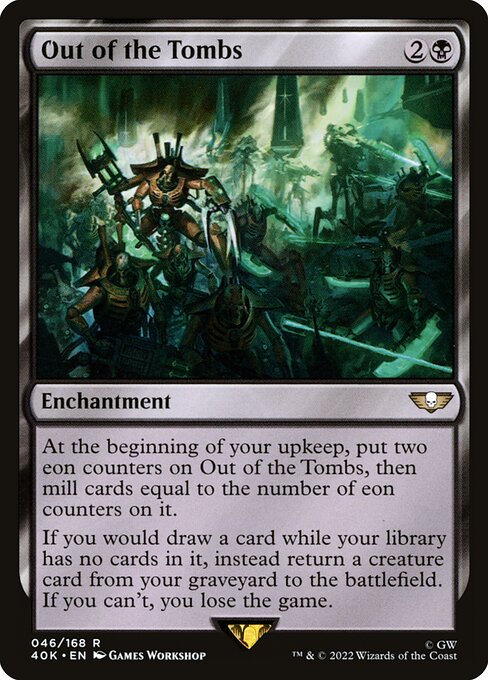
Cards such as Dread Return, Beacon of Unrest, Living Death, and Out of the Tombs reinforce that identity, while Imotekh the Stormlord rewards the return of your artifacts and helps turn your endless supply of resurrected machines into an actual battlefield presence.
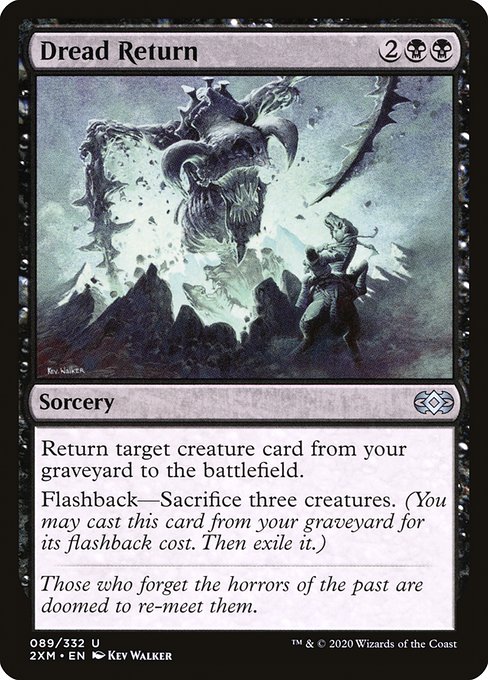

The artifact component also is just as important as the graveyard.
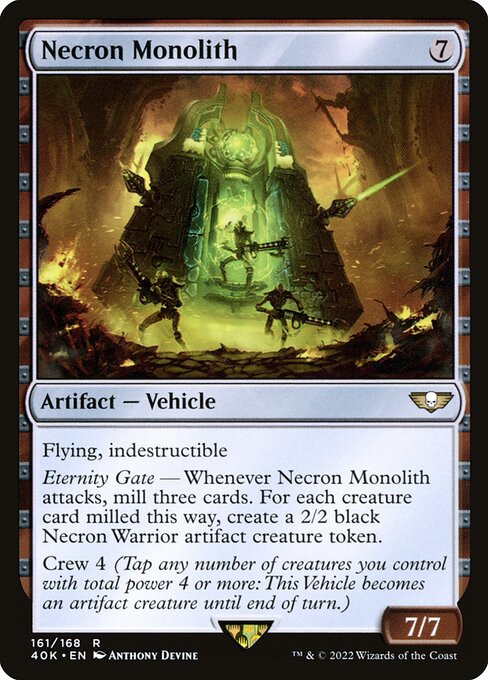
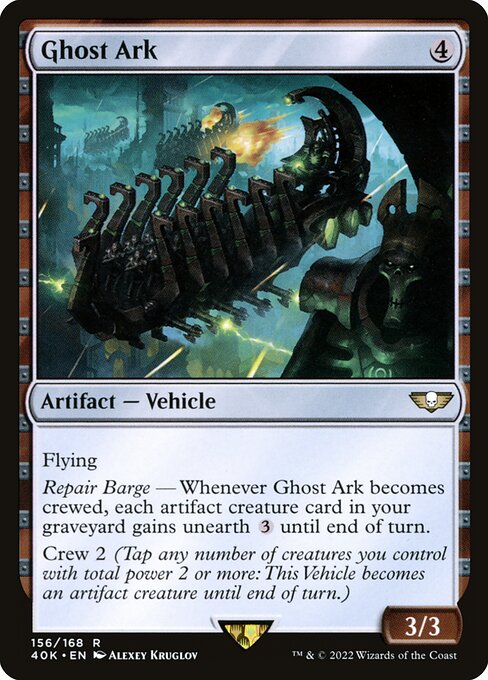
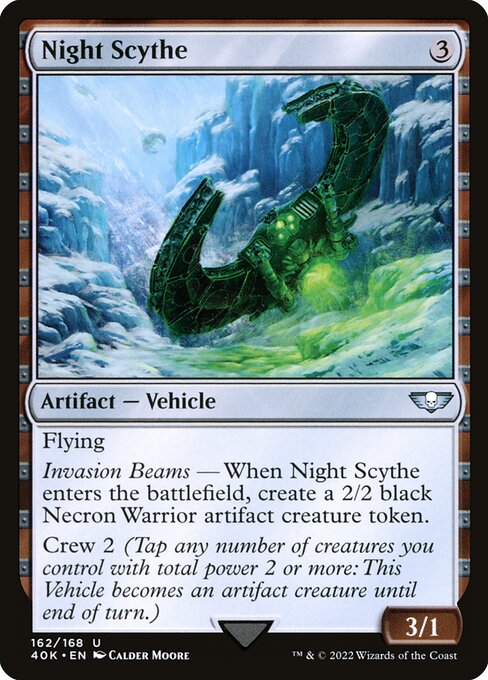
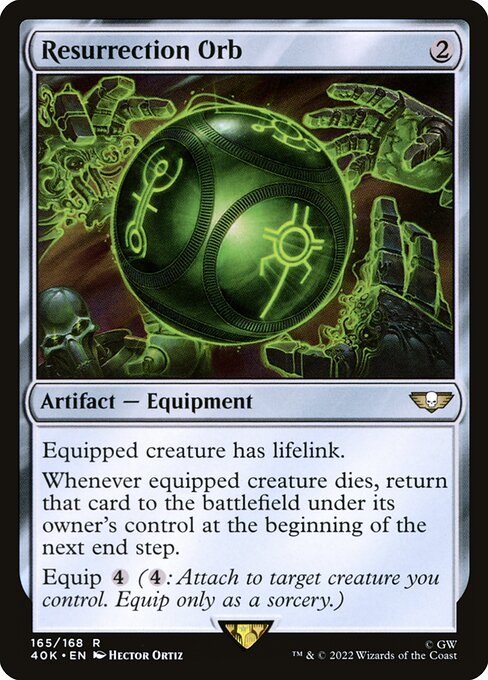
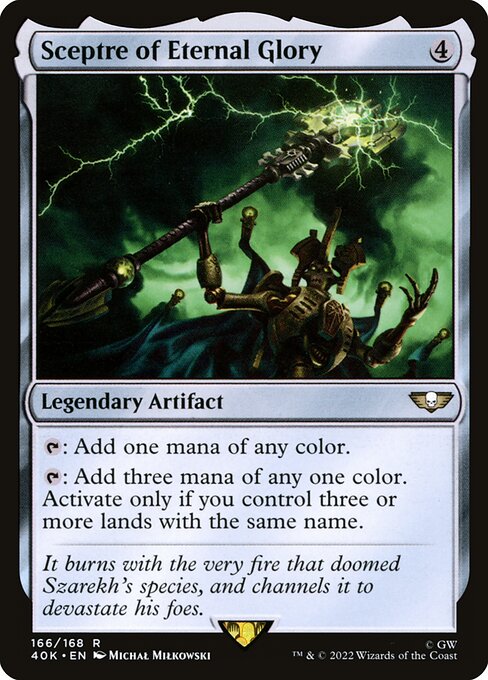
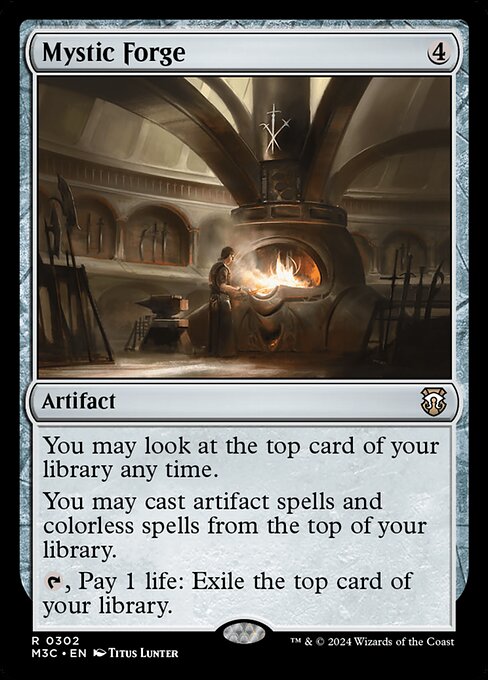
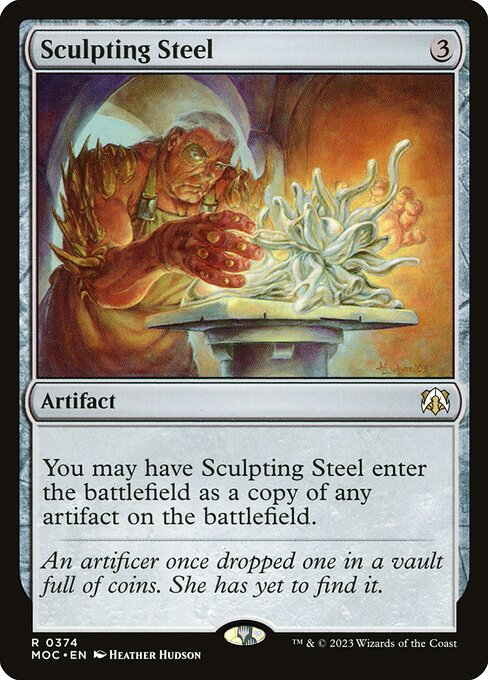
The deck includes everything from Necron Monolith and Ghost Ark to Night Scythe, Resurrection Orb, Sceptre of Eternal Glory, Mystic Forge, and Sculpting Steel. These aren’t simply generic colorless cards that happen to be useful in a black deck. They reinforce the idea that you’re commanding a civilization whose entire existence has been transformed into machinery.
And that makes Necron Dynasties feel very different from Forces of the Imperium, even though both decks are ultimately trying to accomplish the same thing: establish an army and eventually overwhelm their opponents.
The Imperium gets there through numbers and diversity.
The Necrons get there through persistence and repetition.
One deck says, “There are more of us.”
The other says, “It doesn’t matter how many times you kill us.”
Check out the original decklist here:
Commander
Creatures (30)
Sorceries (6)
Artifacts (22)
Lands (36)
100 Cards
$353.82
Reception: A Strong Start for Universes Beyond
Looking back at the release, Warhammer 40,000 Commander was received remarkably well, particularly considering the uncertainty that surrounded Magic’s first major Commander-only Universes Beyond product. The appeal wasn’t limited to Warhammer fans either. Reviews repeatedly pointed toward the combination of strong themes, interesting new cards, and the value packed into the decks as some of the product’s biggest strengths. In fact, Wizards and Hasbro later described the Warhammer Commander decks as among the company’s best-selling Commander products.
The two decks here received somewhat different reactions, however.
Forces of the Imperium was generally appreciated as an accessible and enjoyable go-wide Commander deck. Its strategy is easy to understand: make an army, make the army bigger, and use that army to pressure the table, which made it a relatively approachable entry point for players who were new to Commander. Contemporary reviews also highlighted the sheer amount of value and token production packed into the deck, although some reviewers felt that its Esper color identity was somewhat awkward and that the face commander, Inquisitor Greyfax, did not live up to the strength of some of the deck’s alternatives. Marneus Calgar, in particular, attracted considerable attention as a more natural fit for the deck’s token-heavy strategy.
That criticism didn’t necessarily reflect poorly on the deck as a product, though. If anything, it became part of what made Forces of the Imperium interesting. The deck contained a large selection of alternative legendary creatures representing different corners of the Imperium, allowing players to take the same pool of cards in several directions. Contemporary reviews noted that some of those alternate commanders could substantially change how the deck played, giving the precon more flexibility than its face commander initially suggested.
Necron Dynasties, meanwhile, developed an even stronger reputation among Commander reviewers. Its mono-black identity immediately made it unusual, it was one of the rare mono-colored Commander precons, but the deck’s artifact and graveyard themes were considered remarkably cohesive. Multiple reviews singled out the combination of Necron flavor, artifact synergy, recursion, and the quality of its reprints as major strengths.
There was still criticism of the face commander, Szarekh, the Silent King. Several contemporary reviews considered him underwhelming compared with some of the deck’s alternative commanders, particularly Imotekh the Stormlord and Anrakyr the Traveller. The important distinction, though, is that this criticism often came alongside praise for the deck itself. In other words, reviewers frequently saw Szarekh as a weaker centerpiece than the 99 surrounding him, rather than seeing the preconstructed deck as a failure.
That distinction is worth making because Necron Dynasties went on to have an unusually strong reputation among Commander players. EDHREC later included it in a retrospective list of the best Commander precons of the preceding five years, calling the Warhammer 40,000 precons the best group of preconstructed decks from 2022 and specifically highlighting Necron Dynasties for its flavor and cohesion.
The decks also benefited from something that can be easy to overlook when judging a crossover product: they weren’t merely successful because they were Warhammer. The cards had enough mechanical identity to stand on their own. Someone unfamiliar with the setting could still understand what a Necron deck was trying to do, while a Warhammer player could recognize why artifacts returning from the graveyard or armies of Imperial troops made sense for their respective factions.
That combination helped make these decks an important early proof of concept for Universes Beyond. The product demonstrated that an external property could be more than a collection of recognizable characters and artwork. Its factions could actually determine how the decks played.
And that is probably the most important part of the reception. The Warhammer decks were not universally regarded as flawless. The individual commanders, color identities, and stock lists all attracted their share of criticism,but the overall product was widely regarded as successful, with particularly strong praise for its flavor, mechanical cohesion, and the amount of playable material packed into the decks. Even years later, the Warhammer precons continue to be discussed among notable Commander preconstructed products.
For Forces of the Imperium, the appeal was the fantasy of commanding an enormous and varied military force. For Necron Dynasties, it was the opposite: a remarkably focused army of machines that could keep returning from the graveyard.
Stay tuned for part of this article where we will talk about the other 2 decks from the WH40K set.
If you’re interested in a more in-depth look about the impact of Universes Beyond sets in commander, check out this article here: https://edhmeta.com/universes-beyond-in-commander-and-its-impact/
And if you’re interested in a more comprehensive look of The Hobbit set in commander check out this one: https://edhmeta.com/the-hobbit-the-best-new-cards-for-commander/