




There are a lot of different ways to build a Superfriends deck, and a lot of ways to build a The Second Doctor deck. So, why not combine them? The Second Doctor has an ability that makes it easy to work around the natural downsides of a Superfriends deck. For a partner, we’ll be using Leela, Sevateem Warrior to get our access to Green (and a way to get a win condition). This Second Doctor Superfriends is in Bant colors, which allows us to play all the best planeswalker cards. While we don’t have access to Red and Black, we can still do a ton of powerful things.
The Commanders
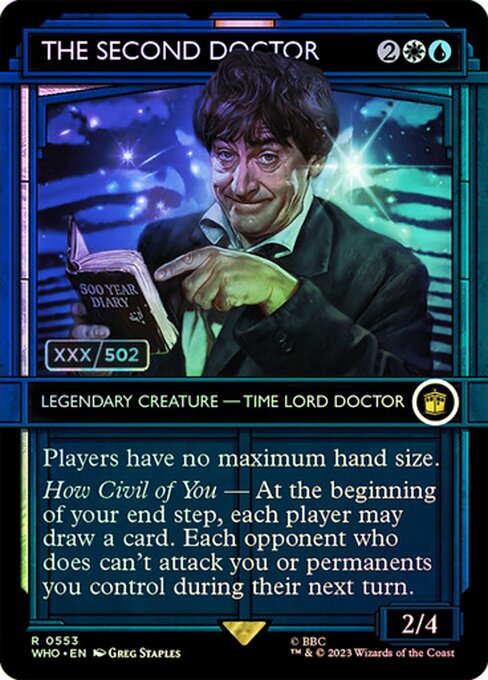
The main commander is The Second Doctor. It is a Group Hug effect that lets players draw a card in exchange for not being able to attack you. With how good card draw is, you’ll often find yourself not having to worry about attackers. It prevents opponents from being able to attack your permanents as well, meaning they won’t be able to attack your planeswalkers. It also gets rid of everyone’s hand size limit, making it so no one will want to remove it.
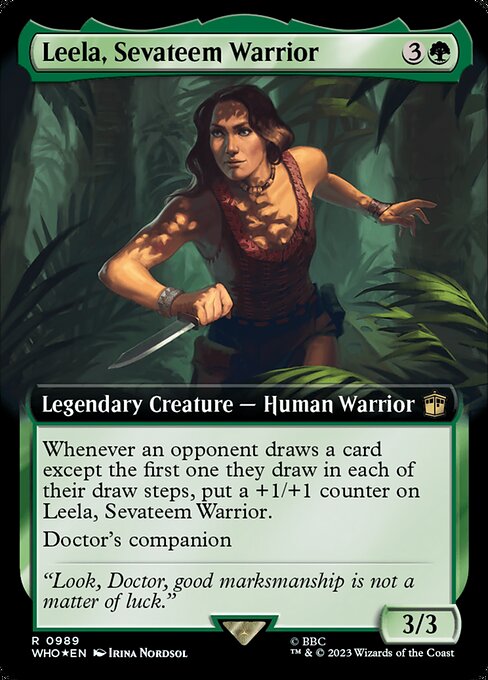
For the other commander, Leela, Sevateem Warrior is less important, but still great. Since your opponents will draw cards outside their draw step with The Second Doctor, Leela, Sevateem Warrior is getting a counter each time. If all your opponents draw a card with The Second Doctor, that’s three +1/+1 counters on Leela, Sevateem Warrior. With how big Leela’s stats can get, you can turn it into a win condition if your opponents can’t block it, and win through commander damage instead of relying on the ultimates of your planeswalkers.
The Planeswalkers
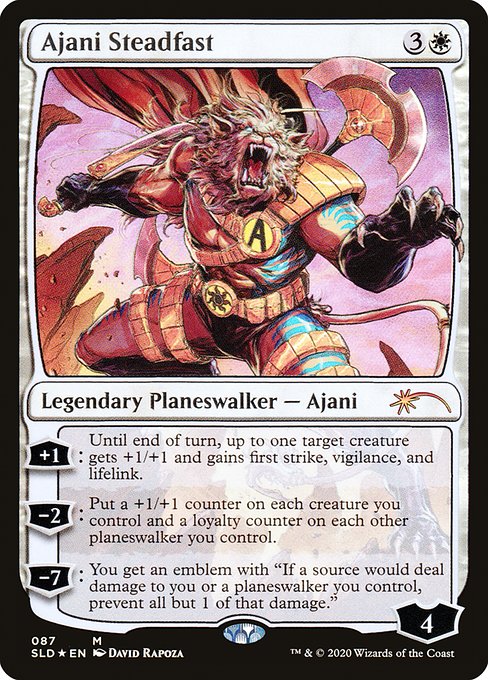
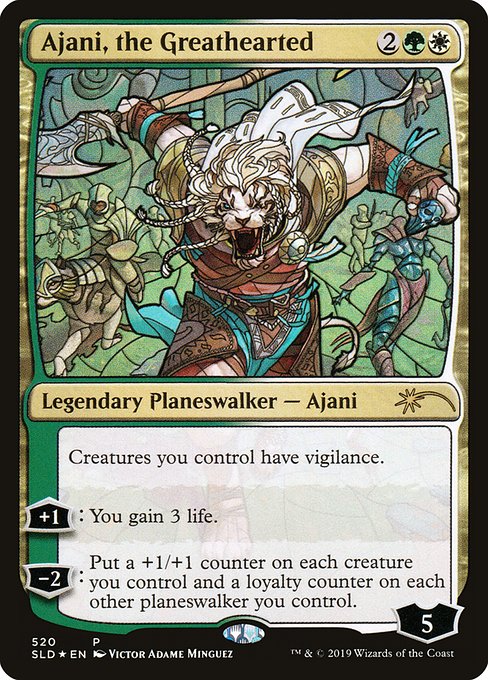
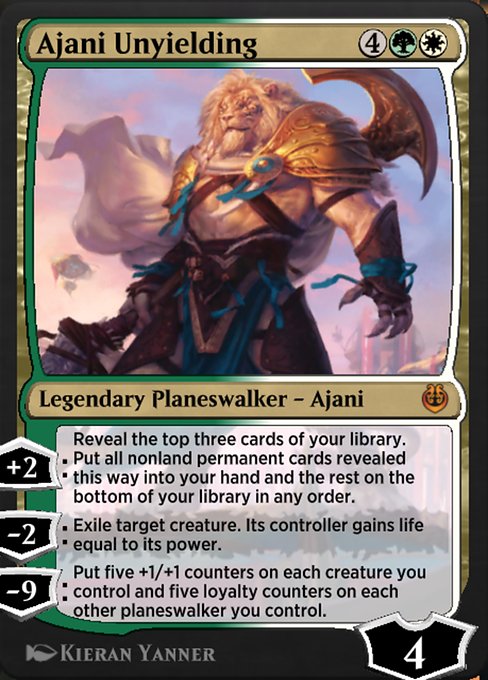
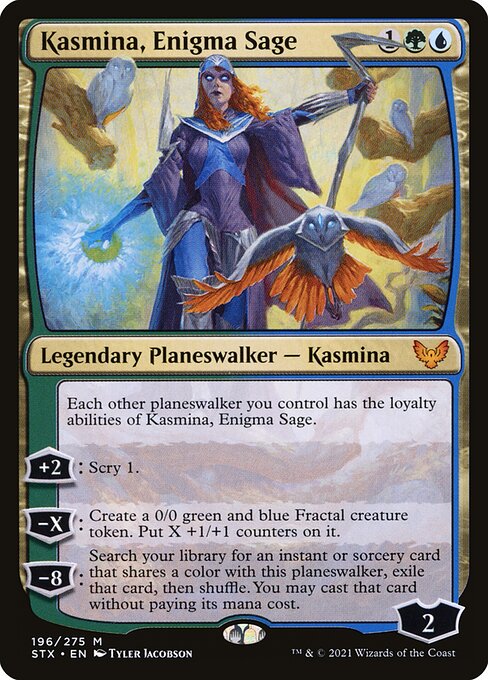
The most important card type in a Superfriends deck is your planeswalkers. That’s what Superfriends decks are built around after all. To start, planeswalkers that give all your other planeswalkers loyalty counters. This helps you to reach their ultimate abilities faster, as these are often your win condition. This is a common theme of Ajani planeswalkers, including Ajani Steadfast, Ajani, the Greathearted, and the ultimate ability of Ajani Unyielding. You can also utilize Kasmina, Enigma Sage as another copy of all these Ajanis (or any other planeswalker with a good ability).
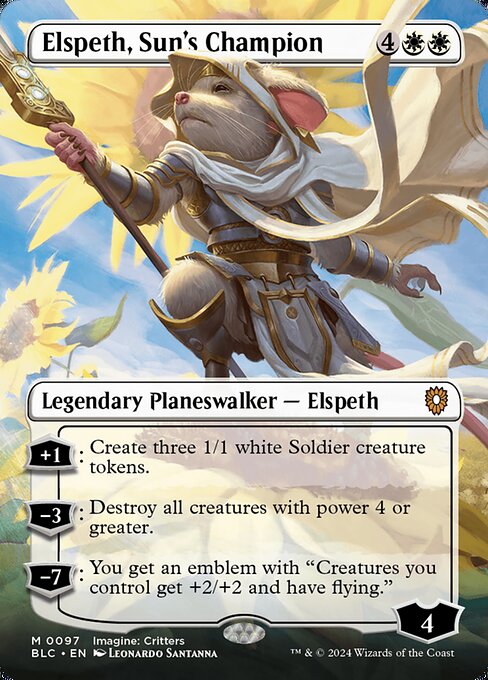
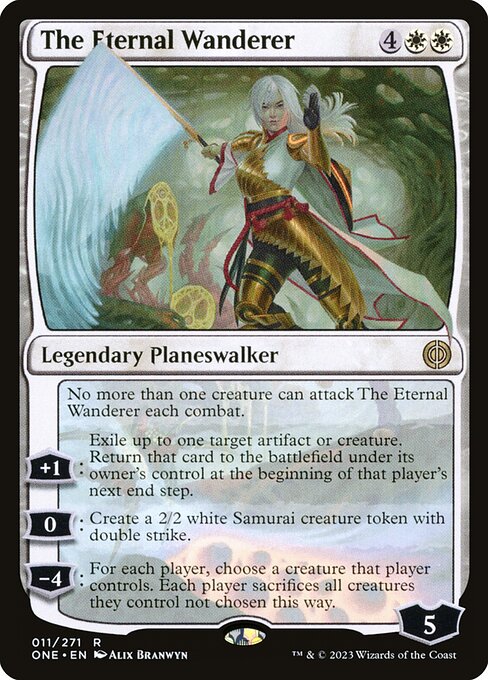
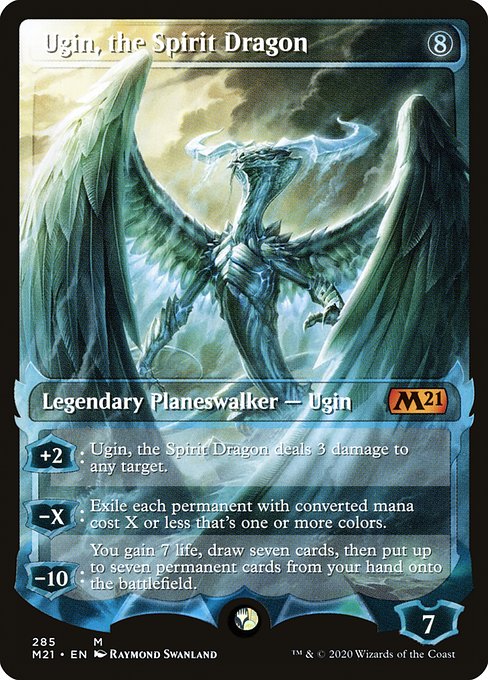
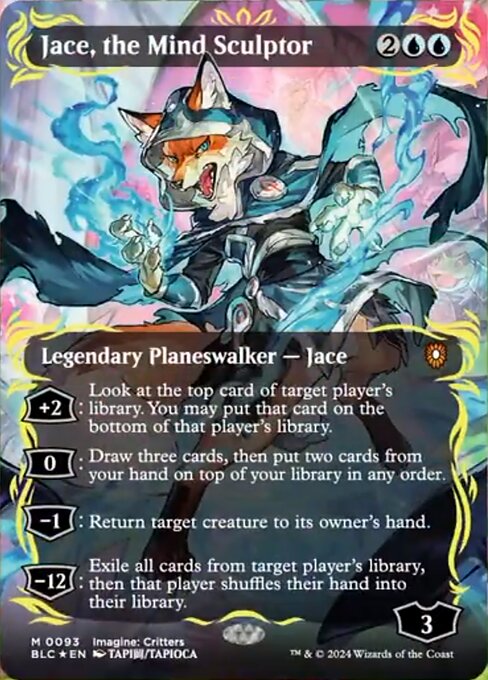
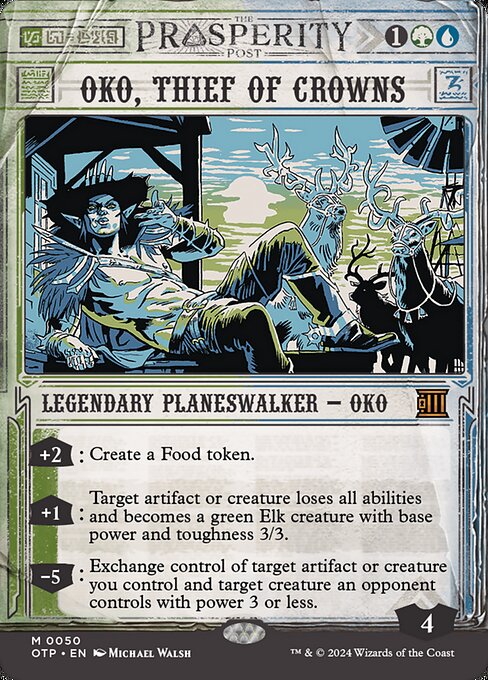
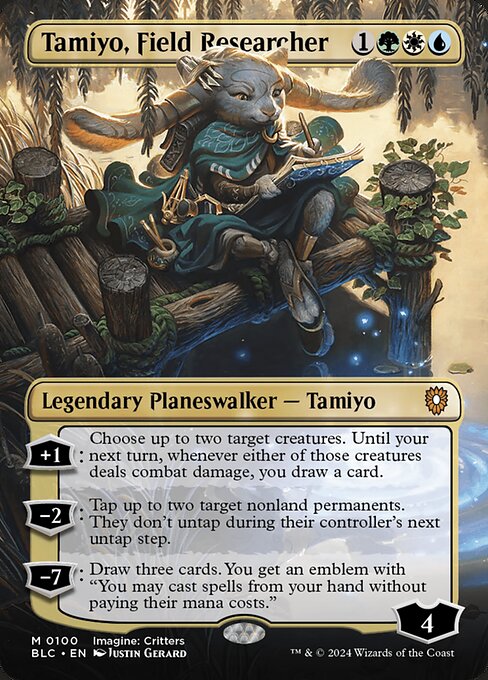
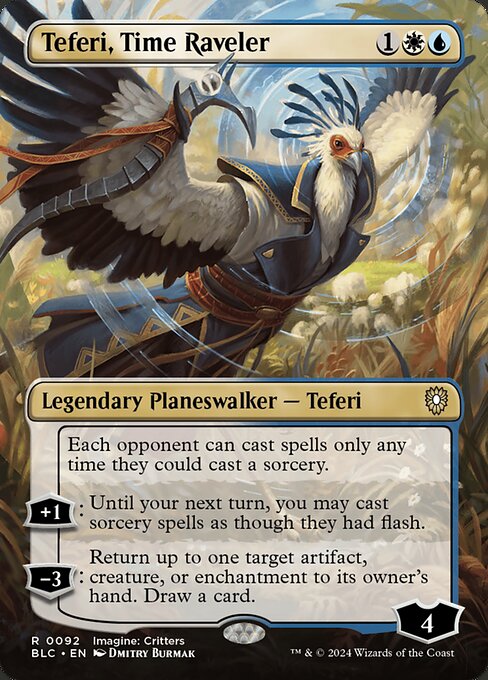
Planeswalkers can also help control the battlefield. You have board wipes attached to Elspeth, Sun's Champion and The Eternal Wanderer. Along with this, Ugin, the Spirit Dragon can exile nonland permanents of specific mana values so long as they have a color. Jace, the Mind Sculptor can control an opponent’s top deck to make sure they don’t draw anything good, and Oko, Thief of Crowns can permanently make a creature or artifact into a 3/3 Elk (including commanders). Tamiyo, Field Researcher and Teferi, Time Raveler can both slow the game down by restricting opponents.
Planeswalker Win Conditions
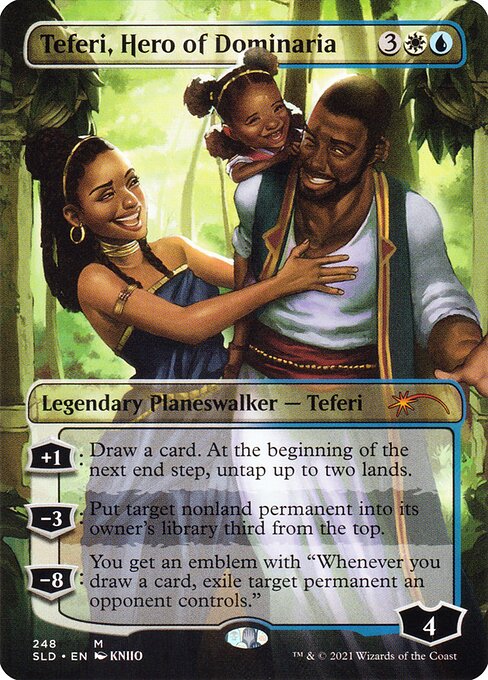
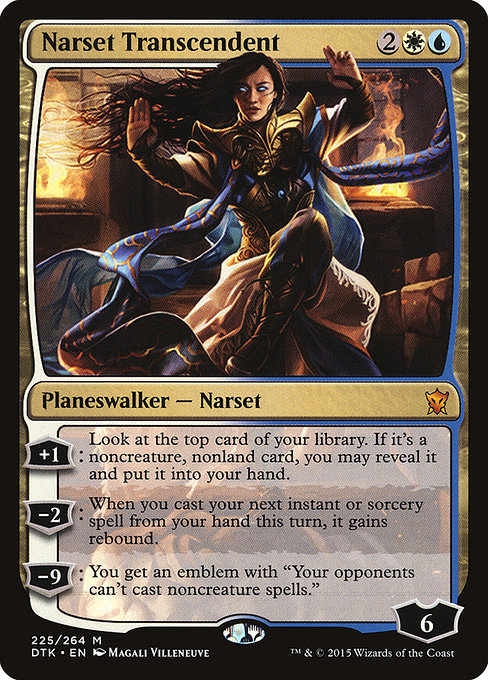
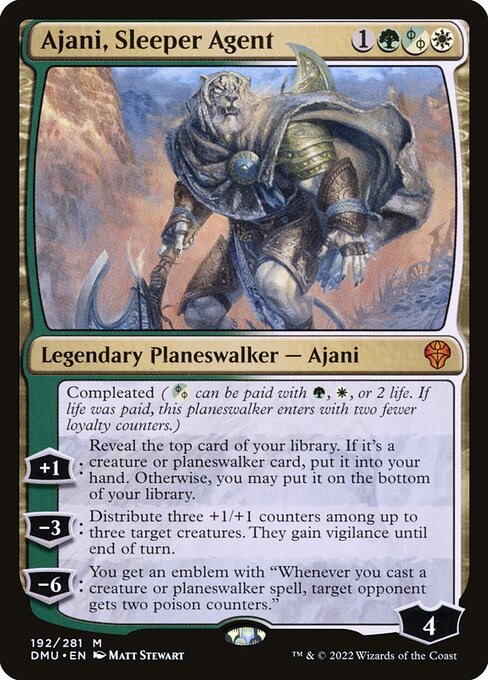
With some of your planeswalkers, their ultimate ability is so good they can often win the game if they resolve. The emblem from Teferi, Hero of Dominaria means any card draw turns into free removal, and since you draw so much in this deck, it’s easy to ensure no one ever controls a permanent but you. Many decks rely on noncreature spells, making Narset Transcendent a game-ender. The easiest win condition is Ajani, Sleeper Agent. Once you get the emblem from the ultimate, you just have to cast planeswalker and creature spells to take someone out of the game with poison counters. Jace, the Mind Sculptor can also make an opponent’s library almost empty, while getting rid of their hand to make them very likely to mill themselves out before they can do anything about it.
If you like the idea of playing a deck more dedicated to poison counters, look no further than an Infect deck. You can learn all about Infect in our mechanic overview here.
Planeswalker Support Cards
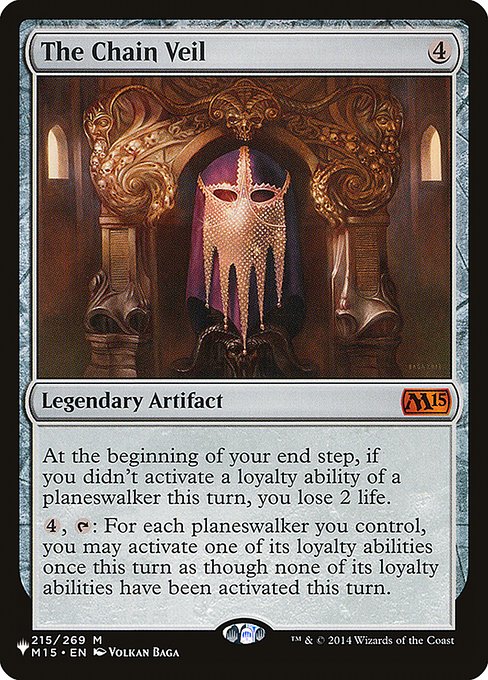
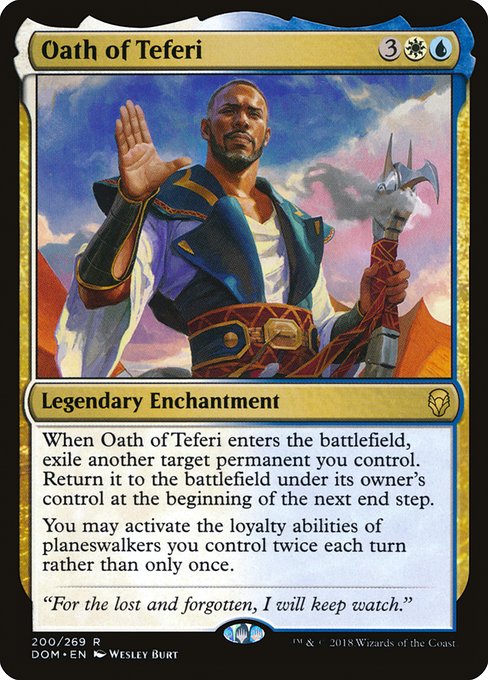
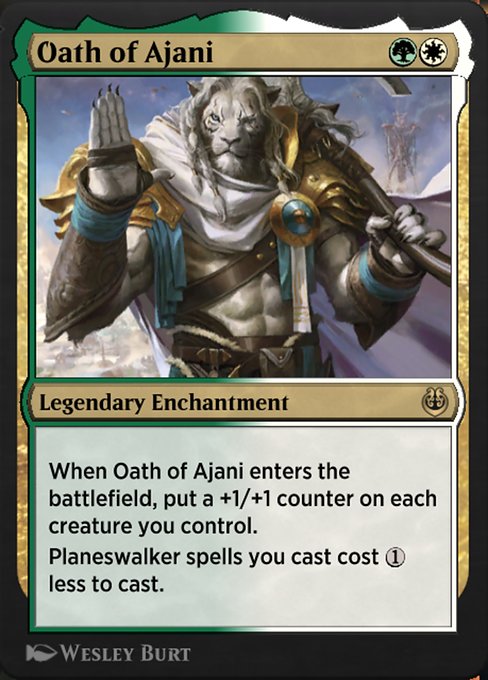
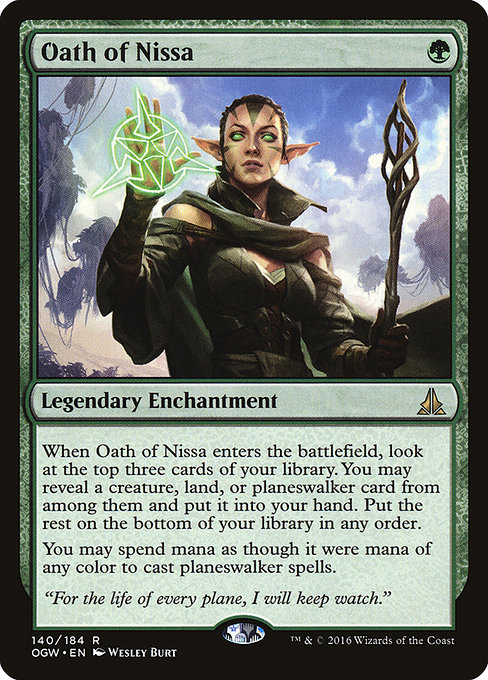
The deck isn’t all planeswalkers, and it has some cards that support the card type. The best are ones that let you activate loyalty abilities more than once. These include The Chain Veil and Oath of Teferi. Speaking of Oaths, Oath of Ajani makes it easier to cast planeswalkers, and Oath of Nissa is mana-fixing specifically for planeswalkers since you don’t need to worry about what colors the mana cost is when casting.
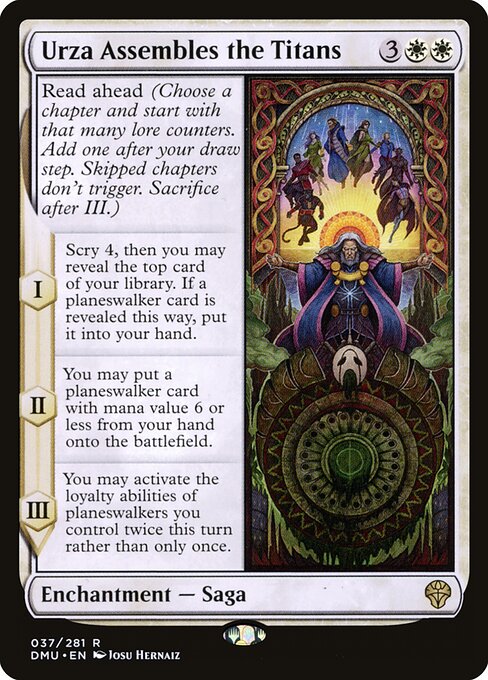
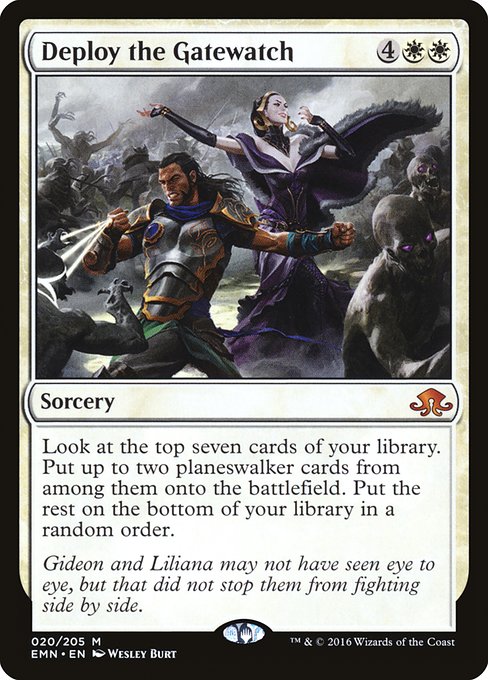
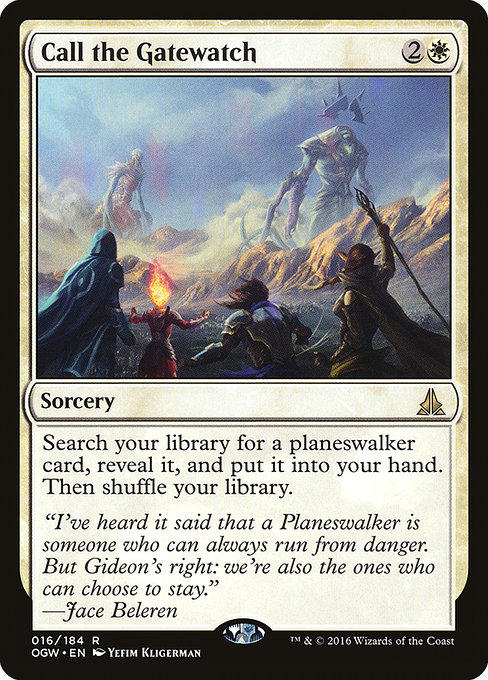
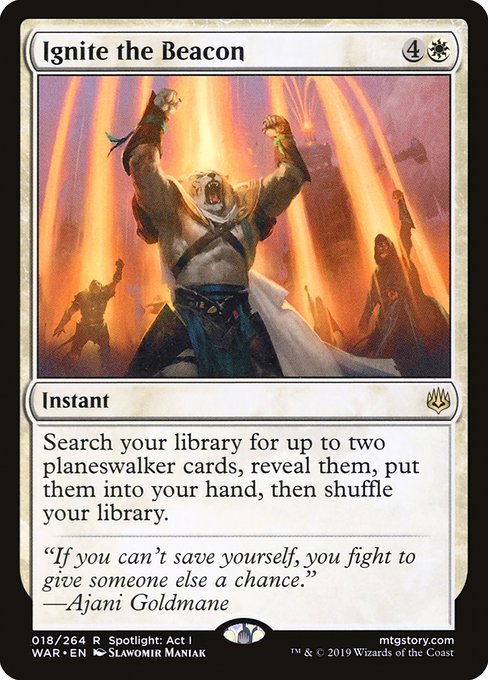
There are a good number of planeswalker tutors as well. Both Urza Assembles the Titans and Deploy the Gatewatch can put planeswalkers directly onto the battlefield. Meanwhile, Call the Gatewatch and Ignite the Beacon both tutor for planeswalkers and put them into your hand. In many cases, one planeswalker can turn the tide of a game, so being able to get to these quickly and consistently is very good.
Proliferation
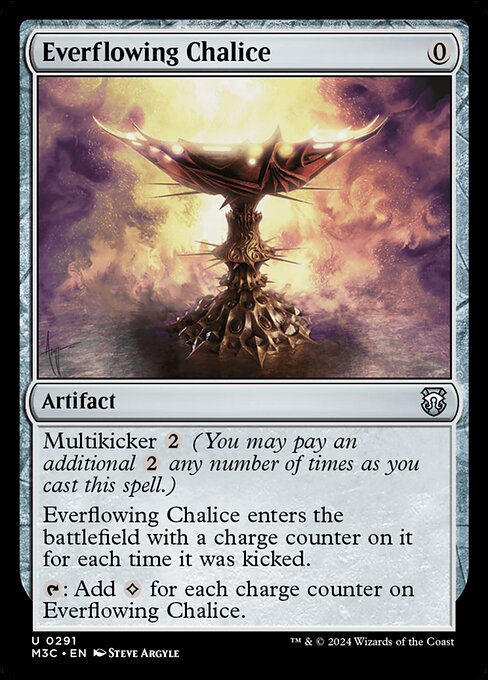
All planeswalkers have counters, so proliferating puts more counters on them. It also gets them onto your commander, so Leela, Sevateem Warrior can get even stronger. And there are a lot of ways to proliferate and proliferate quickly, making a card like Everflowing Chalice even better since it’s easy to add more charge counters onto it each time you proliferate.
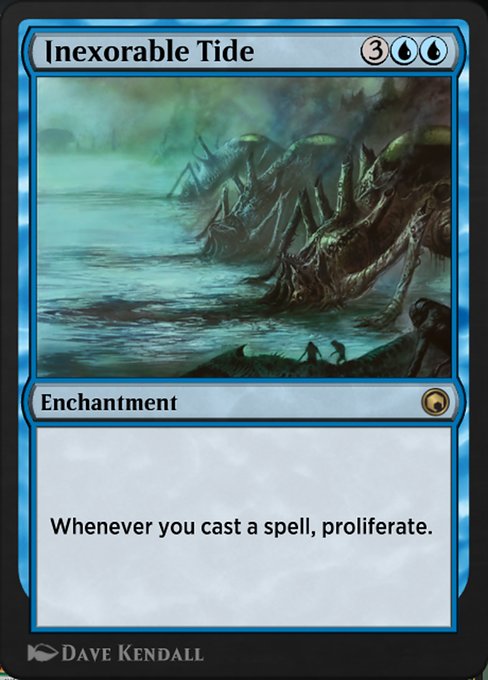
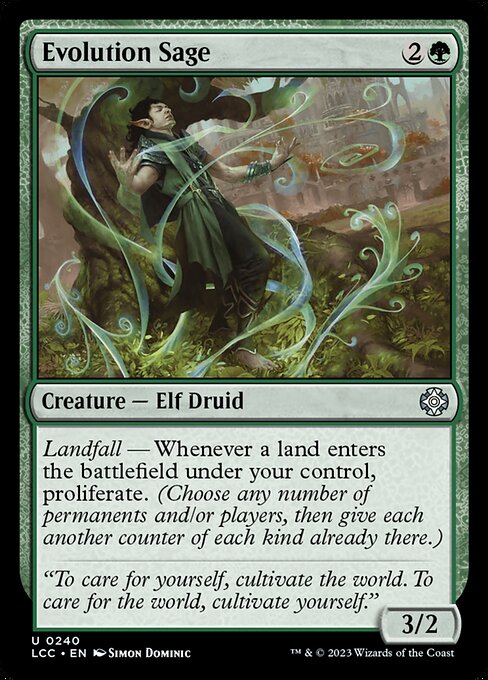
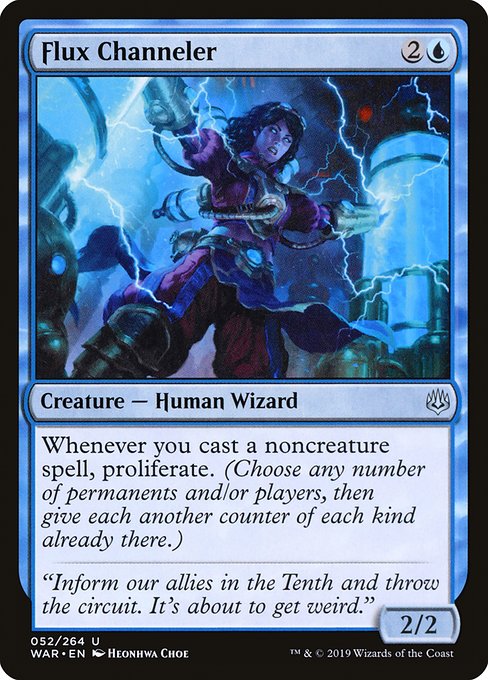
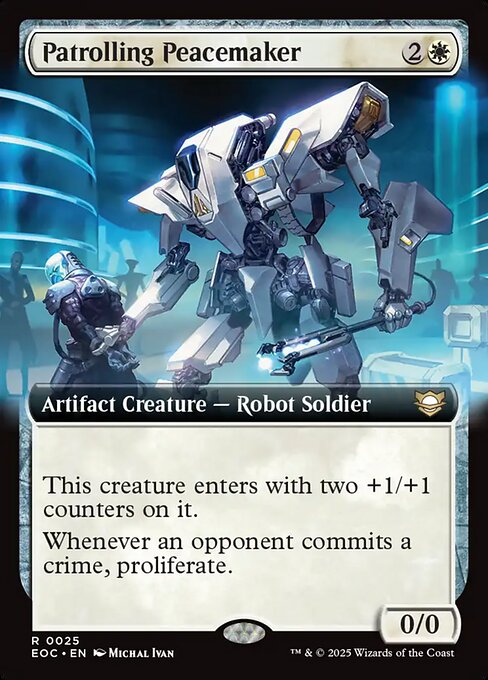
The easiest way to proliferate is with Inexorable Tide, which turns any spells being cast into proliferation. Another easy route is with Evolution Sage as it does it when landfall triggers. Most of your spells are noncreature spells, making Flux Channeler another consistent source of proliferation. Crimes are something opponents commit a lot (meaning they targeted something controlled by someone else). So, Patrolling Peacemaker can make the rounds quickly.
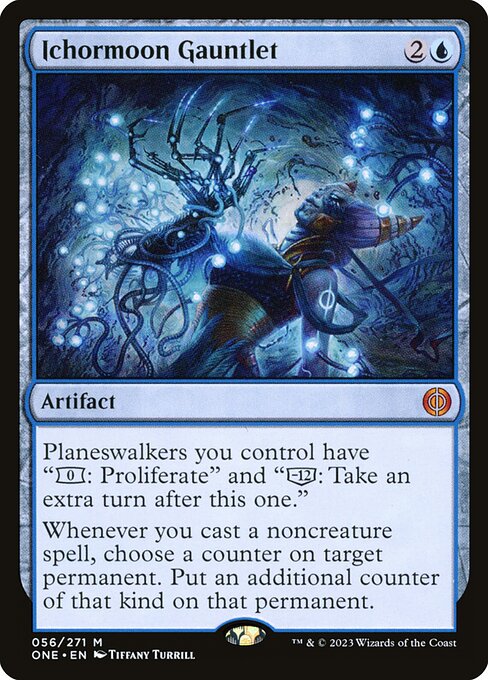
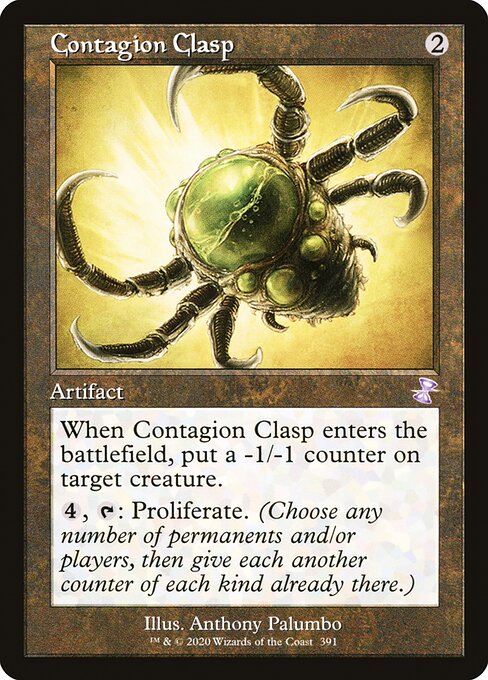
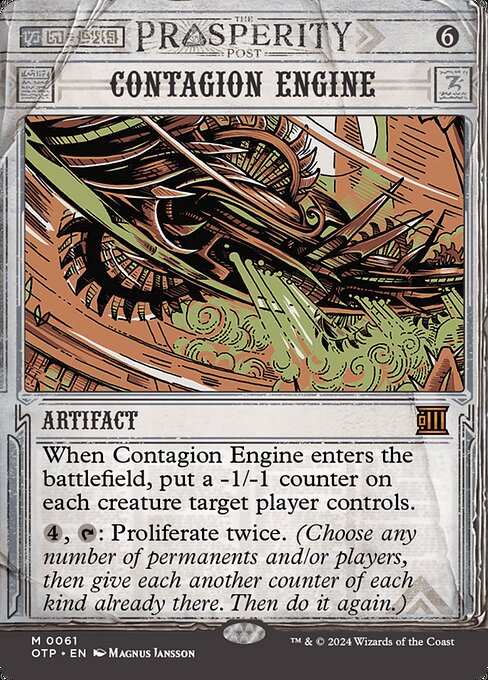
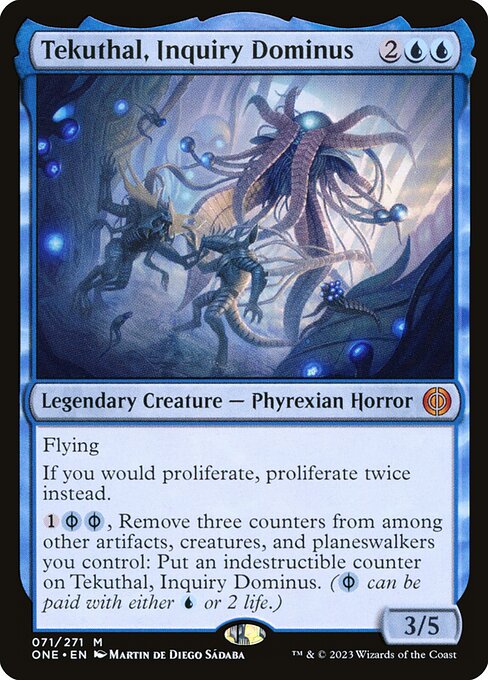
You can give all your planeswalkers the ability to proliferate with Ichormoon Gauntlet. It also turns all noncreature spells being cast into an extra counter on any permanent you want. If you have mana to dump into an effect, Contagion Clasp and Contagion Engine can both be used to proliferate whenever you want. To double up on your proliferation, you have Tekuthal, Inquiry Dominus to keep putting more counters on it.
Stall Cards
The final piece of the puzzle are cards that stall your opponents. While The Second Doctor can make it so your opponents can’t attack you, they have the option of denying the card draw. While they’re likely to draw cards early on, in the late game when they can deal proper damage to you, odds are it’s going to get denied, and your entire battlefield is in danger (as well as your life total).
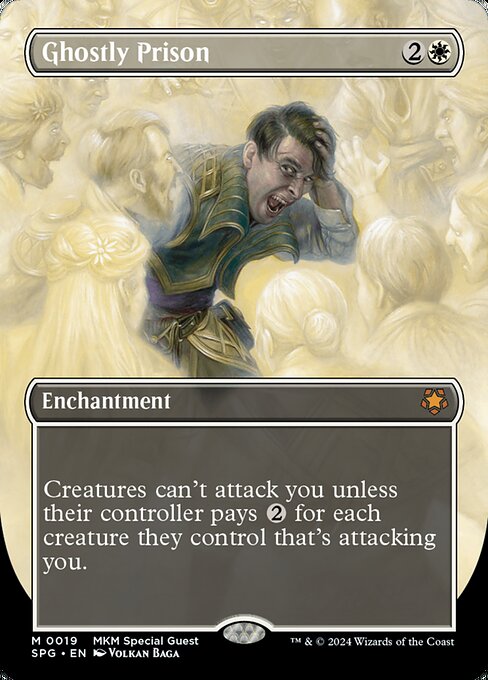
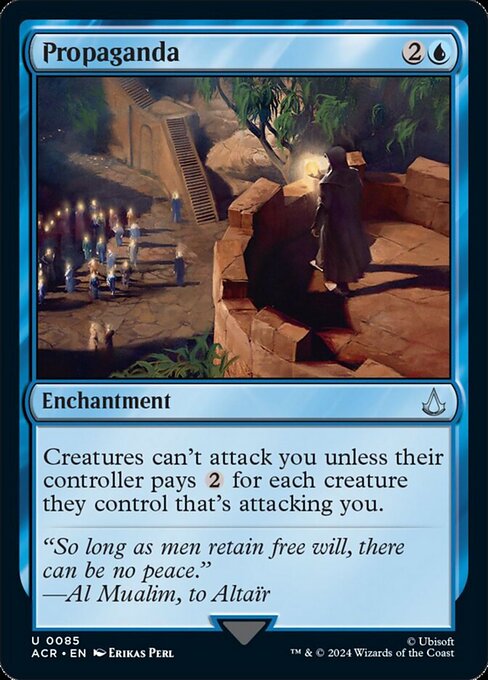
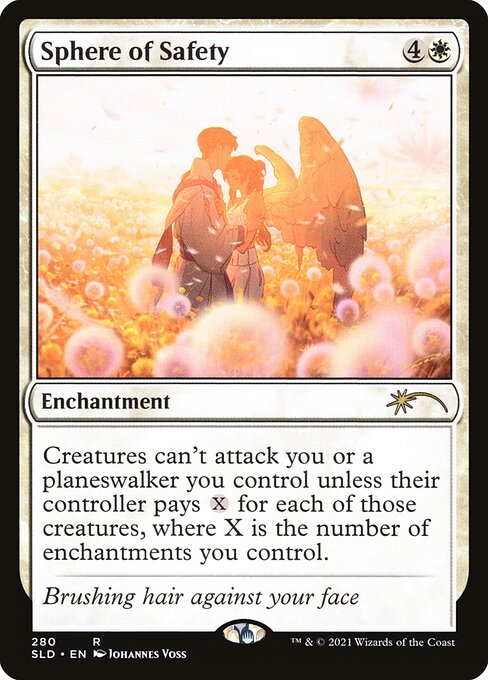
This is where the usual suite of Ghostly Prison, Propaganda, and Sphere of Safety comes in. This taxes opponents for each creature attacking you, requiring them to have access to a ton of mana if they want to attack with a ton of creatures. It is important to note that outside of Sphere of Safety, they can still attack your planeswalkers without having to pay mana.
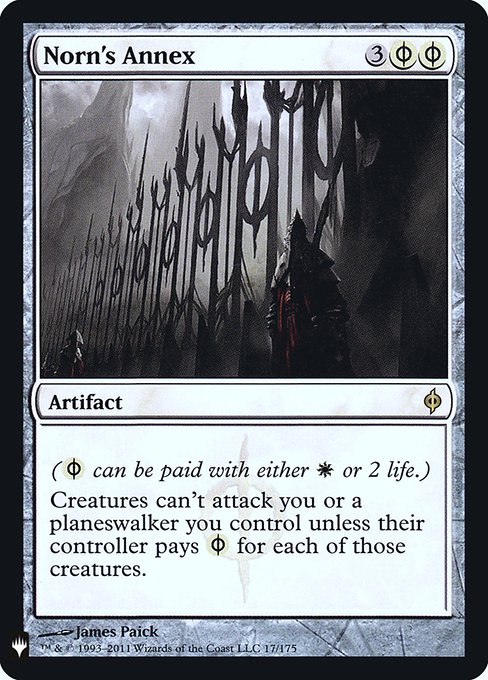
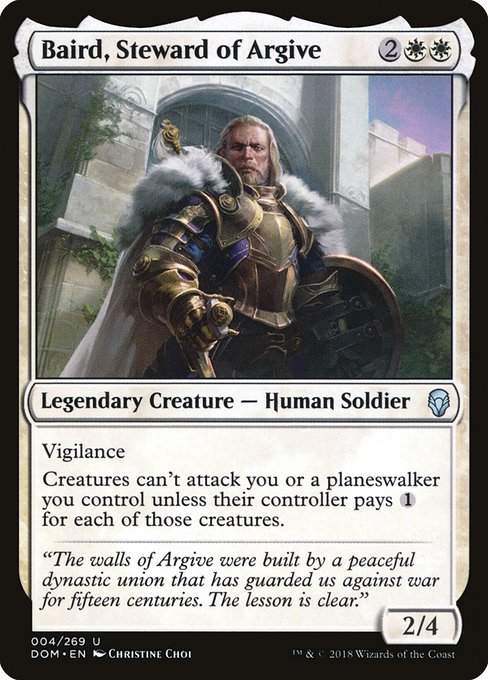
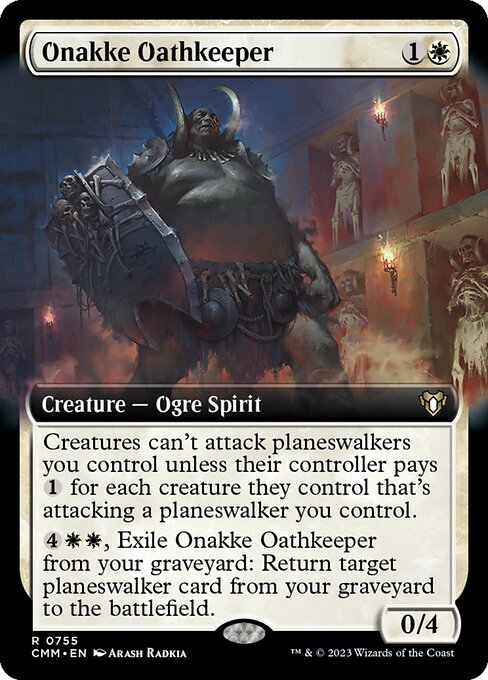
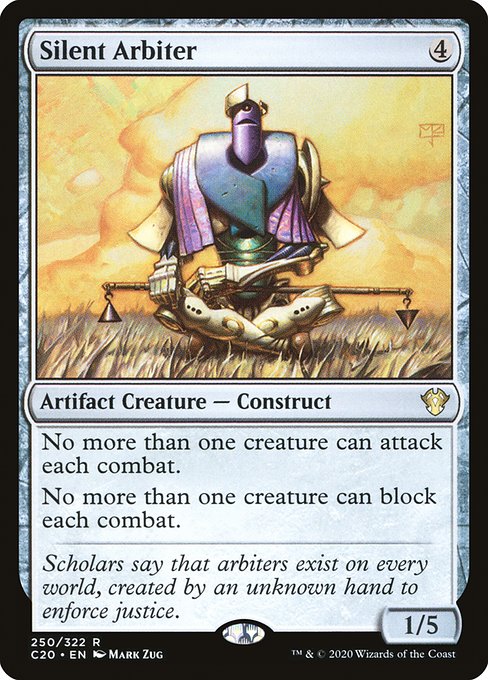
Norn's Annex is very similar, but your opponents can pay life instead of mana. Life is much more of a resource, but in the later stages of the game, they’ll have to think twice about actually paying life or risk getting too low for comfort. This effect is on a creature as well in Baird, Steward of Argive. It doesn’t protect you, but does tax your opponents if they attempt to attack your planeswalkers, so Onakke Oathkeeper is a great defensive card. To really slow the game to a crawl, Silent Arbiter makes it so only one creature can attack and block each combat. Since you don’t actually care about combat, this is only beneficial to you. If anything, it makes it easier for Leela, Sevateem Warrior to get in for damage.
Extra Counters
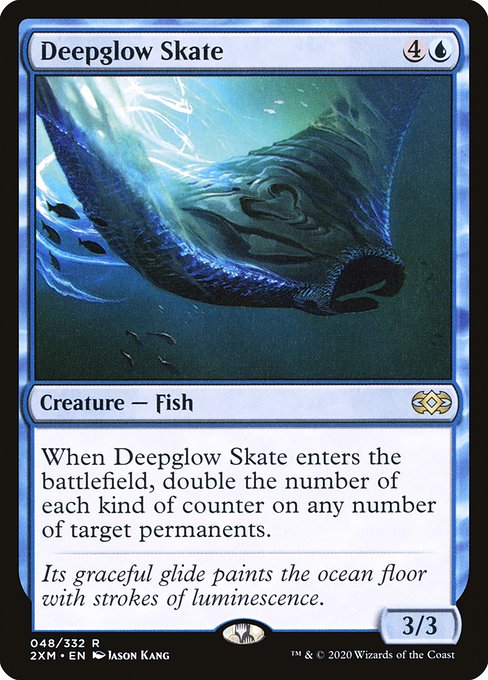
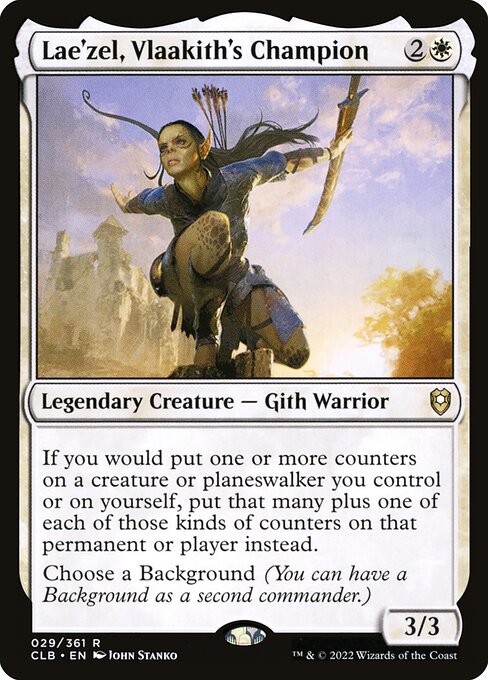
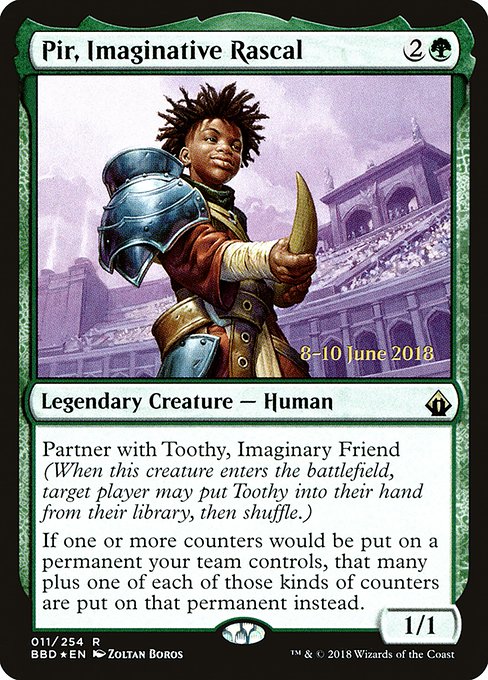
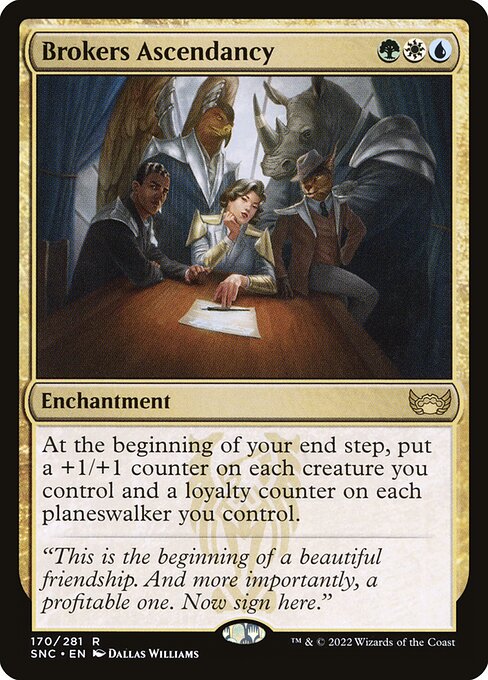
These cards don’t quite proliferate, but do make it so you’re getting extra counters on your permanents (namely, your planeswalkers). You want to use the ultimate abilities of your planeswalkers as soon as you can, making these cards very powerful in the deck. Deepglow Skate is fantastic if you have multiple planeswalkers out, as doubling their counters means you’ll likely be able to use their ultimate abilities right after. It’s a slower build-up, but Lae'zel, Vlaakith's Champion puts an extra counter on your permanents whenever you put one on, with Pir, Imaginative Rascal doing the same. Finally, every end step you can utilize Brokers Ascendancy to spread counters across all your creatures and planeswalkers.
Flow of the Deck
The Second Doctor Superfriends plays like most other Superfriend decks. You’re getting defenses built up and then slapping down planeswalkers while building up their loyalty. Often, you want to cast The Second Doctor as quickly as possible. This makes it so your opponents won’t want to attack you, as you’re supplying them with card draw. It’s also a good idea to get cards like Propaganda and Ghostly Prison onto the battlefield early to ensure your opponents physically can’t attack you to begin with.
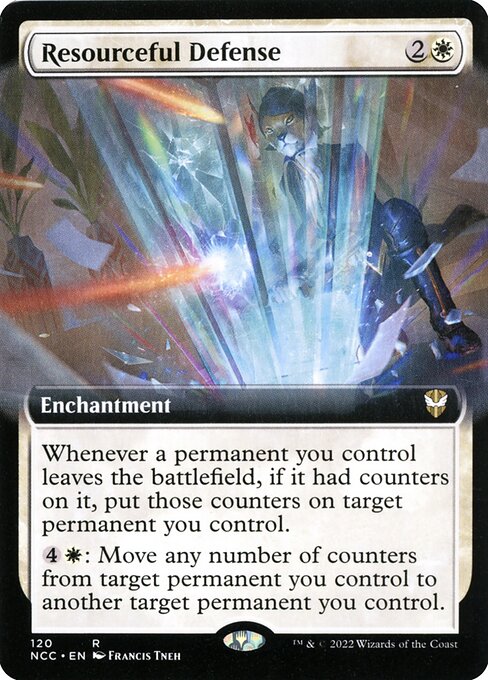
You don’t want to be throwing down your planeswalkers right away; otherwise, they can just get removed before you ever get a chance to use them. A natural downside of Superfriends decks is that there are three other players who can attack into them, making it easy for everyone to team up to take out a planeswalker if it ever gets close to an ultimate ability. Getting down an early Resourceful Defense is helpful, as even if the planeswalker dies, its counters get to live on with another planeswalker. Much of the early game is setting up for the mid to late game, as that’s when you’ll have permanents that’ll be in danger of getting removed. Without setup, you’re just asking to lose your planeswalkers right away.
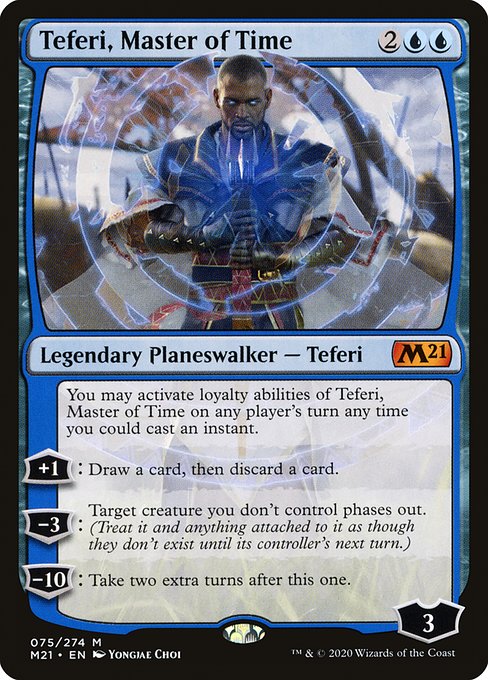
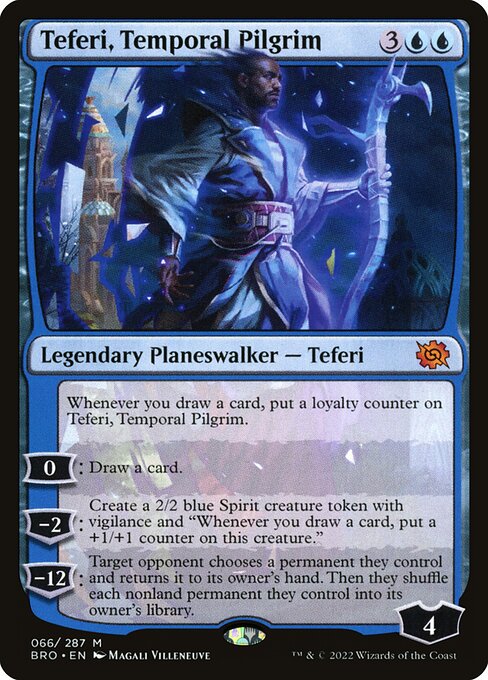
The deck is one is a card advantage machine. You can always draw a card every end step with The Second Doctor, even if your opponents don’t. On top of that, you have planeswalkers like Teferi, Master of Time and Teferi, Temporal Pilgrim to keep the cards coming. So long as The Second Doctor sticks around, you won’t have to even worry about the cards in your hand. The idea is to take your time to set up, playing the friend until it’s time to play the foe.
Winning the Game
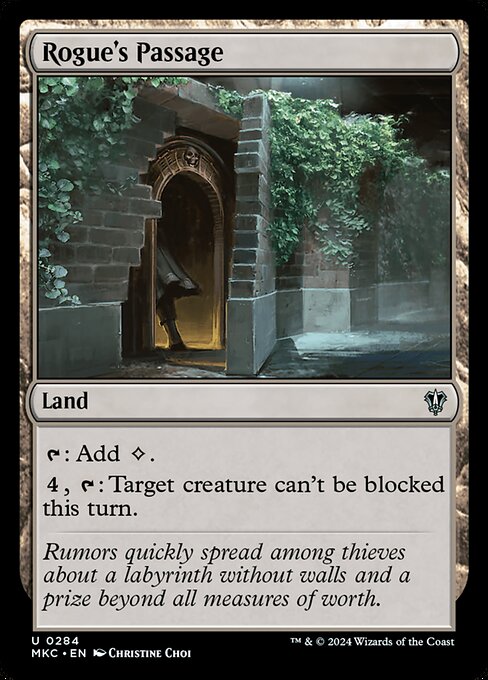
Now that you’ve set up, it’s time to win the game. There are a few different avenues you can go in order to achieve this. The simplest is with Leela, Sevateem Warrior. Its stats grow quickly (especially if players are drawing cards on their own). Once it has a lot of counters, all it takes is one Rogue's Passage to take someone out with commander damage with just one attack. Or if you have any other creatures with a ton of counters, they can win through combat damage. Elspeth, Sun's Champion helps with this if you cast its ultimate.
There are other routes to victory. You can chain multiple extra turn effects if you have Ichormoon Gauntlet on the battlefield. Depending on it, you might take so many extra turns that you can keep looping planeswalker effects until no one can take a turn again. Teferi, Master of Time has its own effect to take two extra turns, which combos well with the other extra turns you can take. Kasmina, Enigma Sage can copy the loyalty abilities that give the most counters, then use these extra turn effects while getting to the counter threshold quickly.
A great card to play early is Ajani, Sleeper Agent, assuming you can get to its ultimate fast before your opponents attack it. This turns all your creatures and planeswalkers into ticking time bombs. All it takes is five being cast, then that takes someone out of the game through poison. You do have a limited amount of creatures and planeswalkers, so you do need to be mindful of that. Make sure to use Ajani, Sleeper Agent‘s effect on each opponent once before repeating targets, as once the poison counters are on, they’re staying on. Then, you can proliferate the counters to get to the ten number needed to take someone out of the game. This is on top of the poison counters you can keep spreading with the emblem to really speed things along.
In Conclusion
The Second Doctor Superfriends is a deck that helps get around the natural downside that Superfriends decks have. You have a card draw engine in the command zone, as well as plenty of stall cards thanks to being in Bant. This allows you to easily push your advantage and work on getting planeswalker ultimates active.
If you like Superfriends, but aren’t interested in The Second Doctor, perhaps you’ll find your next Superfriend commander in our Superfriends archetype overview.