




Commander’s Premise
Mono-black aristocrats decks usually play a patient game: put creatures on the battlefield, sacrifice them for value, and grind opponents down with drain effects while spot removal keeps threats in check. The weakness of the plan is that the commander often sits in the background as a mere payoff. Taborax, Hope's Demise changes that by making every funeral a reason to attack.
It is a three-mana flying Demon Cleric, so it arrives early and threatens damage in the air right away. Whenever another nontoken creature you control dies, it gains a +1/+1 counter, so each sacrifice permanently makes it larger. If the creature that died was a Cleric, you may draw a card at the cost of one life. Once it carries five or more counters, it gains lifelink.
The deck pays life for cards, trades creatures for counters, and then converts the counters into lifelink, so the more it hurts, the safer you become. That loop explains why the commander is worth building around: it rewards the exact actions an aristocrats deck wants to take anyway, while presenting a real clock that opponents must answer.
How it Compares to Others?
This deck is a mono-black aristocrats shell with a Demon and Cleric theme. It sits at an interesting crossroads when set beside the archetypes in our reference reading.
In Pauper Commander Decks: A Common Showcase, the archetype on display is the creature-type deck, which fills the board with one creature type and wins through combat. The overlap is real: both plans lean on creature synergy and look to connect through evasion. The difference is in how the board is used. A typal deck wants its creatures alive and attacking together, while this deck treats its creatures as fuel for one large threat. Typal decks also tend to be narrower in what they can include, whereas an aristocrats shell can use any creature that dies usefully.
Pauper Commander: The Ultra-Budget Format describes a format rather than a single archetype, so the comparison is about shared conditions. A budget-minded, value-focused aristocrats deck fits that setting well, since both reward steady attrition over explosive starts. The difference is that a format overview stays broad, while this list commits to one tightly defined plan.
PDH Ghalta: The TOUGHEST Deck In PDH presents a defender-based swarm that holds the ground and then swings with oversized attackers. Both archetypes flood the board and turn a single threat into a heavy hitter within a few attacks. The contrast is posture: that archetype is defensive until the very end, while this one is reactive and attritional, controlling the table with removal, drain and recursion.
Core Gameplay
The plan is simple to state and rewarding to execute: put cheap creatures on the battlefield, convert them into value, and let Taborax, Hope's Demise absorb every death as permanent growth. Each sacrificed creature leaves behind a card, a counter, or both, so no turn is wasted even when the board looks thin.
Think of the deck as two loops running side by side. The first is sacrifice, where outlets turn creatures into scry, counters and cards. The second is recursion, where spells and abilities pull those creatures back so the cycle can repeat. Bracket 2 tables tend to be slower and more forgiving, so you can usually sculpt the board before committing to a lethal attack.
Early Game
Your first goal is to establish a board presence and smooth your mana. Casting your commander a turn early with Dark Ritual often decides how much value the rest of the game produces.
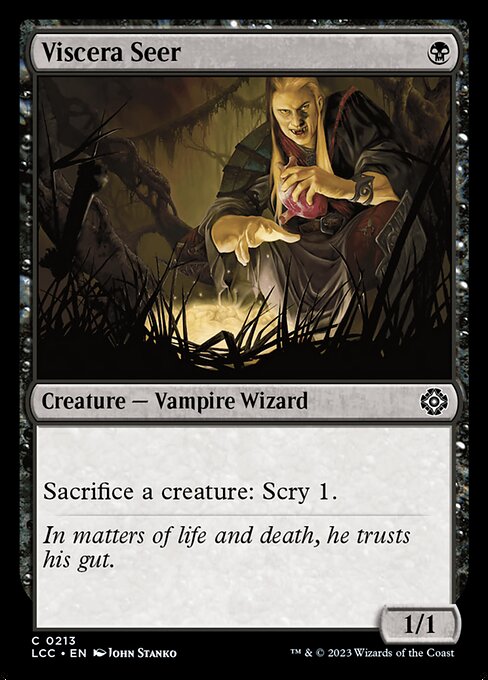
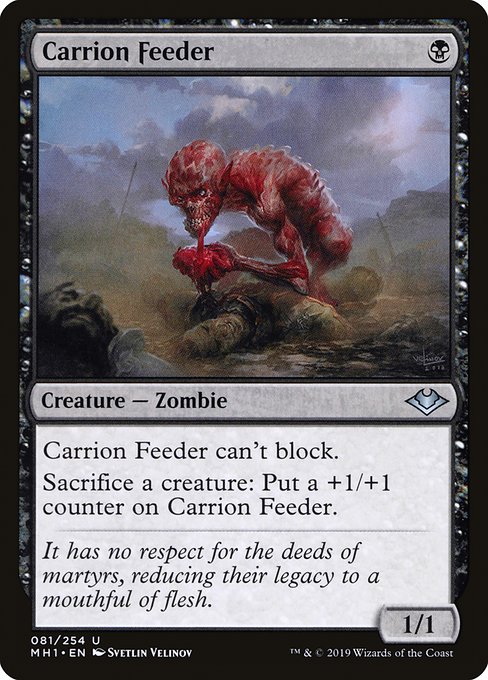
Turn one is the ideal time for Viscera Seer, a one-mana creature that lets you sacrifice any creature to scry. It gives you an outlet the moment you need one. Next, Carrion Feeder arrives as another one-mana body that cannot block but grows with each creature you sacrifice.
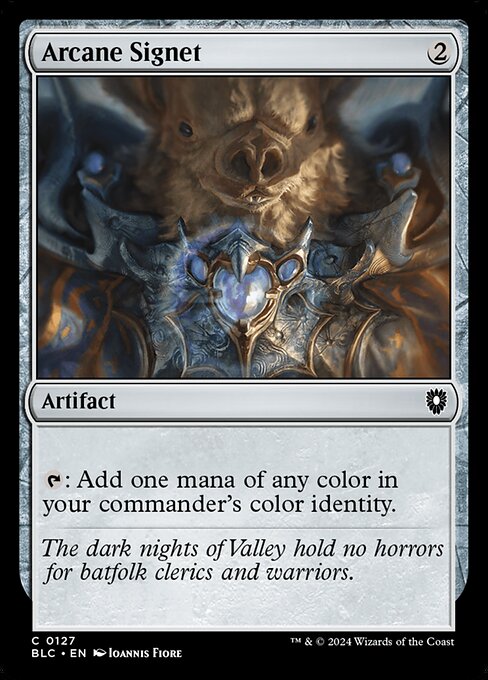
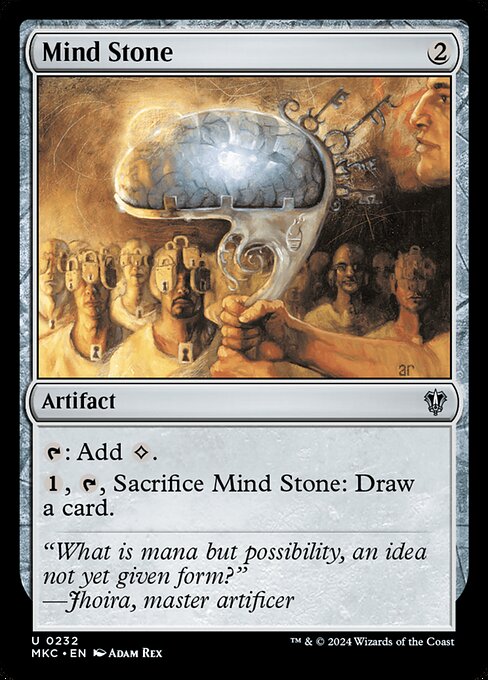
On turn two, develop your mana with Mind Stone or Arcane Signet. Both are two-mana rocks, and Mind Stone can later be cashed in for a card once you no longer need the mana.
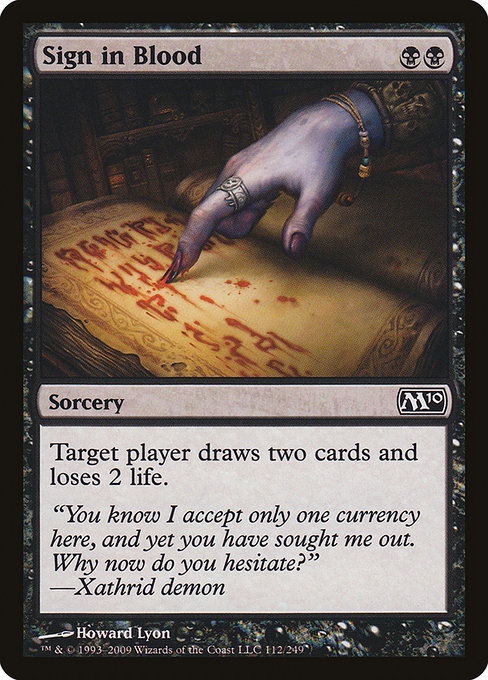
Keep Tragic Slip ready for the first meaningful threat. It costs one mana and is modest on its own, but once any creature has died this turn it becomes devastating removal. When your hand runs low, Sign in Blood refills it at the cost of two life.
Mid Game
The middle turns are where the deck starts to feel like itself. Land Taborax, Hope's Demise once you have a sacrifice outlet ready, because a commander that dies without gaining counters has wasted its best turn. Opponents will often hold removal for it, so an available outlet lets you respond.
Clerics deserve special attention here. Cast Disciple of Malice and Shadowborn Apostle to fill the board with Cleric bodies, since each one that dies while your commander is out can draw you a card in addition to adding a counter. Disciple of Malice can also be cycled early if you need a land drop more than a body.
Use card draw to find the next piece of the puzzle. Night's Whisper and Read the Bones both dig deeper into your library. Watch your life total carefully, because the commander’s draw trigger and these spells all cost life.
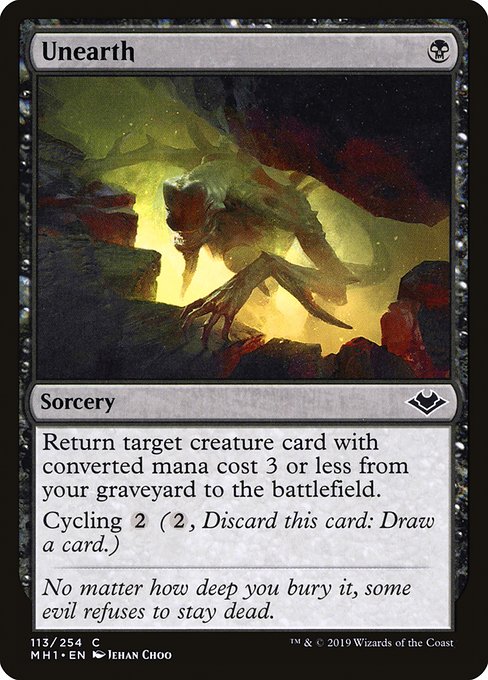
Instants give you flexibility. Hold Corrupted Conviction and Village Rites as emergency tools: when a creature is about to be removed without value, sacrifice it to draw two cards and feed your commander at the same time. Unearth returns a cheap Cleric or outlet from the graveyard to restart the loop. Finally, consider Pestilence once your commander has grown large enough to survive the damage.
End Game
By now your commander should be carrying several counters, and the goal is to reach five so it gains lifelink. Count your sacrifice fodder and available mana, then decide whether you can reach that threshold this turn. Once it has lifelink, you can attack freely in the air, stabilizing your life total while pressuring opponents.
Bring in heavier threats to replace what you have sacrificed. Renegade Demon provides a large Demon body, while Etched Host Doombringer drains opponents when it arrives, a small swing that adds up alongside other sources. First-Sphere Gargantua is a six-mana threat that draws a card on arrival and can return from the graveyard briefly, giving you one more body to sacrifice.
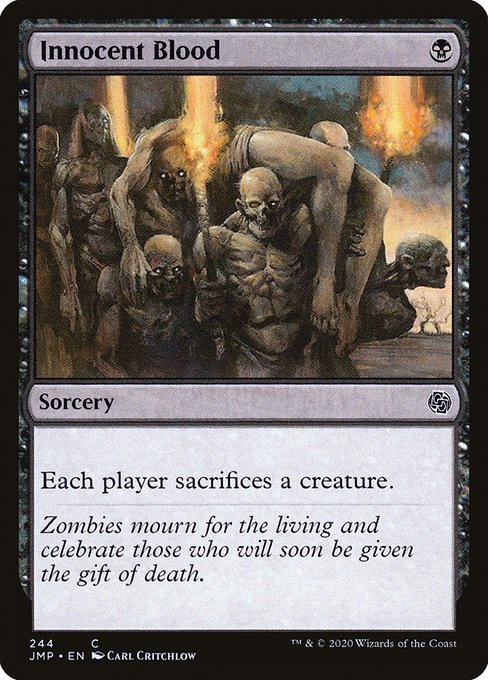
Disruption matters just as much as pressure. Cast Syphon Mind in multiplayer to strip a card from each opponent while you draw several, and fire off Innocent Blood to clear a lone threat, ideally after you have a spare body to give up.
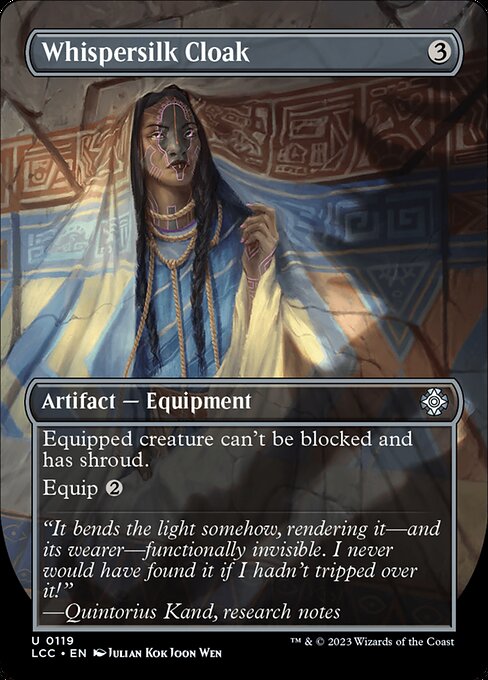
Here is a concrete finishing sequence. With a large commander on the board, protect it with Whispersilk Cloak so it cannot be blocked or targeted. Hold Altar's Reap in reserve: if an opponent tries to remove a key creature in response, sacrifice it, draw two cards, and add another counter to your commander. Then use Pestilence to ping the table while lifelink attacks keep your life total healthy.
Power Analysis and Decklist
Endless Cycle of Suffering sits at Bracket 2, the precon-adjacent tier where games run longer and combos are rare. The deck contains zero Game Changers, so nothing in the list should raise eyebrows at a Bracket 2 table. Its total price is $157.80, which is respectable for a deck stocked with efficient removal and card draw.
The honest tradeoff is life. Nearly every draw spell costs life, the commander’s Cleric trigger costs life, and the drain-heavy finishers can hurt you too. Against fast aggressive starts, the list can stumble before Taborax, Hope's Demise reaches lifelink.
Decklist highlights: Taborax, Hope's Demise leads a package of sacrifice outlets, Demons, removal, card draw, mana rocks and a small set of utility lands, as detailed in the sections that follow.

Creatures (36)
Instants (10)
Sorceries (9)
Artifacts (7)
101 Cards
$127.09
Deep Analysis
The intent of this build is straightforward: turn a pile of cheap, replaceable creatures into permanent growth and card advantage, then close the game with a large flier and a well-timed drain. Every slot either makes a creature die usefully, brings it back, or protects the plan while it runs.
The mana package supports that goal. Leaden Myr gives a black-producing body that doubles as fodder, while Commander's Sphere is a three-mana rock that can be sacrificed for a card when it is no longer needed.
Protection is lighter than in many aristocrats lists, and that is deliberate. Supernatural Stamina lets a threatened creature die and come back, which triggers your commander and keeps a body on the board in one motion.
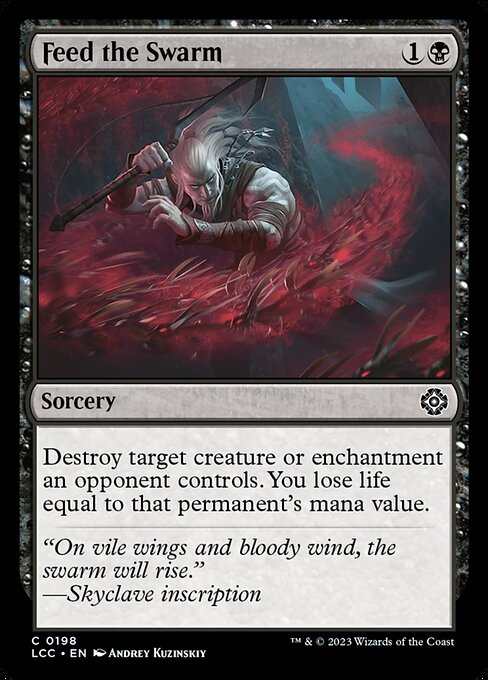
Removal covers the other half of the job. Defile scales with the Swamps you control, so it shines in a mono-black shell. Victim of Night answers most creatures cleanly (with a few creature-type exceptions). Feed the Swarm handles creatures and enchantments but costs life equal to the target’s mana value, so check your total first.
The lands add quiet utility. Bojuka Bog shuts off graveyard strategies, and Witch's Cottage can put a fallen creature back on top of your library. Barren Moor can be cycled late to smooth out flood.
Two double-faced entries, Ecstatic Awakener and Hezrou, belong to the Demon package. Because their exact text is not confirmed here, treat them as value bodies that feed your commander when they die, and check the current card text before you play them.
Creatures
Creatures are the heart of this deck, serving as fodder, payoffs and finishers all at once. Every body either feeds your commander when it dies or threatens to close the game if it survives.
Sacrifice Outlets and Death Triggers
These cheap bodies turn the plan on, giving you ways to cash in creatures and keeping the Clerics’ card flow moving.
- Costing one mana, Viscera Seer is a Vampire Wizard that scries whenever you sacrifice a creature.
- Acting as a hungry one-drop, Carrion Feeder grows with each sacrifice and doubles as a threat.
- Protection from white and a cycling option make Disciple of Malice a flexible Cleric.
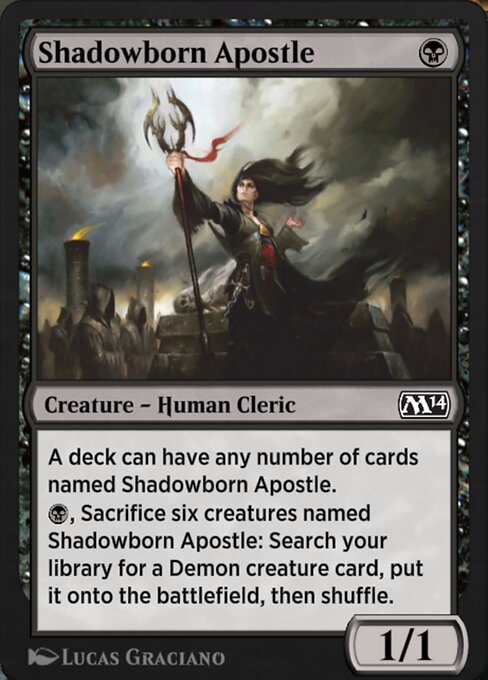
- Another one-mana Cleric, Shadowborn Apostle, is cheap fodder that can draw a card when it dies beside your commander.

Demons and Value Bodies
Larger bodies replace what you have sacrificed, adding drain, card draw and Demon synergy to the late game.
- Ecstatic Awakener is a double-faced value body who functions as a sac outlet before turning into a 4/4 demon, worth checking before play.
- Likewise, Hezrou works as an adventurous boardwipe or as a powerful demon who ironically protects your creatures by reducing the power of any creature that dares to blocks yours.
- A large Demon, Renegade Demon supplies a body to sacrifice or swing with.
- Draining opponents on arrival, Etched Host Doombringer is a Phyrexian Demon that turns the clock to your favor when enters.
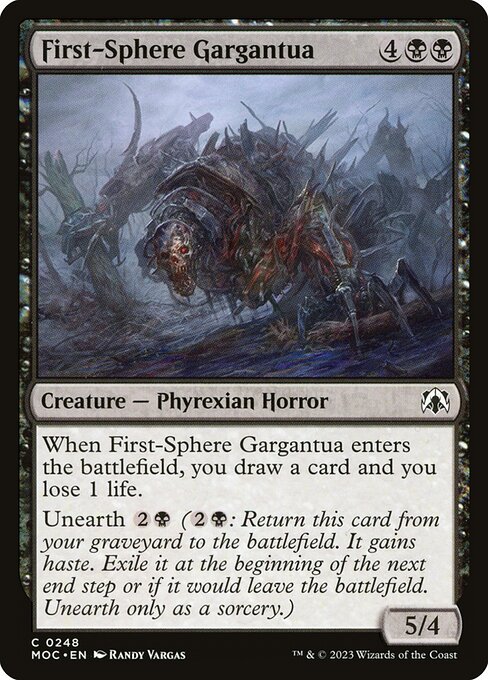
- At six mana, First-Sphere Gargantua draws a card on entry and can return briefly from the graveyard.


Ramp
Mana creatures keep the curve smooth while doubling as sacrifice fodder.
- Tapping for black mana, Leaden Myr is a two-mana artifact creature that accelerates your mana base, on pauper mono-black its a powerful ramp dork.

Instants
Instants give the deck its reactive edge. They answer threats, turn sacrifices into cards, and protect key creatures, often at the moment an opponent thinks they have won an exchange.
Sacrifice Support and Protection
These spells convert doomed creatures into cards and keep your board resilient.
- Requiring a sacrifice, Altar's Reap is a two-mana spell that draws two cards, ideal in response to removal.
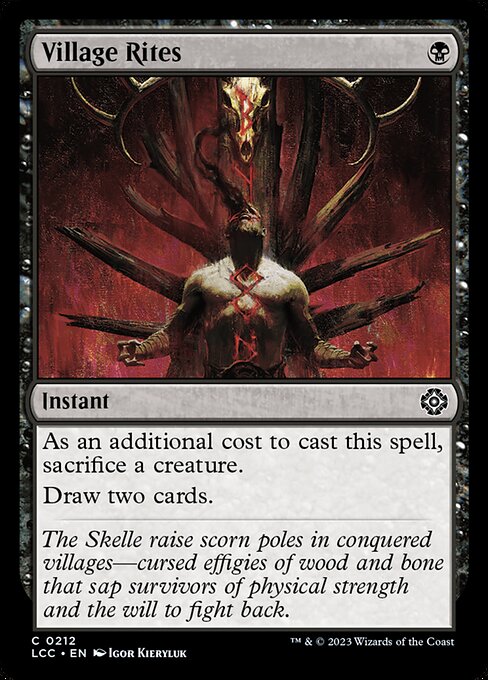
- Working the same way, Village Rites costs one mana and refills your hand cheaply.
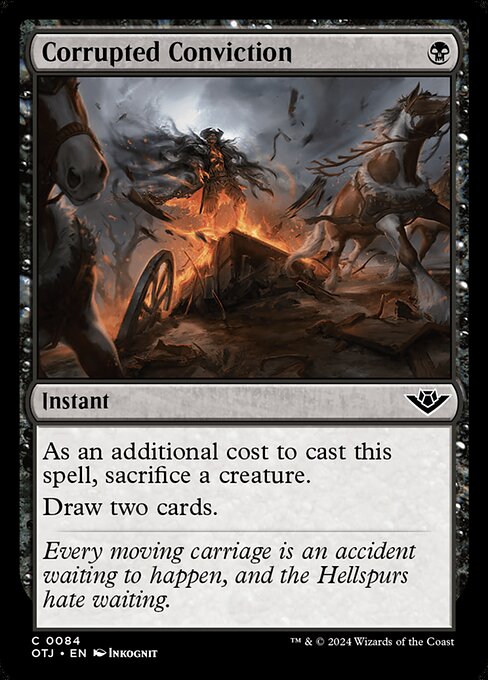
- Another sacrifice cantrip, Corrupted Conviction costs two mana and also draws two.
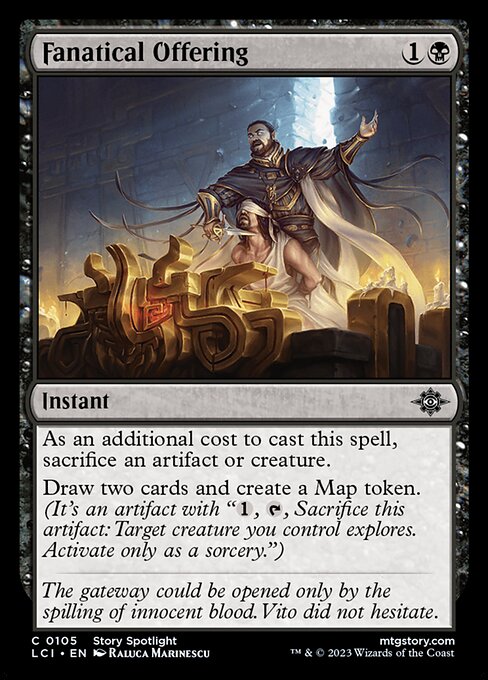
- Letting you sacrifice an artifact or creature, Fanatical Offering draws two and creates a Map token.
- Granting +2/+0 and a return-on-death effect, Supernatural Stamina brings a creature back after it triggers your commander.


Removal
Cheap interaction keeps early threats from running away while you build your board.
- Shrinking a creature by one, Tragic Slip becomes a huge penalty once any creature has died this turn.
- Scaling with your Swamps, Defile is a two-mana answer that improves as the game goes on.
- For two mana, Victim of Night destroys most creatures, aside from Vampires, Werewolves and Zombies.


Ramp
Burst mana lets you leap ahead of the curve.
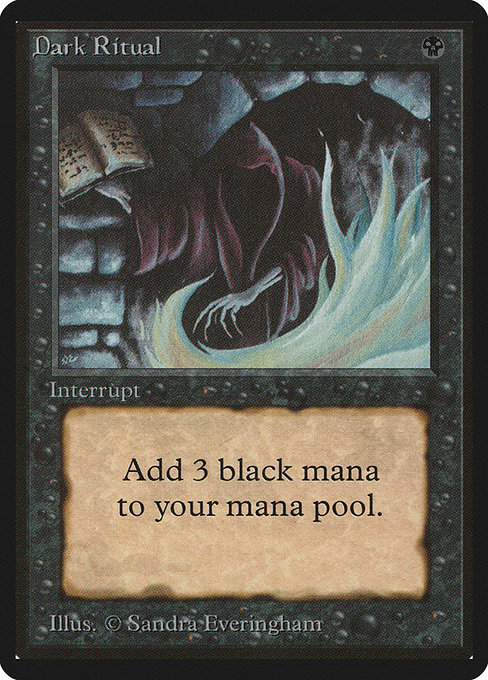
- Adding three black mana, Dark Ritual powers out your commander or a pair of plays a turn early.
Sorceries
Sorceries supply the deck’s slower, more deliberate plays: refilling the hand, clearing the table and punishing opponents. Because they cannot be cast at instant speed, plan them around the sacrifices you have already made.
Card Advantage
Black’s draw spells keep the sacrifice loop supplied with fresh bodies and answers, at a life cost you will need to watch.
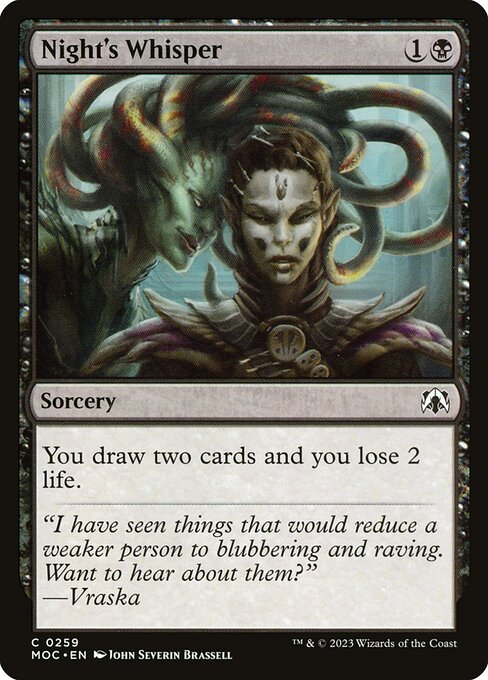
- Drawing two cards for two mana, Night's Whisper is the cleanest refill in the deck, though it costs you two life.
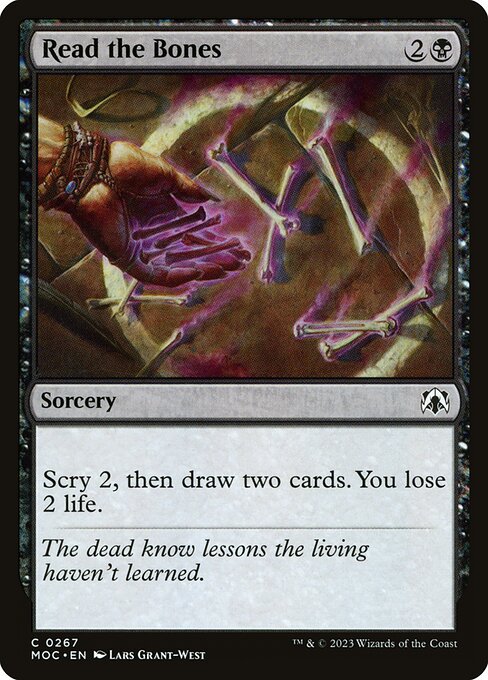
- A three-mana spell, Read the Bones lets you scry two before drawing two, at the same life cost.
- Because it targets a player, Sign in Blood can also give an opponent cards, but you will usually aim it at yourself.
Removal and Board Wipes
These spells clear the way when a single threat or a crowded board threatens your plan.
- Costing one mana, Innocent Blood forces each player to sacrifice a creature, so cast it when you have a spare body.
- Handling an opposing creature or enchantment, Feed the Swarm is a two-mana answer that charges you life equal to the target’s mana value.
Drain and Recursion
Here the deck turns the late game into a grind, stripping opponents of resources while rebuilding its own board.
- Making every other player discard a card, Syphon Mind is a four-mana spell that draws you one card for each discard.
- Returning a creature with mana value three or less from your graveyard to the battlefield, Unearth costs one mana and can be cycled if no target is available.

Artifacts
Artifacts give the deck consistency and resilience. They accelerate you toward heavier plays and keep your key threat safe, all without taking up creature slots.
Ramp
Mana rocks let you deploy multiple spells in a turn, which matters when you want to sacrifice and recast in the same breath.
- A two-mana rock, Arcane Signet taps for black in this deck, giving you a reliable turn-two play.
- Tapping for colorless mana, Mind Stone can later be sacrificed to draw a card, so it never becomes dead late.
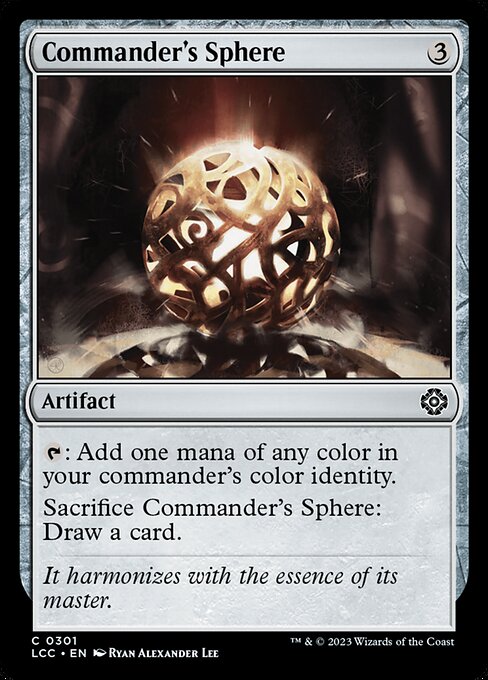
- Costing three mana, Commander's Sphere taps for black and can be sacrificed to draw a card, making it both ramp and fodder.
Protection
A single piece of defense helps your commander survive long enough to take over.
- Making the equipped creature unblockable and giving it shroud, Whispersilk Cloak is a three-mana Equipment that turns your commander into a clock opponents cannot interact with directly.
Enchantments
Enchantments are the deck’s quietest category, yet the single entry here carries a large share of the finishing power. Rather than adding to the board, it reshapes how every creature and life total behaves.
Board Control and Drain
This subcategory covers permanents that punish the whole table at once. Because the effect hits everyone, timing and life totals matter as much as the card itself.
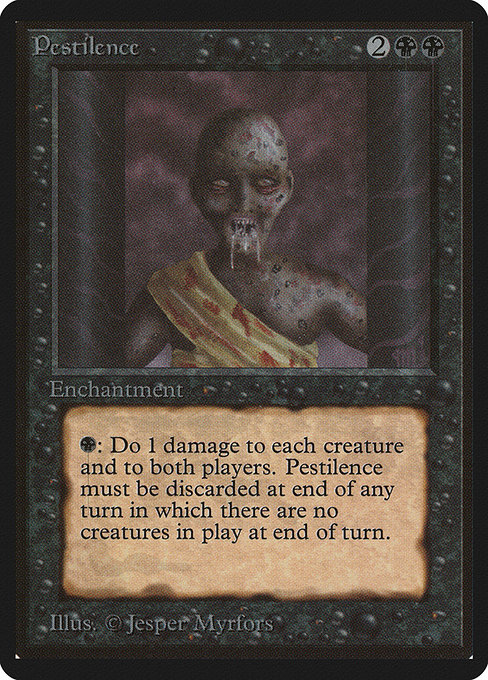
- Sitting at four mana, Pestilence lets you pay one black mana at a time to deal one damage to each creature and each player. Every creature it kills while your commander is out feeds a counter to it. It is sacrificed at the beginning of an end step if no creatures remain on the battlefield, so always leave a durable body behind.
Lands
Lands in this list do more than produce black mana. A few utility lands handle card flow, graveyard hate and recursion without costing a spell slot.
Utility Lands
These three lands each enter tapped in most situations, so sequence them on turns where you have no better play. In exchange, they offer flexibility that basic Swamps cannot match.
- Cycling for one black mana, Barren Moor taps for black when you need a land drop and can be discarded late in the game to draw a card.
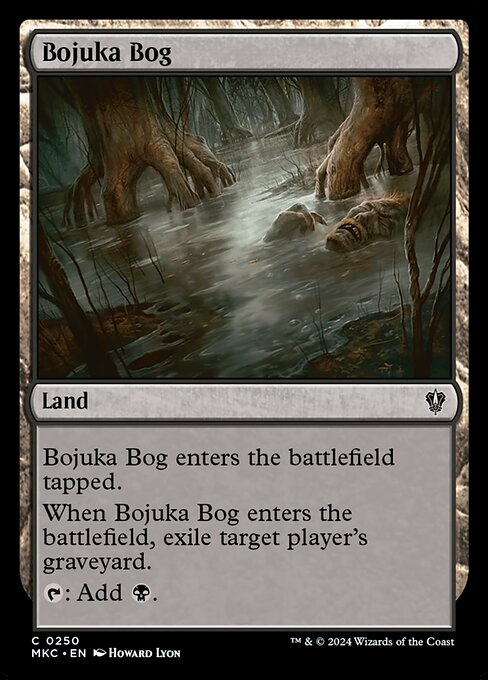
- Exiling a target player’s graveyard when it enters, Bojuka Bog shuts down opposing recursion plans, and you can hold it until someone tries to abuse their graveyard.
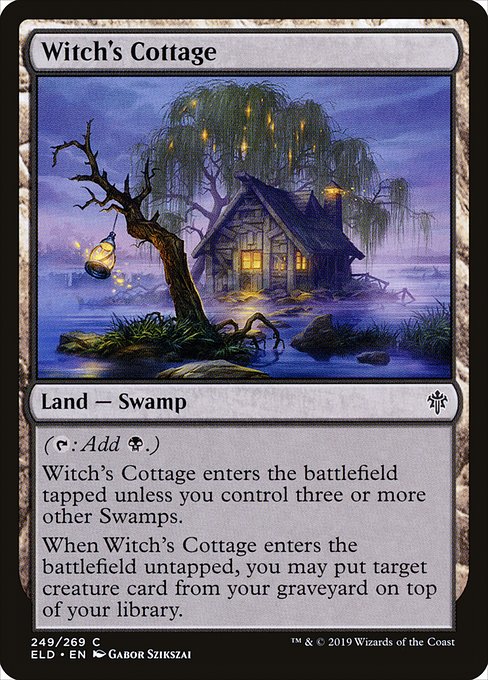
- Counting as a Swamp, Witch's Cottage enters untapped if you control three or more other Swamps, and when it does you may put a creature card from your graveyard on top of your library.

Closing Words
Taborax, Hope's Demise turns the most painful part of a sacrifice deck into its greatest strength. Every funeral adds a counter, every Cleric that falls can refill your hand, and once the lifelink switches on, the table has to reckon with a flier that heals while it hits.
So bury your fodder, recur your regrets, and let your commander feast on the grief.