



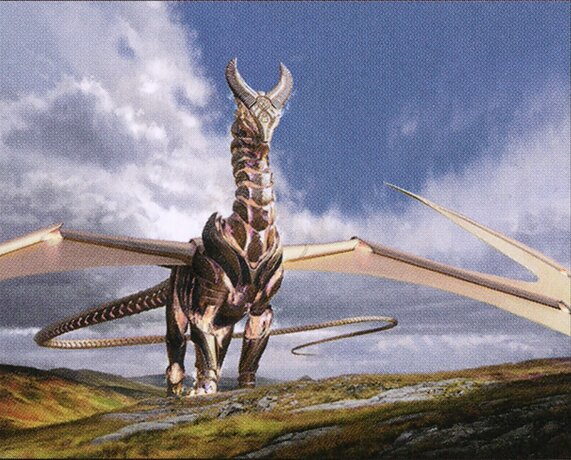

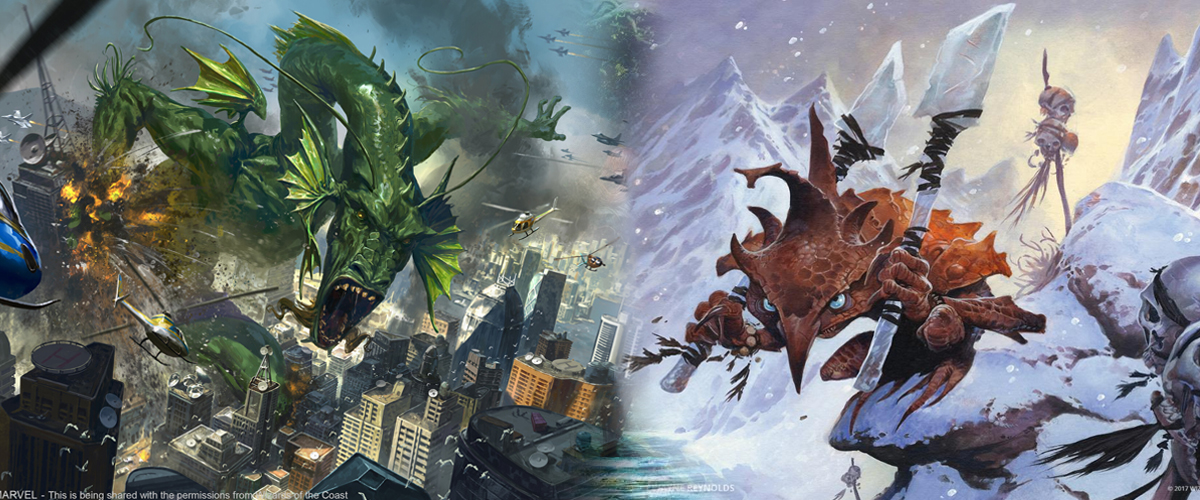
Few strategies in Commander can generate as much immediate salt as Land Destruction. Destroying a creature usually feels like an expected part of the game. Countering a spell might be frustrating, but it is temporary. Destroying a land, however, can prevent an opponent from participating in the game at all, especially when several lands are removed in succession.
That reputation has made Land Destruction one of Commander’s most controversial strategies. It can be miserable when used without a clear path toward ending the game, but it can also be a powerful way to answer greedy manabases, explosive utility lands, and decks that have become too far ahead to handle through conventional removal.
The two decks showcased here embrace that philosophy in very different ways.
Both are Mono-Red, both are willing to destroy lands, and both are designed to make rebuilding difficult. But Fin Fang Foom and Zo-Zu the Punisher approach the strategy from different directions. Fin Fang Foom wants to target specific lands and artifacts, turning those targeted spells into additional value through his ability. Zo-Zu is much more interested in punishing the entire table for having and playing lands, with mass land destruction and damage effects that make every attempt to recover painful.
The result is a fascinating contrast between precision and punishment. So let’s dive in and explore these 2 decks:
Deck #1: Fin Fang Foom
Land destruction is usually at its most controversial when it simply prevents players from playing the game. Fin Fang Foom offers a different approach. Rather than making the destruction of lands the entire point of the deck, this commander turns targeted land destruction into an engine for generating value.

That distinction defines the deck. It certainly contains the familiar red land-destruction package: Stone Rain, Molten Rain, Pillage, Melt Terrain, Roiling Terrain, Wake of Destruction, and Boom // Bust, but these cards aren’t included simply because destroying lands is powerful. They are ways of deliberately targeting lands to take advantage of what Fin Fang Foom provides.

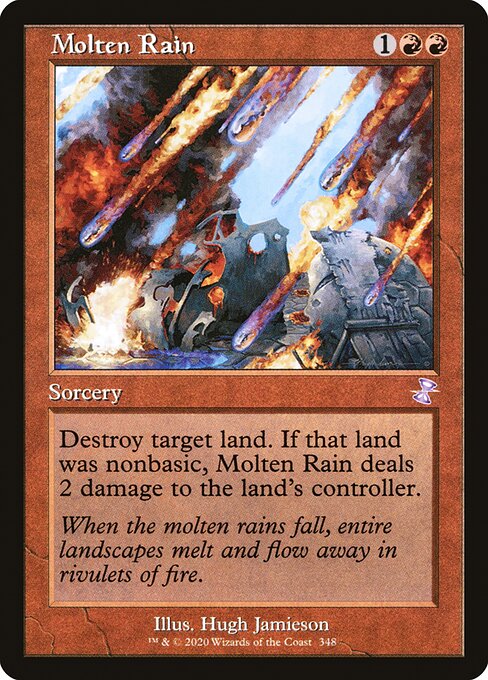
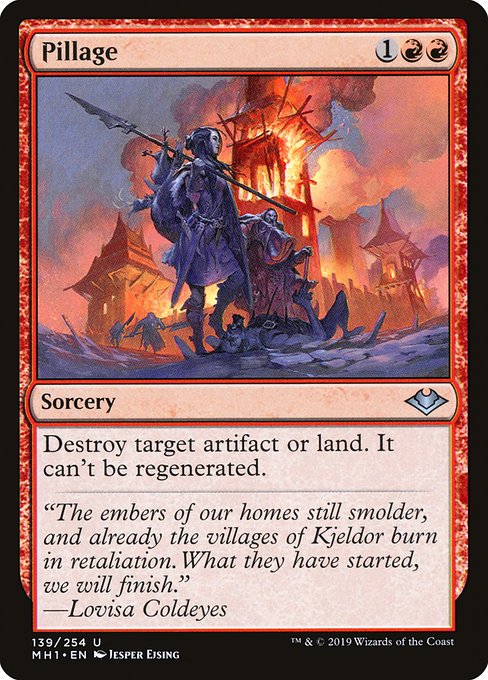
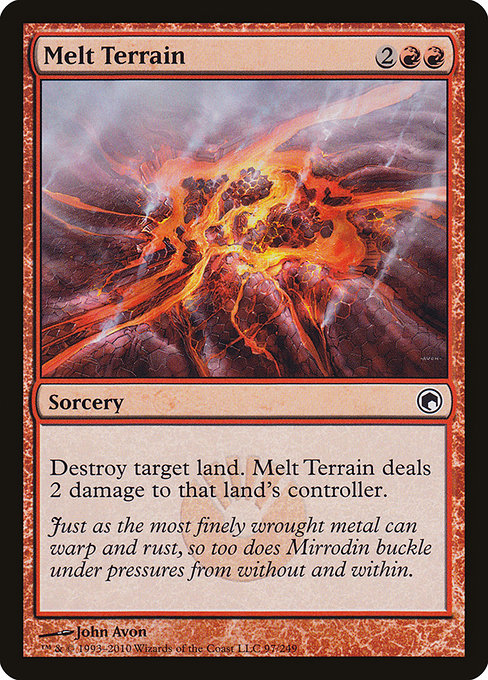
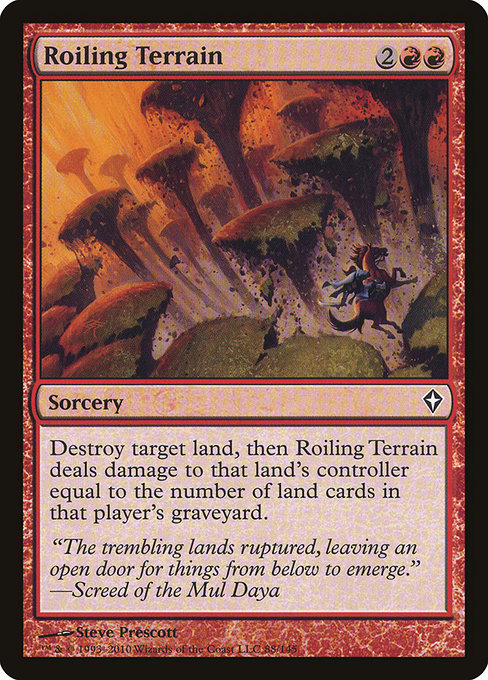
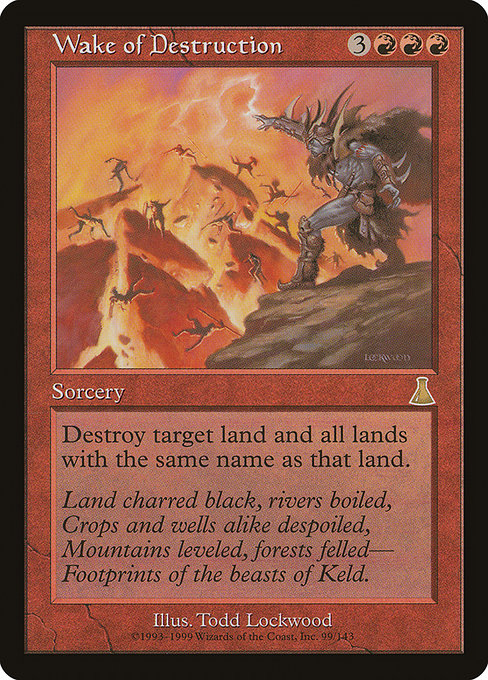
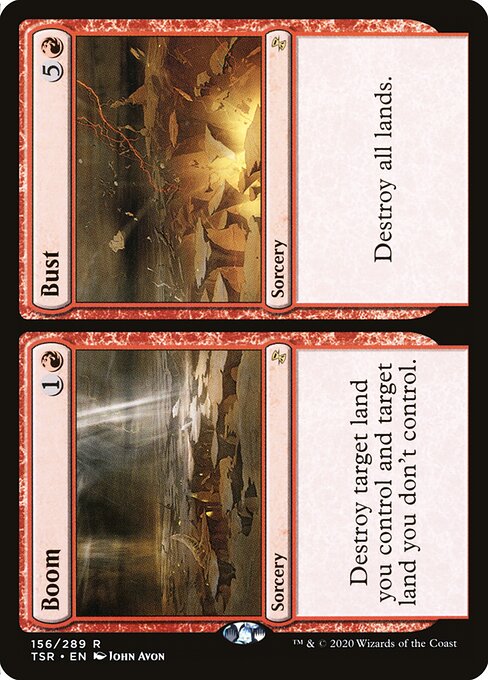
This makes the deck much more interested in which land gets destroyed than a conventional mass-land-destruction strategy would be. A particularly powerful utility land, an important nonbasic, or a land that an opponent desperately needs can become an attractive target. The deck can then turn that interaction into additional advantage while continuing to pressure the table.
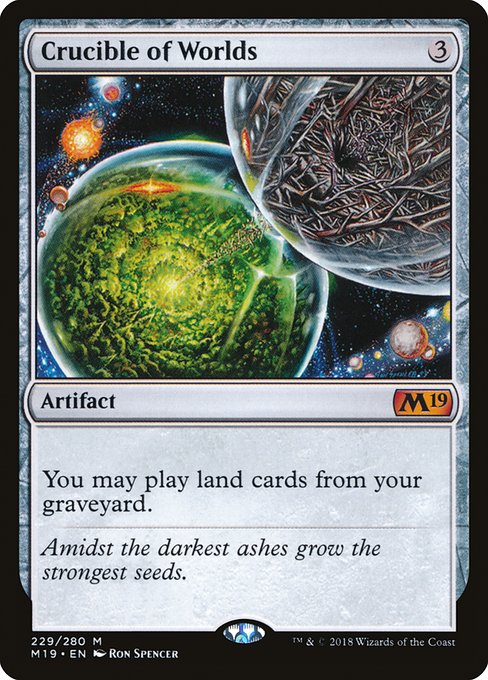
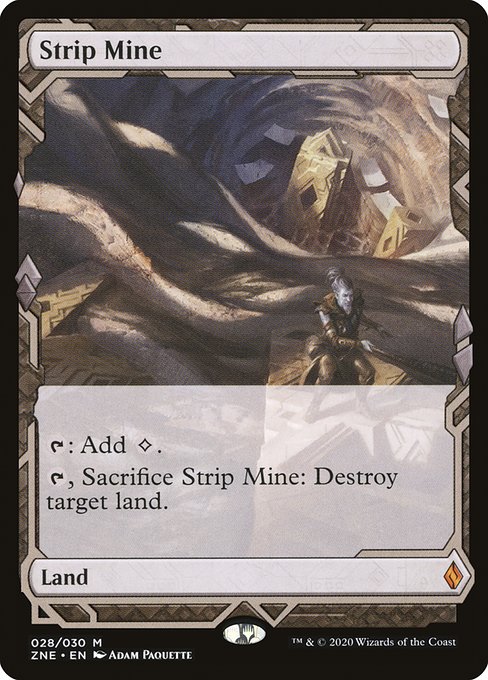
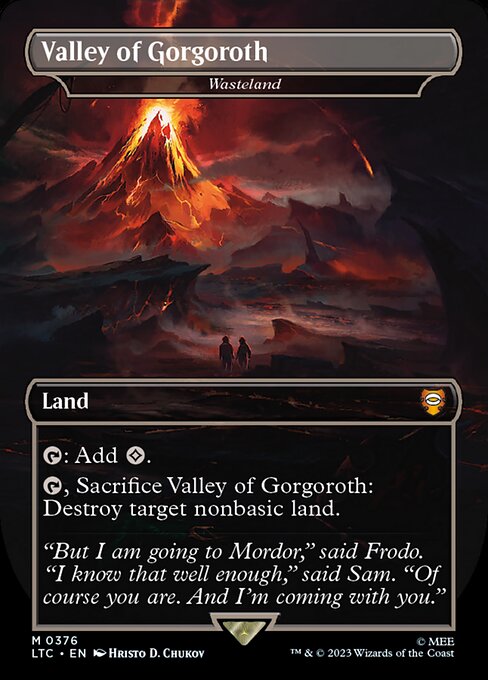
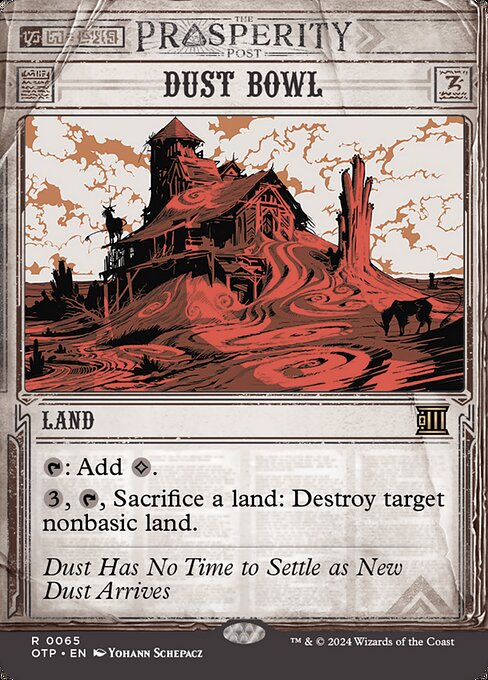
That is where Crucible of Worlds becomes particularly important. Once it is on the battlefield, Strip Mine, Wasteland, and Dust Bowl become recurring sources of land destruction. Instead of spending a card every time a land needs to be removed, the deck can repeatedly reuse its lands from the graveyard. Crucible of Worlds therefore transforms the deck’s targeted land destruction from a limited resource into a repeatable engine.
The mana base supports this plan with a surprisingly large number of Mountains, but the utility lands are where much of the deck’s interaction comes from. Strip Mine and Wasteland provide straightforward answers to problematic lands, while Dust Bowl can repeatedly remove nonbasic lands once enough mana is available.
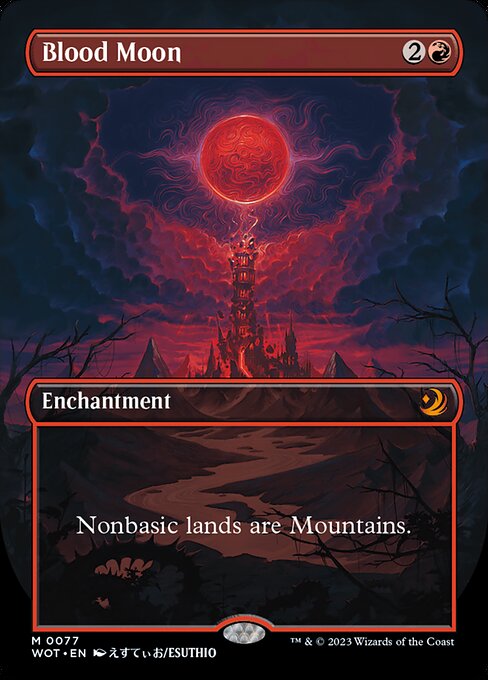
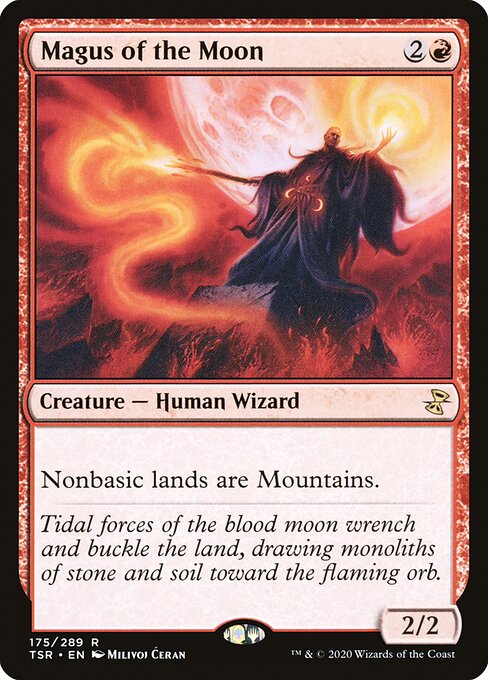
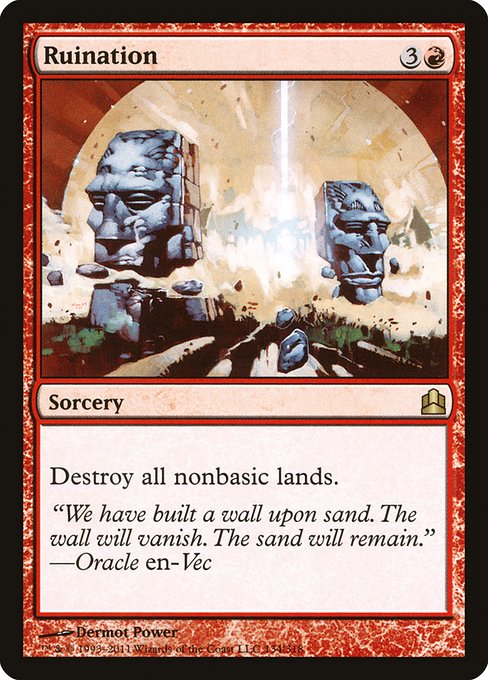
The deck also has ways to make its own land destruction considerably more consequential. Blood Moon and Magus of the Moon punish complicated mana bases by turning nonbasic lands into Mountains, while Wake of Destruction can potentially eliminate an entire category of basic lands if an opponent is heavily invested in one type. Ruination is similarly devastating against greedy mana bases.
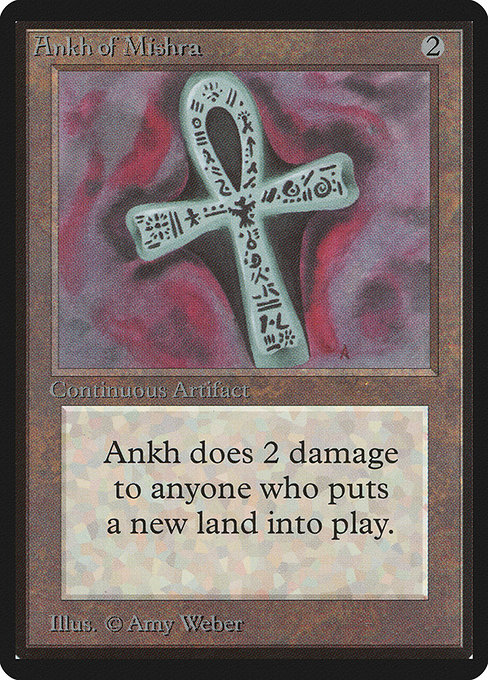
However, these effects are not the only way this deck attacks resources. Cards such as Ankh of Mishra, Zo-Zu the Punisher, Citadel of Pain, and Dingus Egg ensure that even when lands aren’t being destroyed, their presence can still become painful.
Ankh of Mishra and Zo-Zu the Punisher punish players for putting lands onto the battlefield, meaning that rebuilding after a land wipe can be dangerous. Citadel of Pain attacks players who leave their lands untapped, while Dingus Egg turns destroyed lands into another source of damage. The deck therefore has several ways to extract value from the same resource it is trying to destroy.
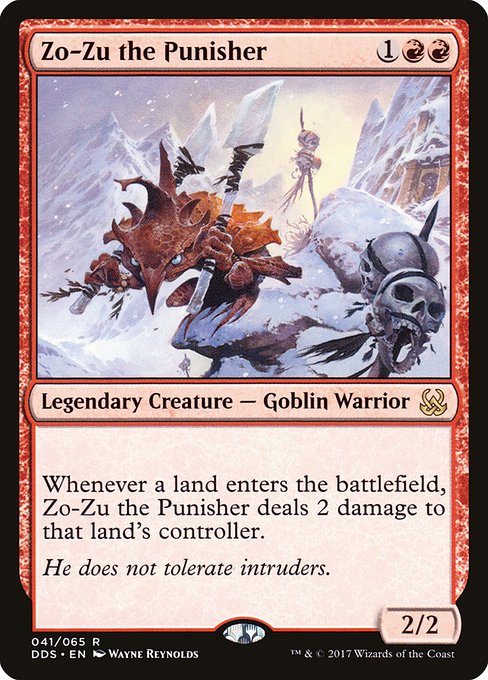
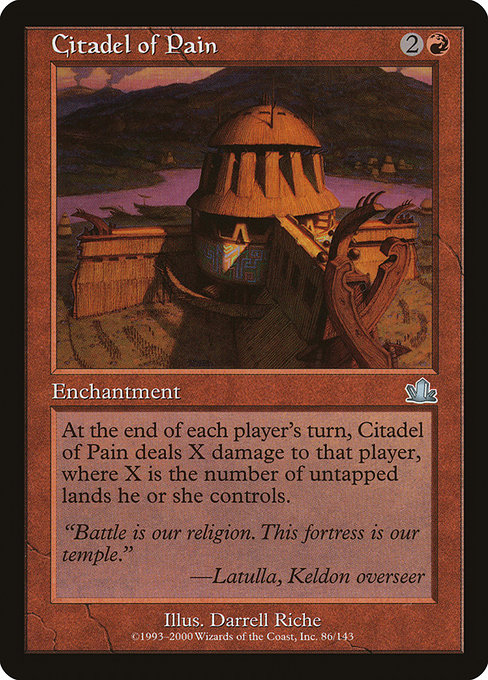
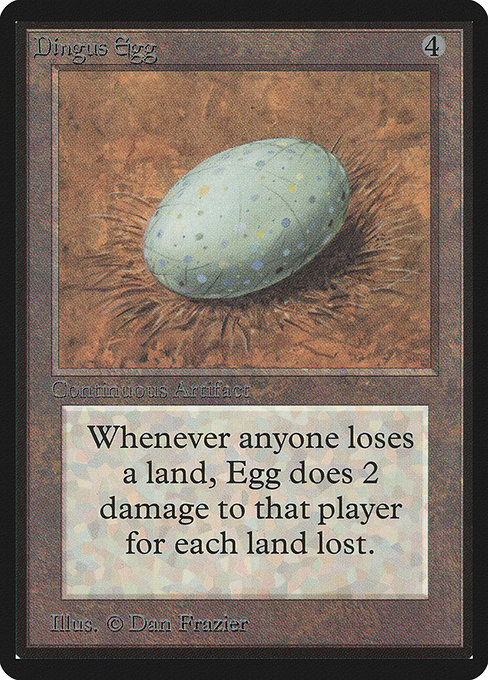
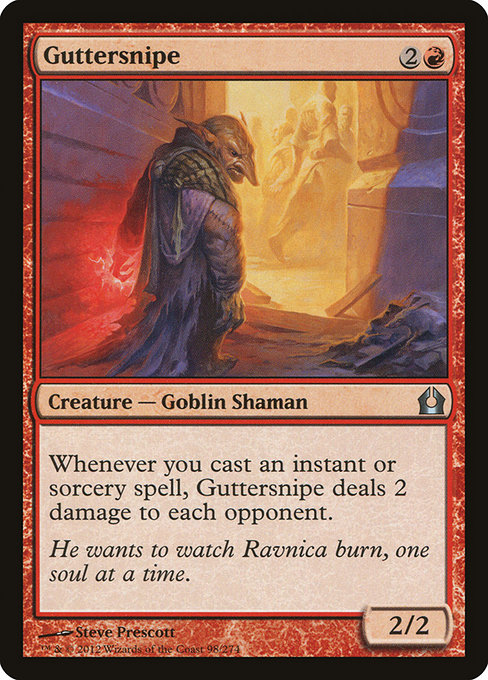
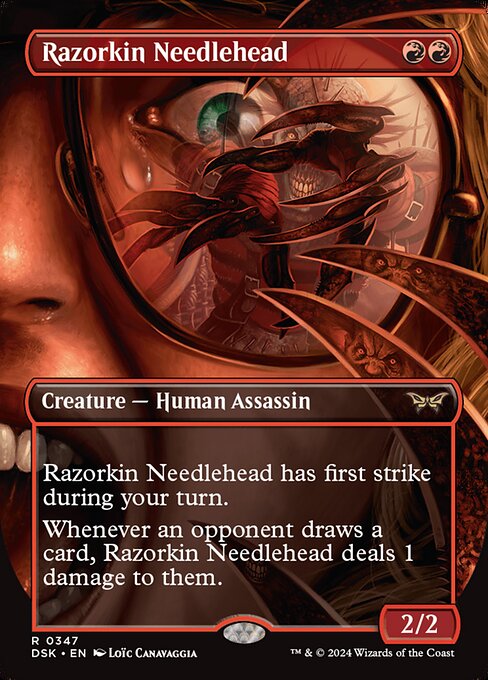
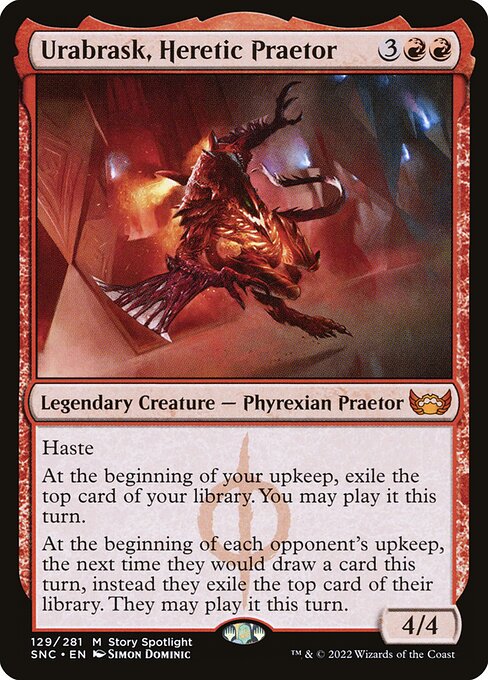
That punishment becomes even more effective when combined with cards like Guttersnipe, Razorkin Needlehead, and Urabrask, Heretic Praetor. The deck isn’t entirely dependent on land destruction to win; it can continue dealing incremental damage while casting the spells that make its main strategy work.
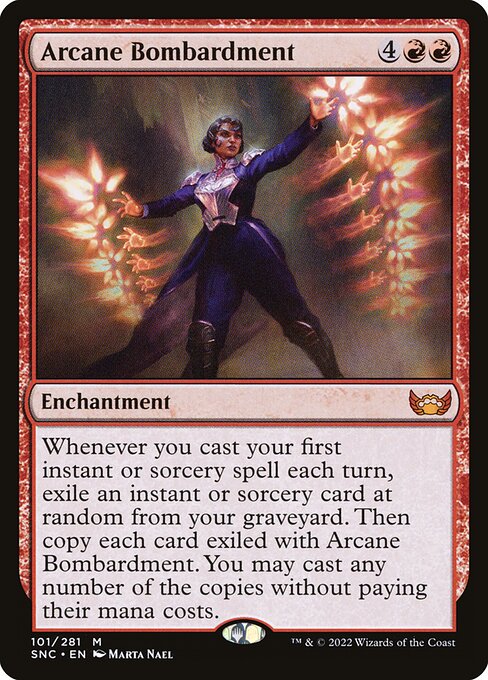
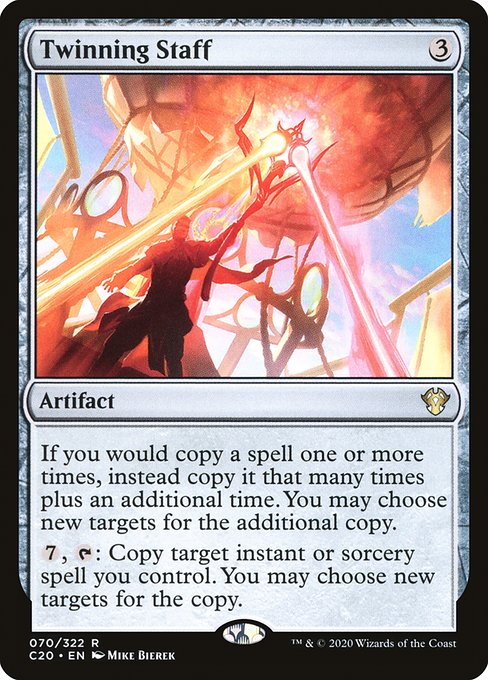
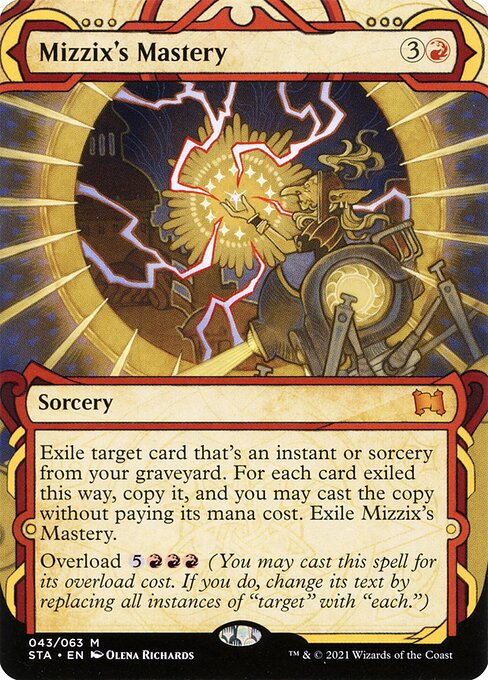
This is particularly useful because Fin Fang Foom itself doesn’t necessarily need to be the only source of pressure. Arcane Bombardment, Twinning Staff, and Mizzix's Mastery give the deck access to significant spell-based value. The more interaction the deck can generate from its graveyard or from copied spells, the more efficiently it can keep applying pressure.
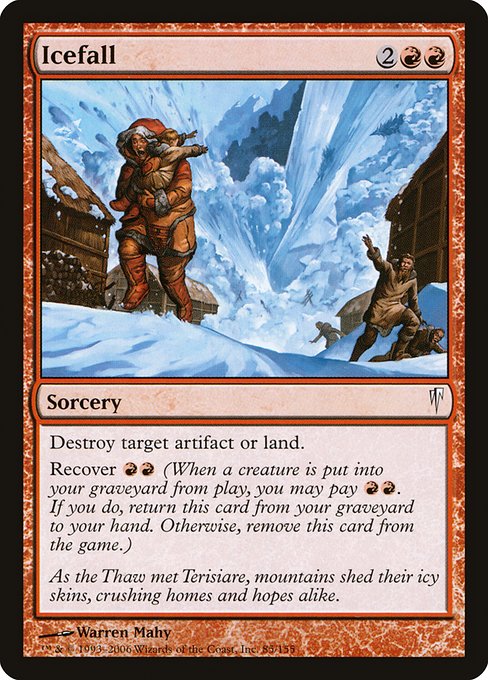
Icefall is especially interesting in this context. For four mana, it can destroy an artifact or land, but its recover ability allows it to return to its owner’s hand when one of their creatures dies and they pay the recover cost. This makes it a flexible removal spell that can potentially be used more than once, fitting perfectly into a strategy that wants its land destruction to generate repeated value rather than being a one-time effect.
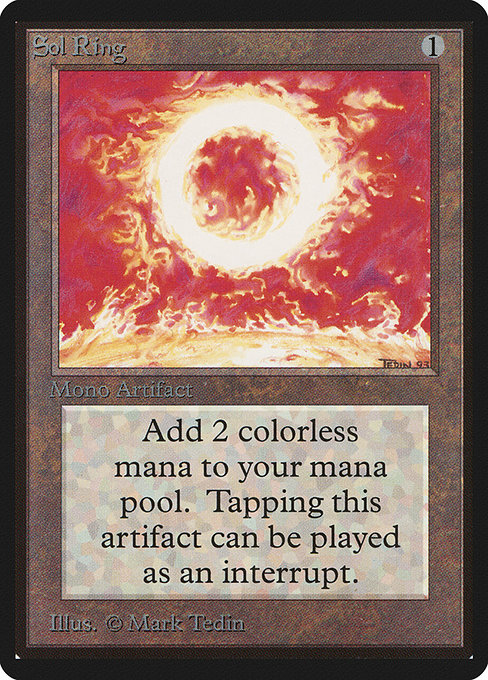
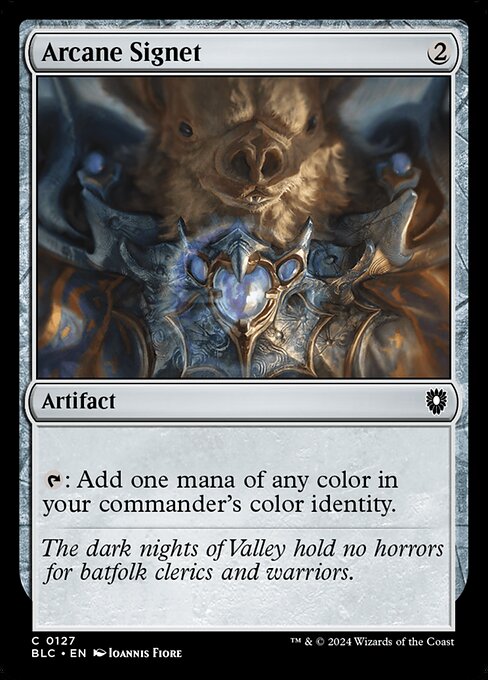
The deck’s artifact package provides another route toward acceleration. Sol Ring, Arcane Signet, Fellwar Stone, Fire Diamond, and Ruby Medallion help the deck get ahead on mana. Jeska's Will can provide a huge burst of resources, while Storm-Kiln Artist generates Treasures as the deck casts its numerous instants and sorceries.
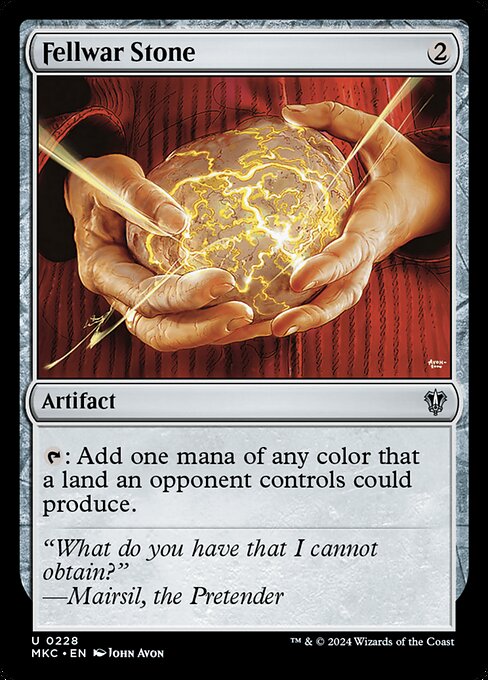
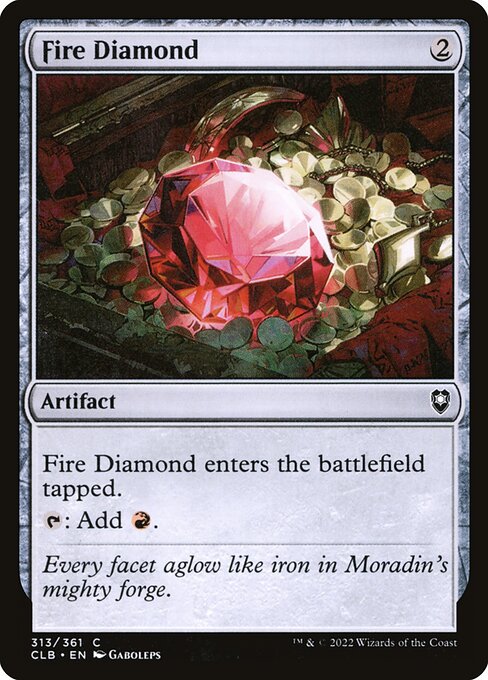
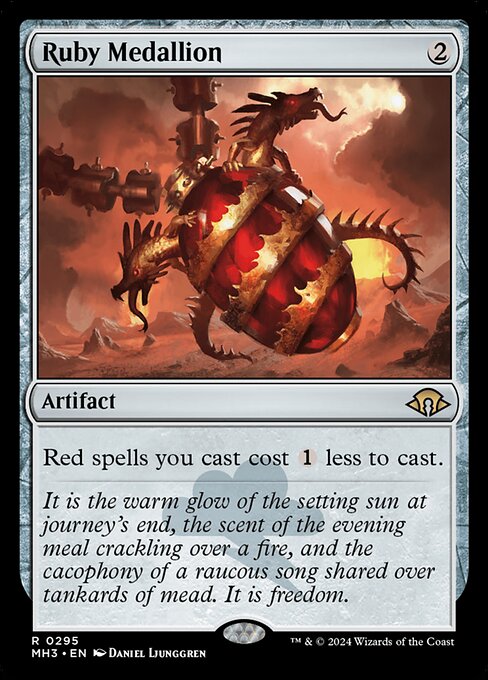
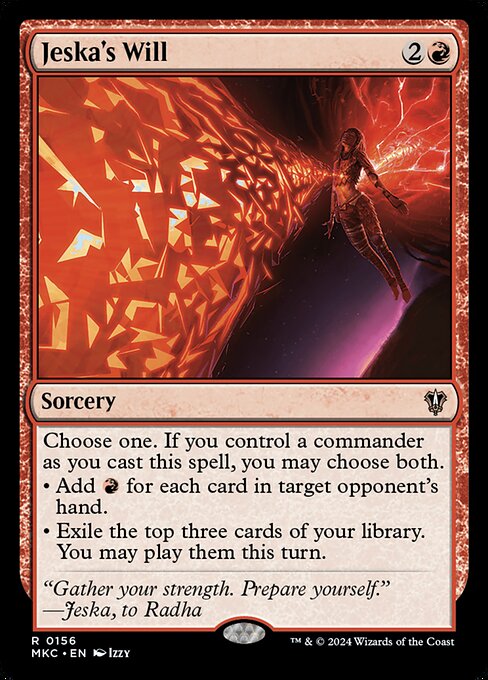
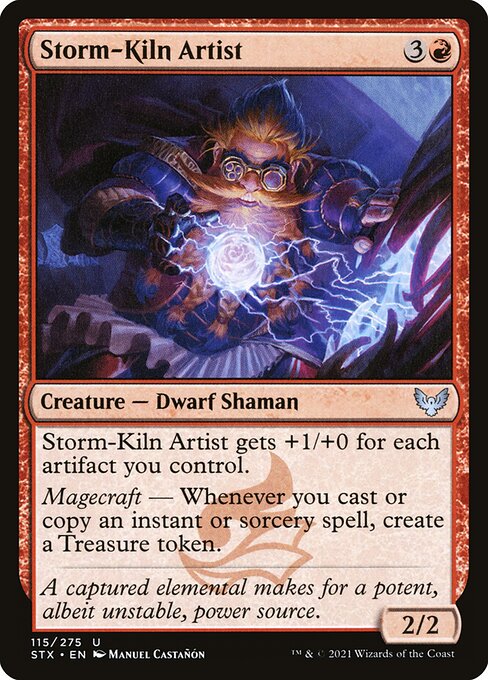
This acceleration matters enormously for a land-destruction strategy. Destroying lands is most effective when you are already ahead on resources. If everyone has five lands and you destroy three of yours as well as three of theirs, you haven’t necessarily gained much. But if your acceleration has put you ahead, you can afford to keep casting spells while opponents struggle to rebuild.
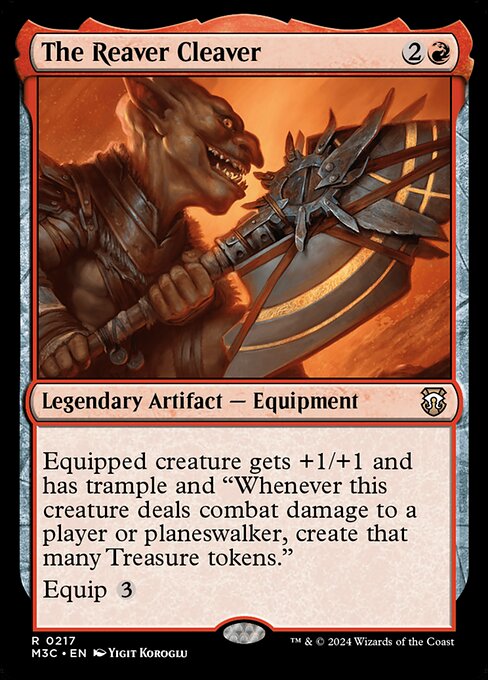
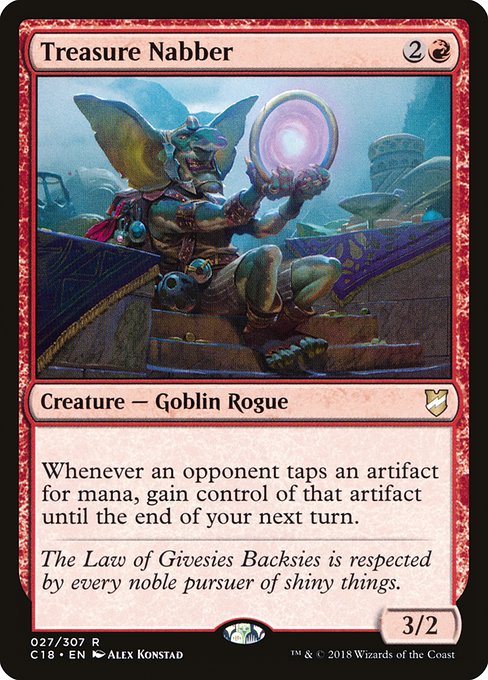
The Reaver Cleaver and Treasure Nabber reinforce this philosophy. The Cleaver can turn a large creature into an enormous burst of Treasures, while Treasure Nabber can temporarily steal opposing mana rocks. Both help the deck operate independently of its lands, which becomes increasingly valuable as the game progresses and the battlefield’s mana infrastructure starts disappearing.
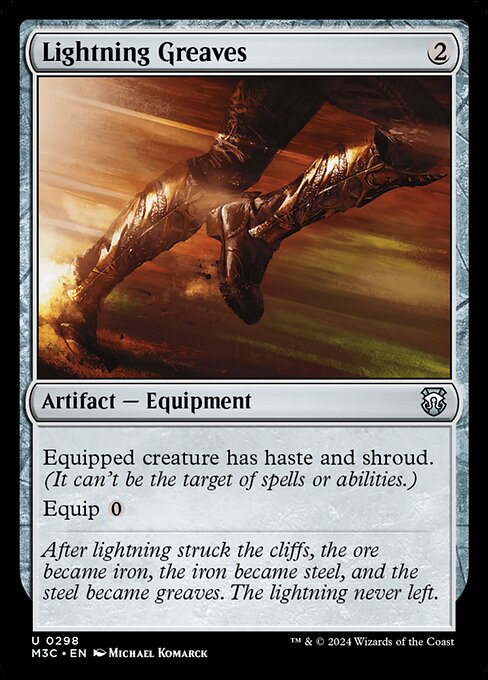
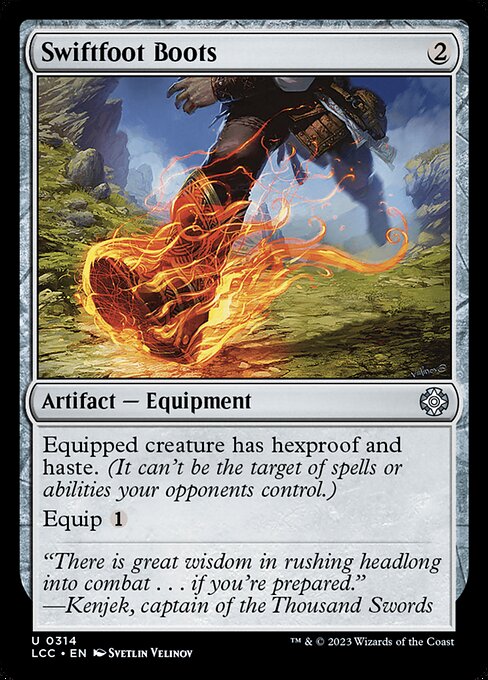
The deck also has a number of ways to protect its most important pieces. Lightning Greaves and Swiftfoot Boots can protect Fin Fang Foom from removal, while Hexing Squelcher provides another layer of protection. Keeping the commander alive matters because the deck’s targeted land destruction becomes considerably more valuable when it can repeatedly interact with the same engine.
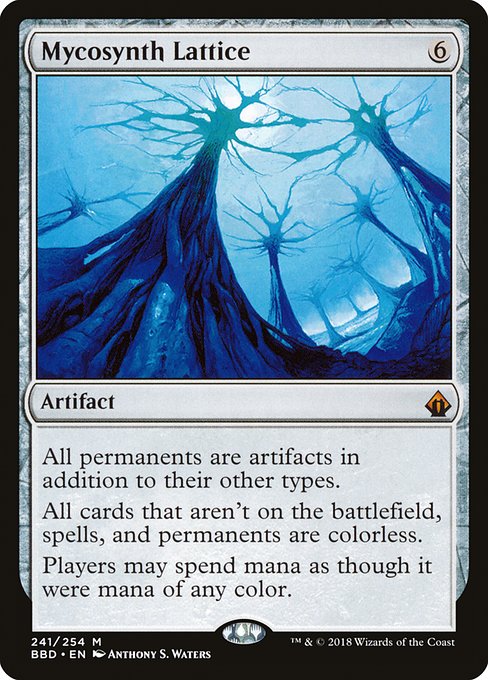
The combination of Mycosynth Lattice and Karn, the Great Creator is another particularly nasty angle. Lattice turns permanents into artifacts, dramatically changing the way the battlefield functions, while Karn can shut down activated abilities of opposing artifacts. Even without relying on this interaction as the deck’s primary win condition, it gives the deck a way to lock down opposing resources once enough mana is available.

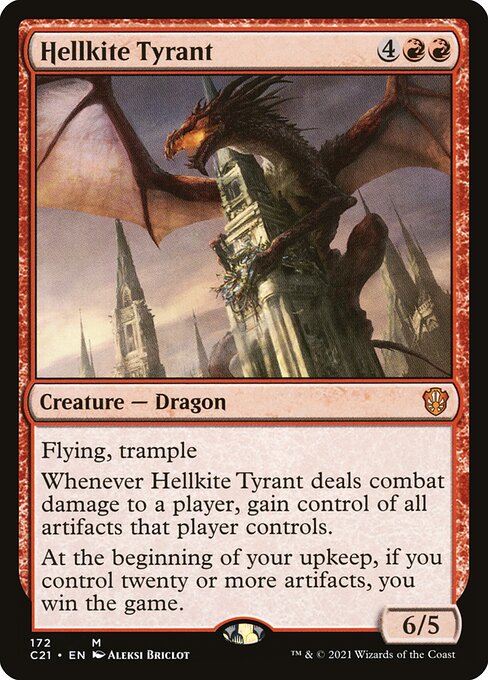
There is also a clear late-game plan. Hellkite Tyrant can steal opposing artifacts and potentially win through its alternate victory condition, while Ruination, Wake of Destruction, and Boom // Bust can become devastating once the deck has established a significant mana advantage. The goal isn’t necessarily to destroy every land immediately. Instead, the deck wants to reach a position where opponents have fewer resources than it does and then exploit that advantage.
This is ultimately what makes Fin Fang Foom so interesting as a land-destruction commander. The deck doesn’t treat land destruction as an end in itself. It uses it as a form of targeted interaction, repeatedly picking apart opposing mana bases while converting those actions into additional value.
That also makes the deck’s play pattern more nuanced than simply casting a mass land wipe and hoping the table can’t recover. The pilot has to decide which lands matter, when to spend a land-destruction spell, when to reuse Strip Mine or Wasteland, and when it is worth escalating into something as destructive as Ruination or Wake of Destruction.
In other words, the deck wants to make land destruction profitable. Every destroyed land should ideally accomplish more than simply removing a mana source. It can trigger Fin Fang Foom, generate damage through Dingus Egg, create an opening for the deck’s other engines, or make an opponent’s next several turns dramatically weaker.
That is what separates this deck from the more straightforward land-destruction strategy we’ll see next. Fin Fang Foom is ultimately an engine deck disguised as a land-destruction deck. Its goal is to target lands intelligently, extract value from doing so, and gradually create a resource advantage that makes it increasingly difficult for opponents to keep pace.
Deck #2: Zo-Zu the Punisher
Where Fin Fang Foom’s deck is primarily interested in destroying specific lands so that it can exploit its commander’s ability, [cardname=”Zo-Zu the Punisher”] takes a much more direct approach. This deck is not really interested in what lands it destroys. It wants lands to enter the battlefield, it wants those lands to disappear, and it wants everyone at the table to suffer for trying to play Magic afterward.
[cardname=”Zo-Zu the Punisher”] is the perfect commander for this strategy because every land an opponent plays deals 2 damage to them. That turns one of the most fundamental actions in Commander into a liability. Normally, destroying lands can be risky because opponents can simply play more lands afterward. Zo-Zu changes that equation. If an opponent rebuilds their mana base by making their normal land drops, they are actively hurting themselves. The deck therefore creates a situation where the more opponents try to recover, the more damage they take.
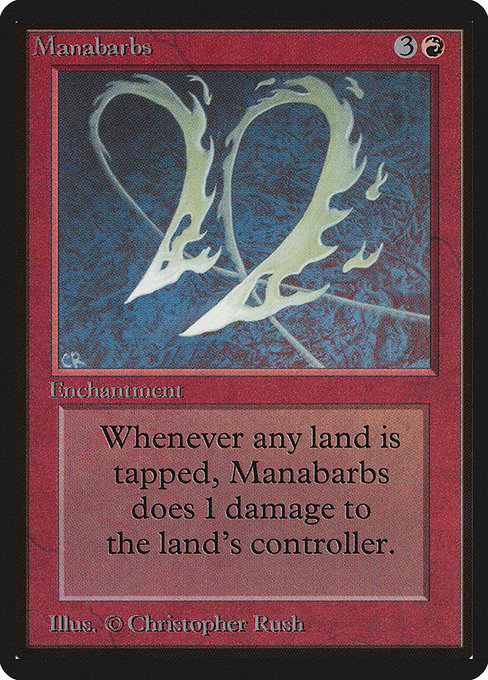
That punishment package is much larger than Zo-Zu himself. [cardname=”Ankh of Mishra”] provides another 2 damage whenever a land enters the battlefield, while [cardname=”Manabarbs”] punishes players for tapping their lands. [cardname=”Citadel of Pain”] similarly makes untapped lands painful at the end of each player’s turn, discouraging players from simply sitting on their mana. [cardname=”Price of Progress”] can become devastating against opponents with greedy nonbasic-heavy manabases, while [cardname=”Acidic Soil”] turns the number of lands a player controls directly into damage.
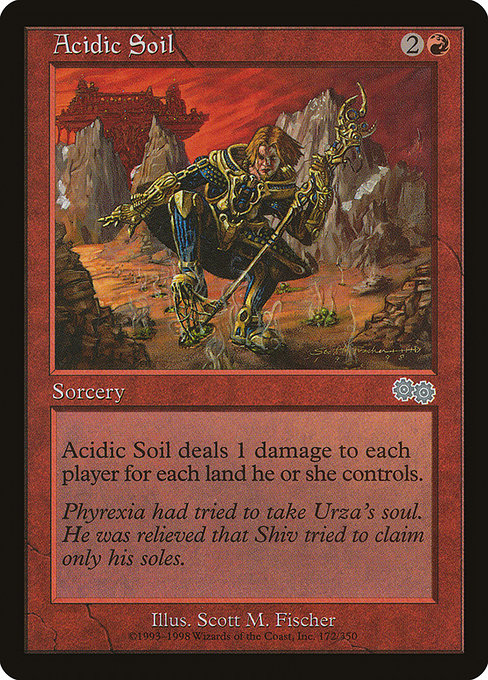
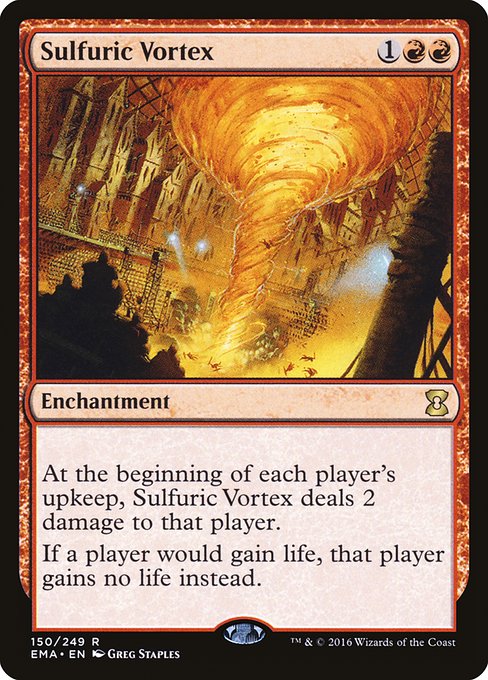
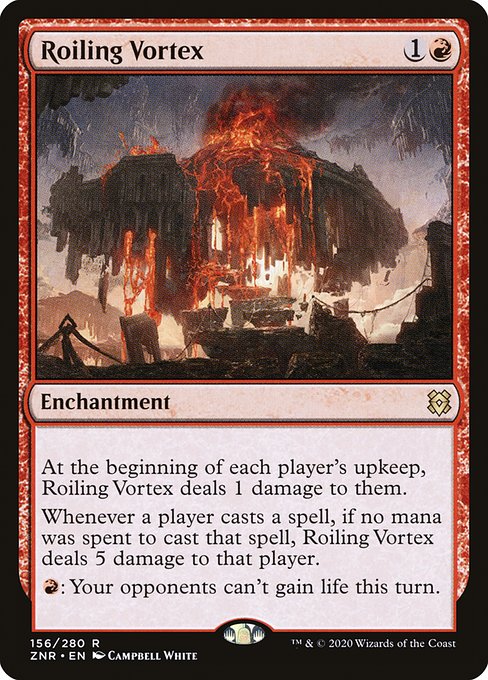
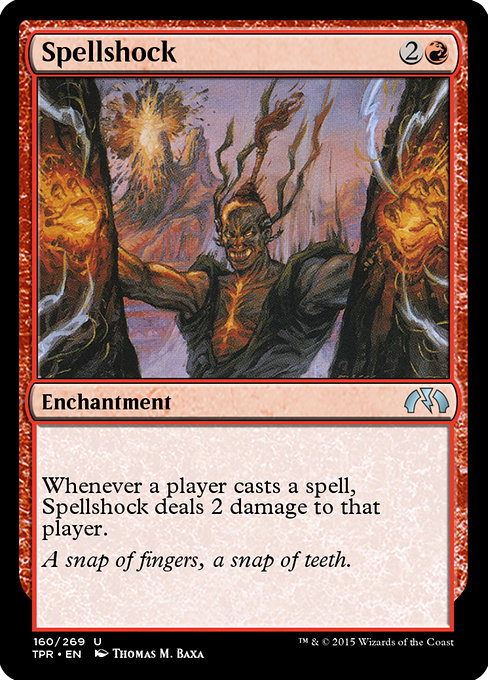
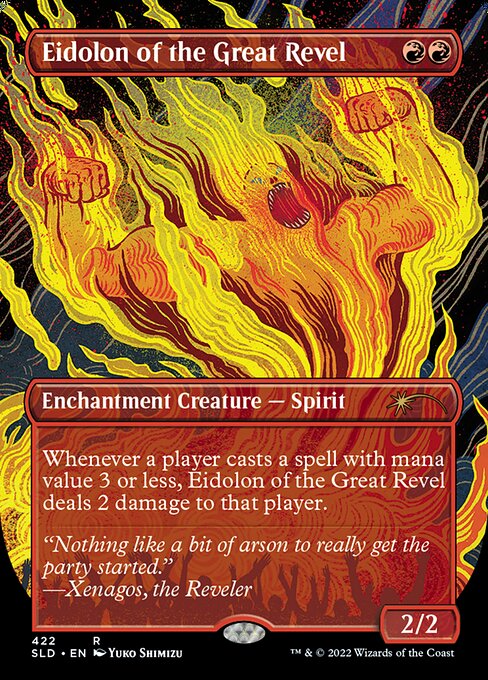
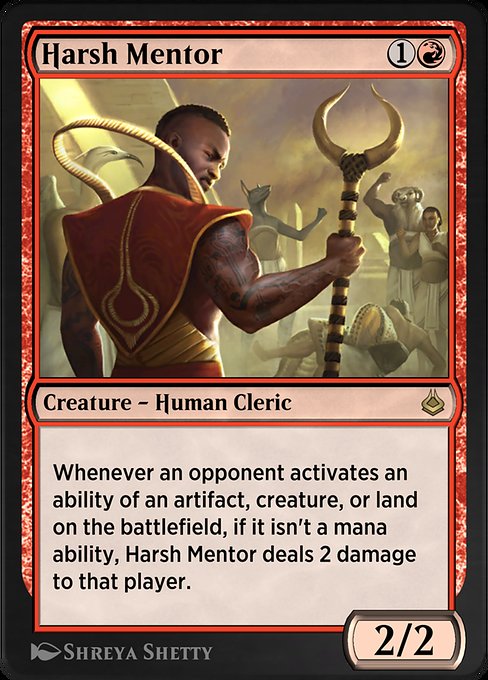
The deck is consequently capable of dealing enormous amounts of damage without needing to attack. [cardname=”Sulfuric Vortex”], [cardname=”Roiling Vortex”], [cardname=”Spellshock”], [cardname=”Eidolon of the Great Revel”], and [cardname=”Harsh Mentor”] all contribute to the same philosophy: every ordinary action should have a cost. The deck wants opponents to feel as though simply casting spells, playing lands, or using their permanents is slowly burning them out.
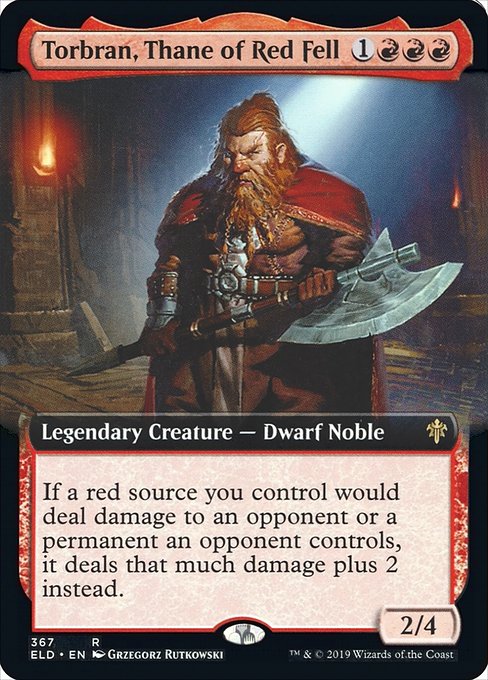
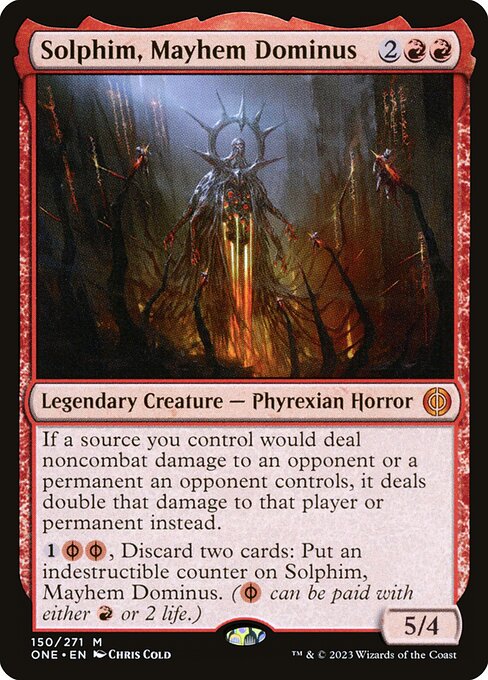
That damage becomes particularly dangerous when paired with the deck’s damage multipliers. [cardname=”Torbran, Thane of Red Fell”] increases the damage dealt by many of the deck’s red sources, while [cardname=”Solphim, Mayhem Dominus”] doubles noncombat damage. These effects can turn seemingly manageable punishment into lethal damage surprisingly quickly. With Zo-Zu and [cardname=”Ankh of Mishra”] both on the battlefield, for example, a single land drop already represents 4 damage before any other modifiers are considered.
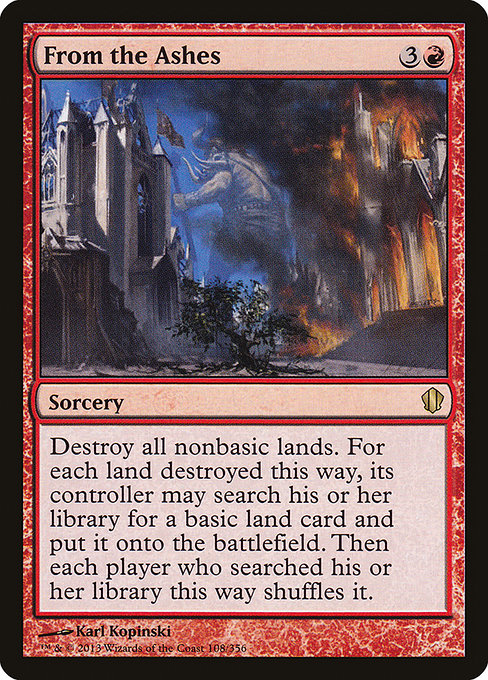
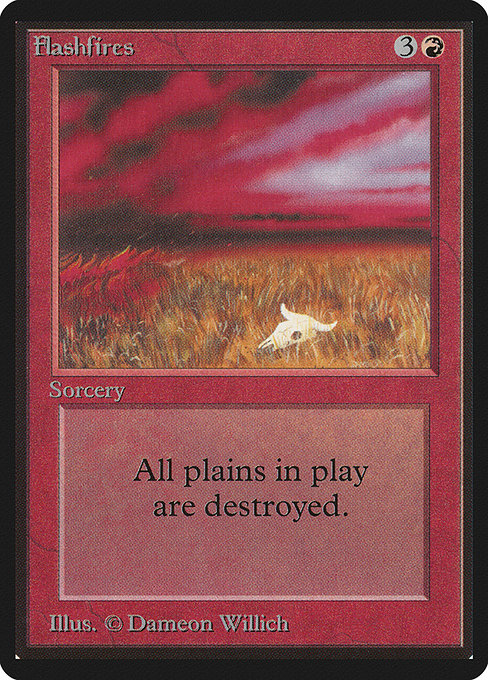
The deck’s land-destruction package is what makes this punishment strategy truly oppressive. [cardname=”Burning of Xinye”], [cardname=”Wildfire”], [cardname=”From the Ashes”], [cardname=”Ruination”], [cardname=”Wake of Destruction”], and [cardname=”Flashfires”] give the deck several ways to reset or cripple opposing manabases. These effects are particularly effective after opponents have spent several turns developing their lands. A well-timed [cardname=”Ruination”] can be devastating against decks relying on nonbasic lands, while [cardname=”Wake of Destruction”] can repeatedly remove a particular basic land type from the table.
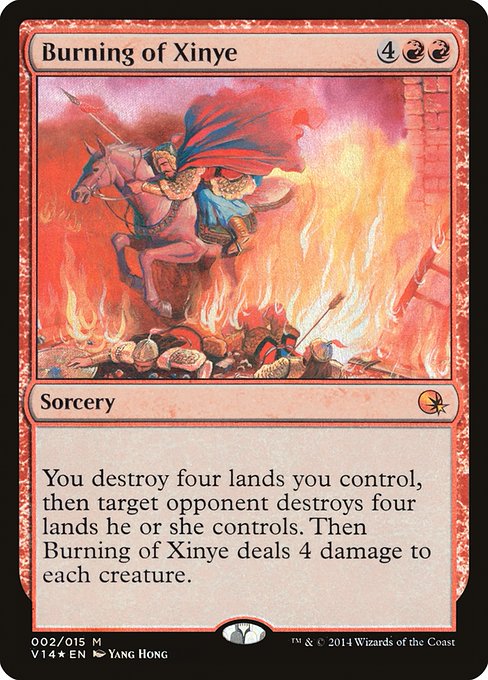
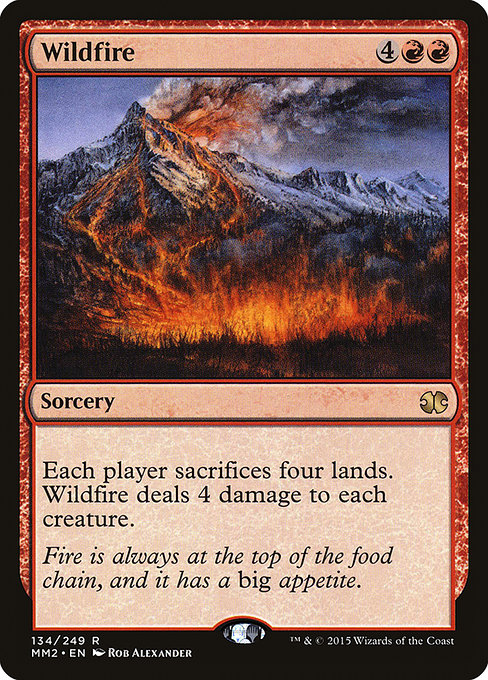
Importantly, the deck is not built around destroying lands and then doing nothing. The commander and punishment permanents make the recovery process itself dangerous. If a player loses most of their lands to [cardname=”Wildfire”], for instance, they still have to rebuild by playing lands. Every one of those lands triggers [cardname=”Zo-Zu the Punisher”], and potentially [cardname=”Ankh of Mishra”] as well. The deck therefore turns mass land destruction into a damage engine rather than simply using it as a reset button.
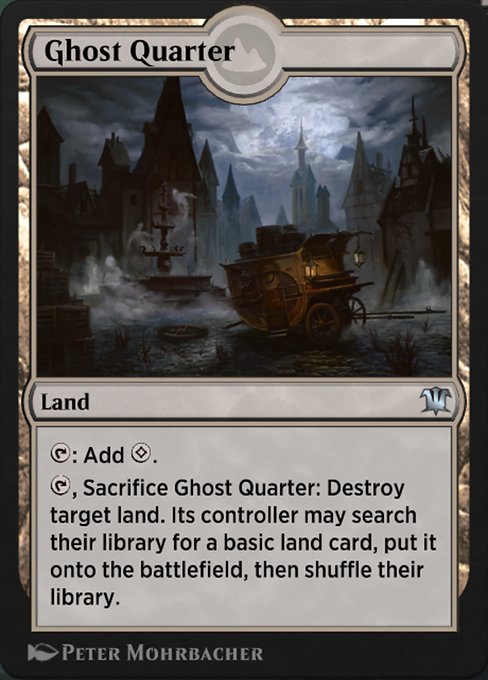
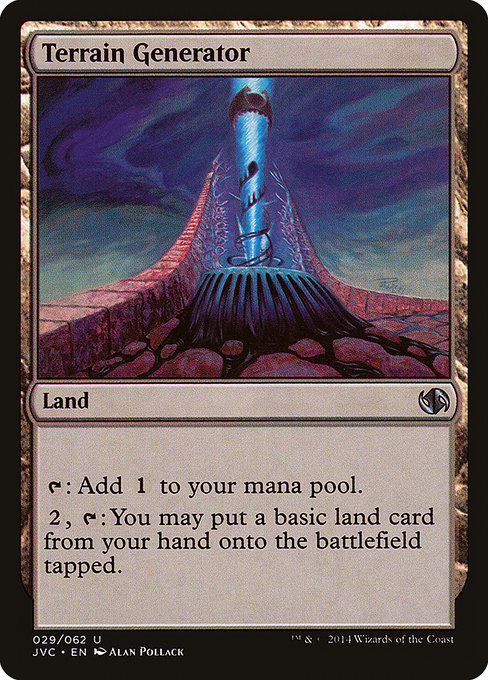
The deck also has a smaller package of targeted land destruction in [cardname=”Ghost Quarter”], [cardname=”Strip Mine”], and [cardname=”Wasteland”]. These lands are useful for dealing with particularly problematic utility lands without having to commit to a full board wipe. [cardname=”Crucible of Worlds”] makes these effects considerably stronger, allowing the deck to replay its own lands and repeatedly reuse its land-destruction package. [cardname=”Terrain Generator”] also gives the deck a way to manipulate its own land development when necessary.
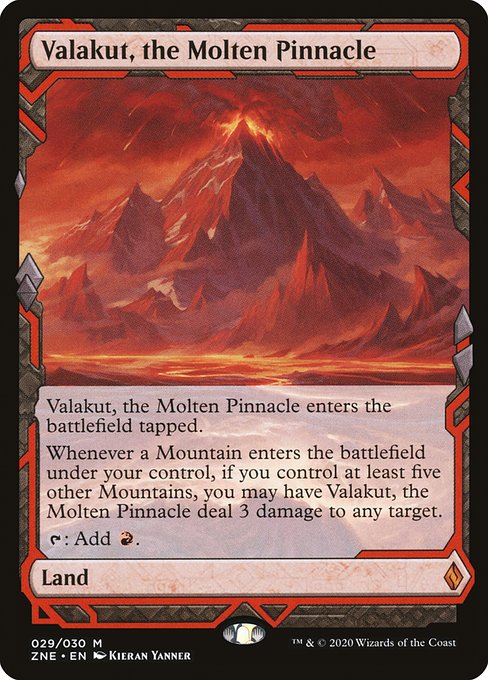
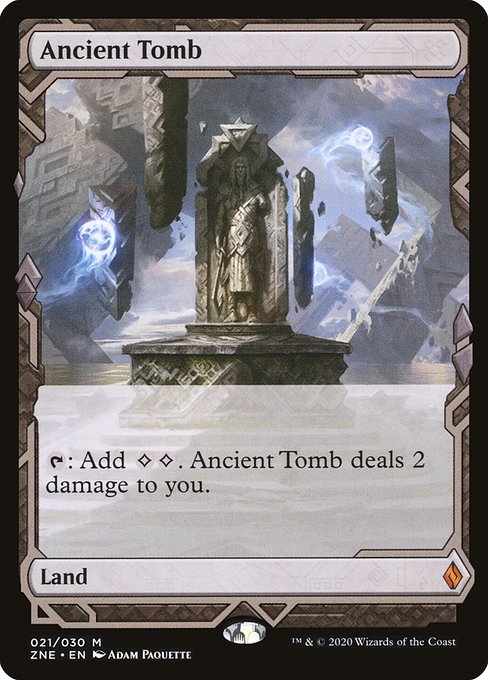
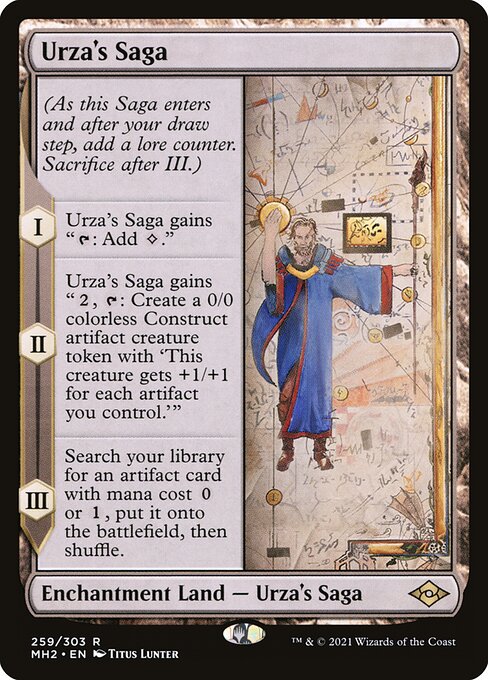
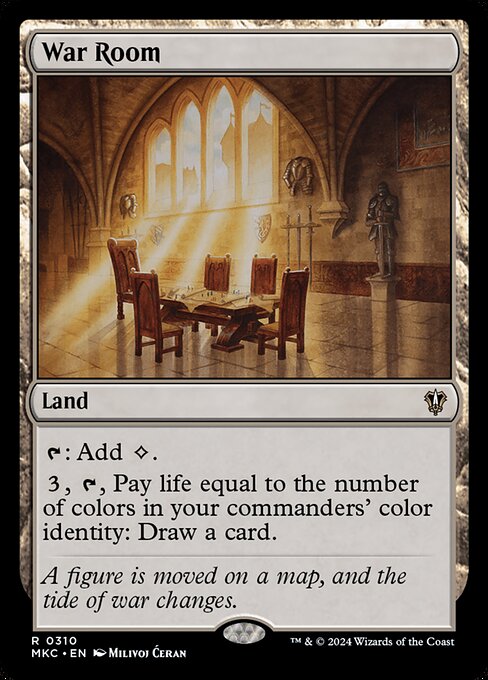
The mana base itself is deliberately straightforward. There are nineteen [cardname=”Mountain”] alongside utility lands such as [cardname=”Valakut, the Molten Pinnacle”], [cardname=”Ancient Tomb”], [cardname=”Urza’s Saga”], and [cardname=”War Room”]. This heavy basic-land count is important because the deck’s own mass-destruction effects are symmetrical. Cards like [cardname=”Wildfire”] and [cardname=”Burning of Xinye”] destroy your lands as well as your opponents’ lands, so having a relatively simple manabase makes it easier for the deck to recover.
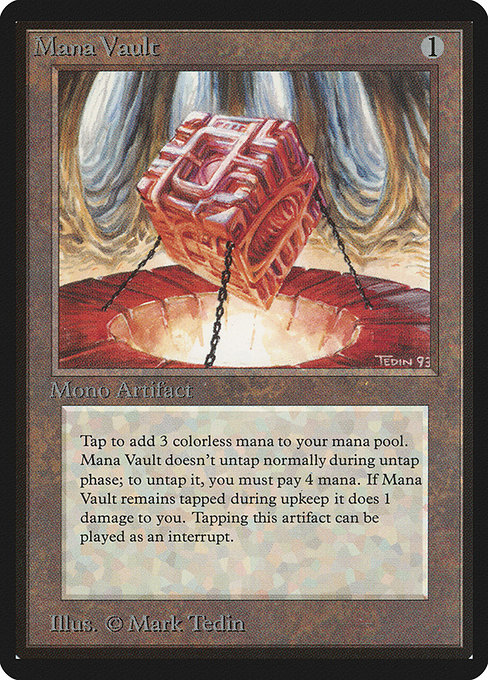
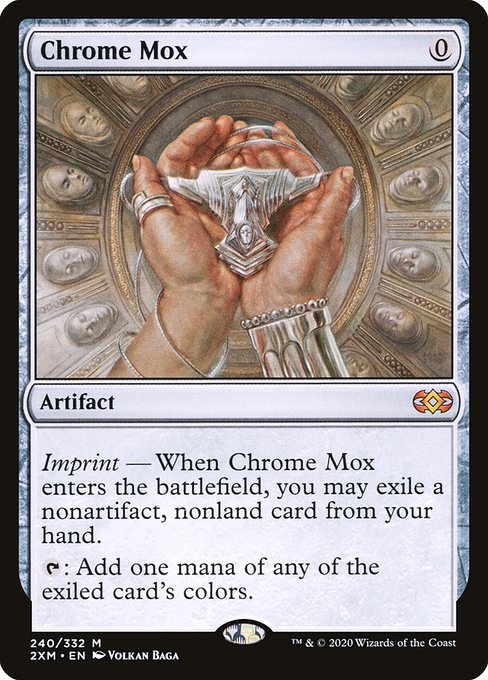
The ramp package helps solve that problem as well. [cardname=”Sol Ring”], [cardname=”Mana Vault”], [cardname=”Chrome Mox”], [cardname=”Mox Opal”], [cardname=”Lotus Petal”], [cardname=”Arcane Signet”], and [cardname=”Ruby Medallion”] allow the deck to get ahead of the table before it starts destroying resources. [cardname=”Braid of Fire”] can provide an increasingly large amount of mana during upkeep, while [cardname=”Desperate Ritual”] and [cardname=”Pyretic Ritual”] provide bursts of mana when the deck needs to accelerate into a major spell.

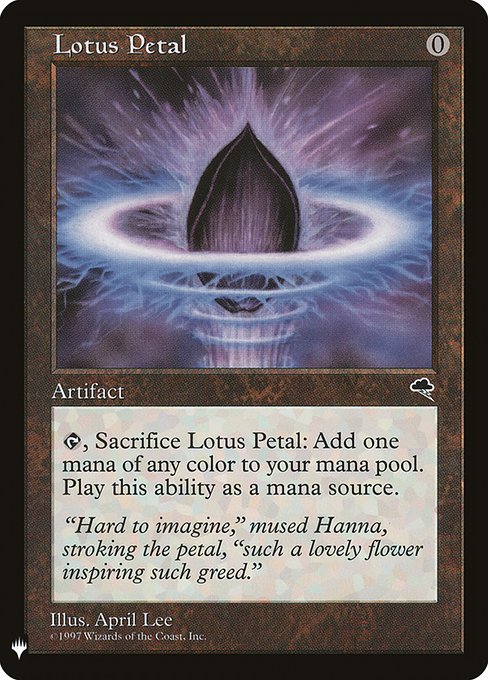
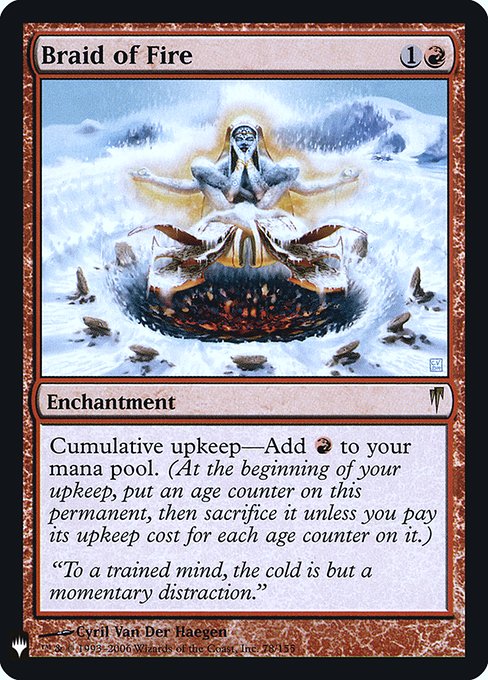
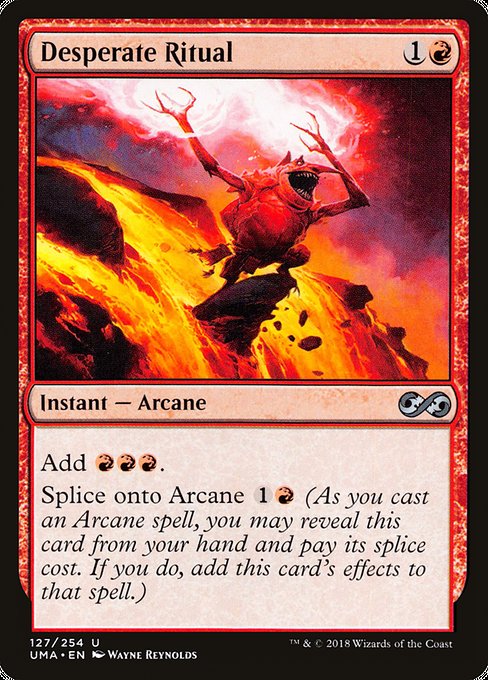
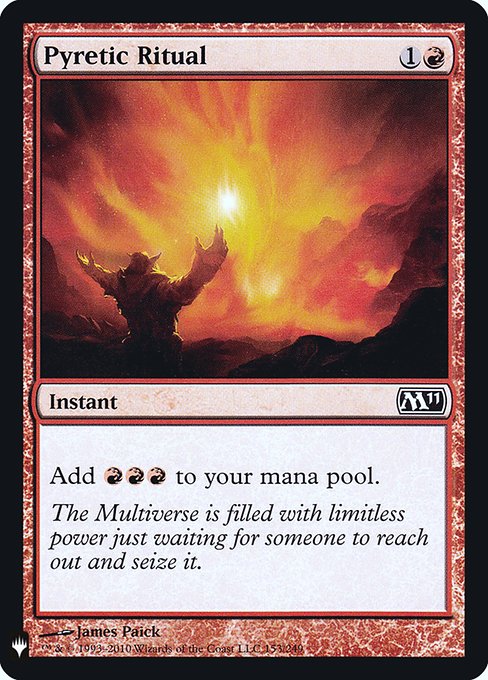
That acceleration is particularly important because this deck wants to establish its punishment engines before the table becomes too developed. Getting [cardname=”Zo-Zu the Punisher”] onto the battlefield early means every subsequent land drop becomes damaging. If the deck can then follow up with something like [cardname=”Manabarbs”], [cardname=”Ankh of Mishra”], or [cardname=”Citadel of Pain”], opponents can quickly find themselves in a position where their resources are actively working against them.
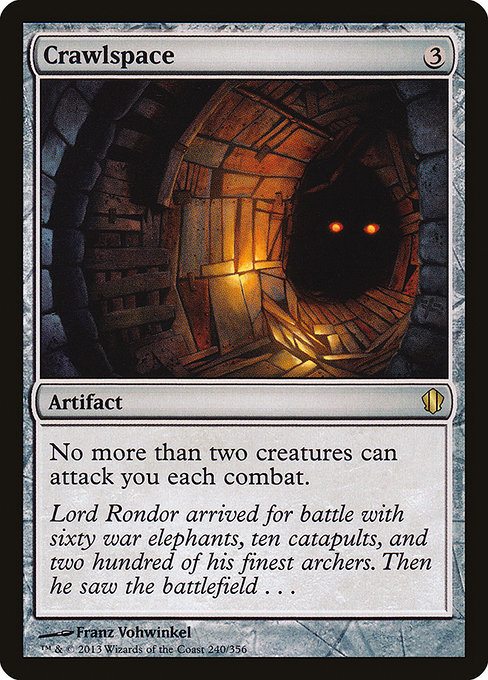
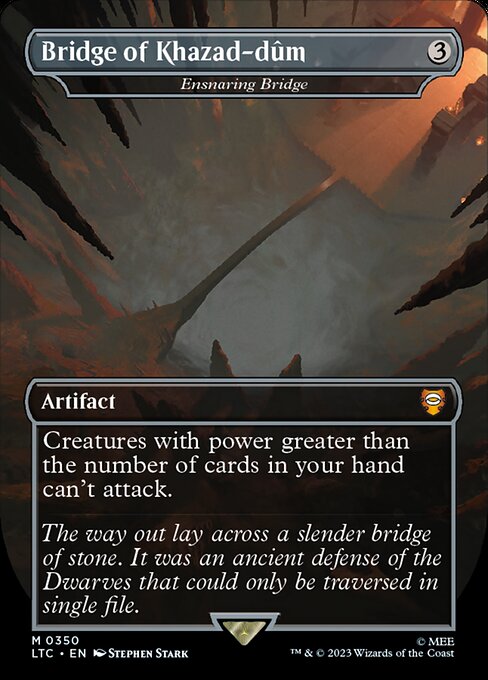
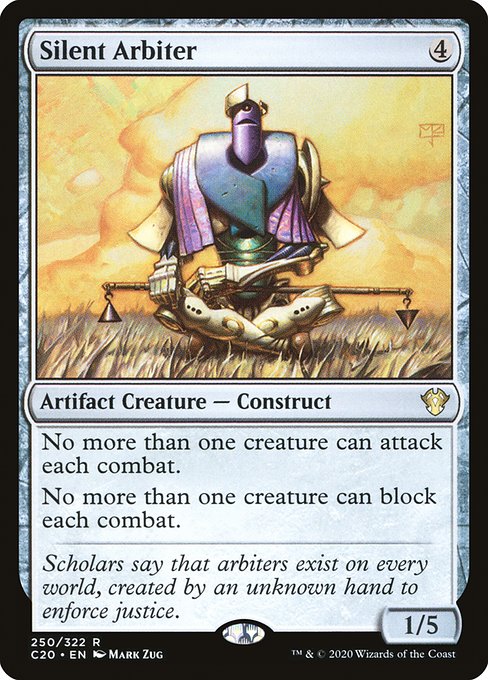
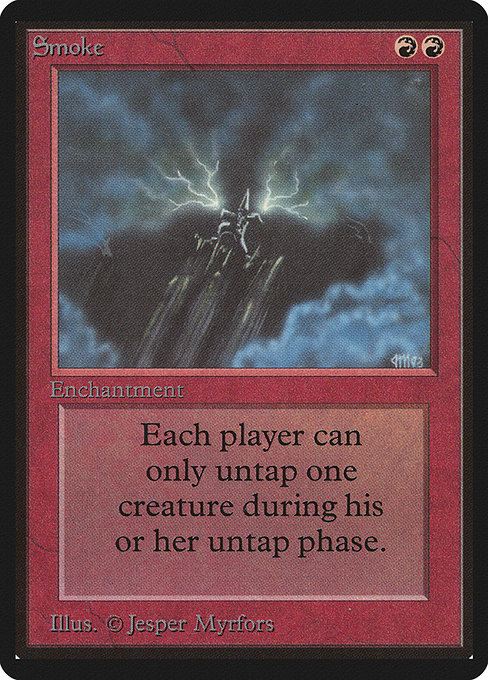
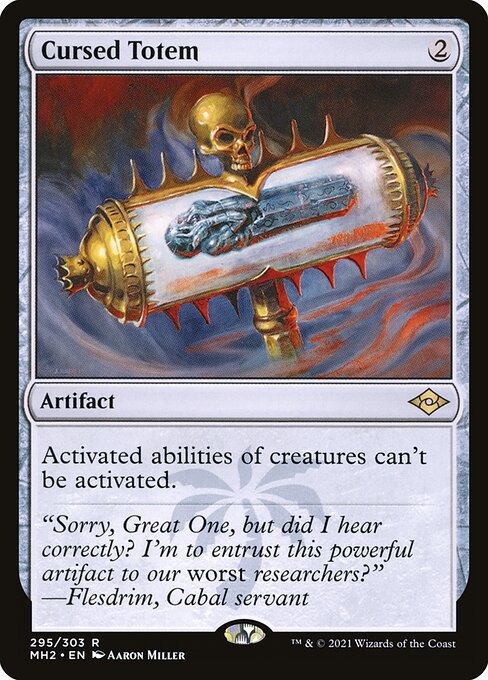
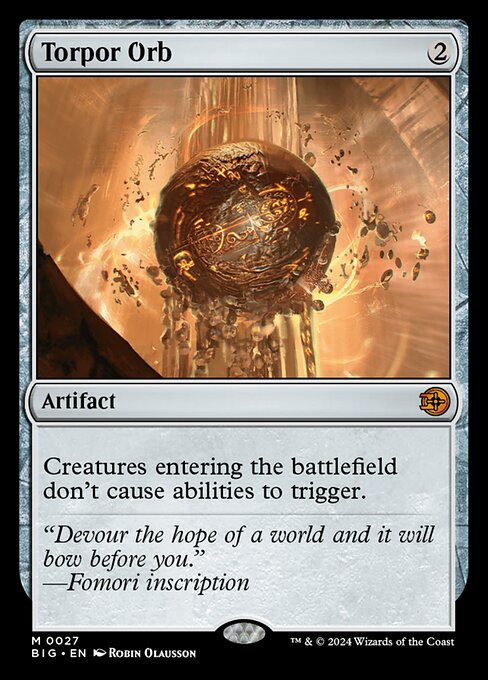
The deck also has several ways to prevent opponents from simply ignoring its damage engines and attacking Zo-Zu’s controller. [cardname=”Crawlspace”], [cardname=”Ensnaring Bridge”], and [cardname=”Silent Arbiter”] can severely restrict combat, giving the deck time to establish its board. [cardname=”Smoke”] makes creature-based strategies much less effective, while [cardname=”Cursed Totem”] shuts down activated abilities of creatures. [cardname=”Torpor Orb”] similarly interferes with enter-the-battlefield strategies.
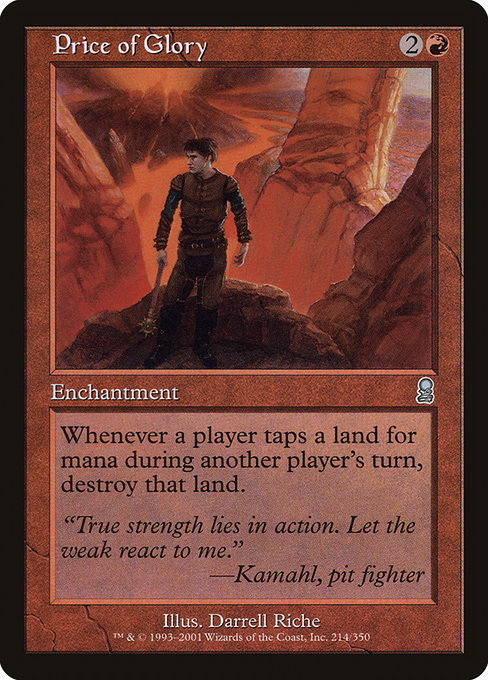
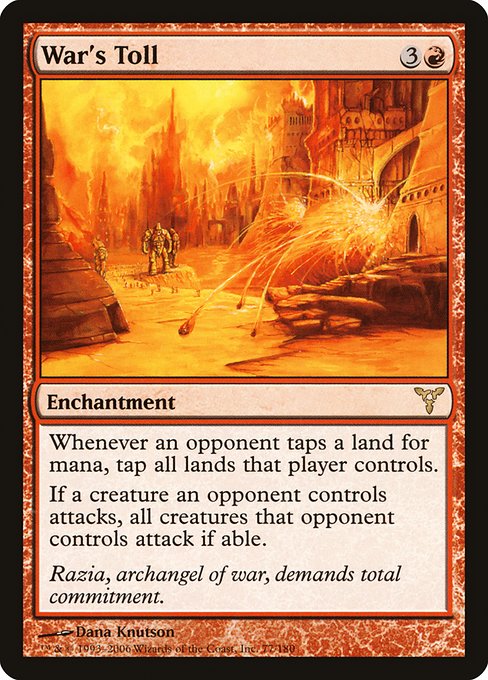
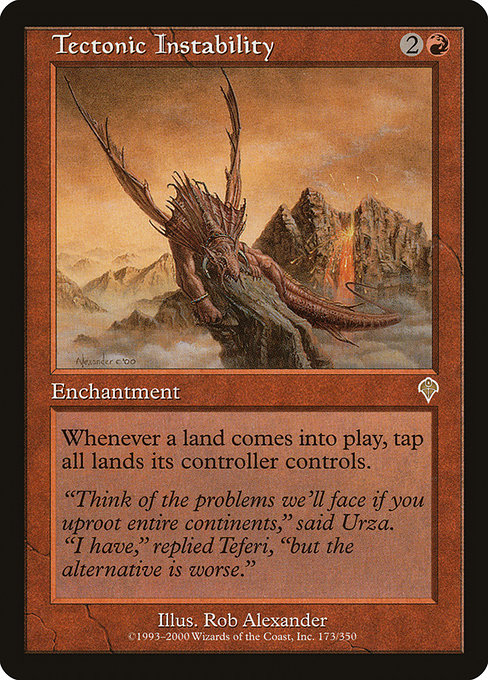
Cards such as [cardname=”Price of Glory”], [cardname=”War’s Toll”], and [cardname=”Tectonic Instability”] continue this theme of making resources difficult to use. The deck does not necessarily need a traditional hard lock; instead, it creates a battlefield where almost every avenue of recovery is painful or inconvenient.
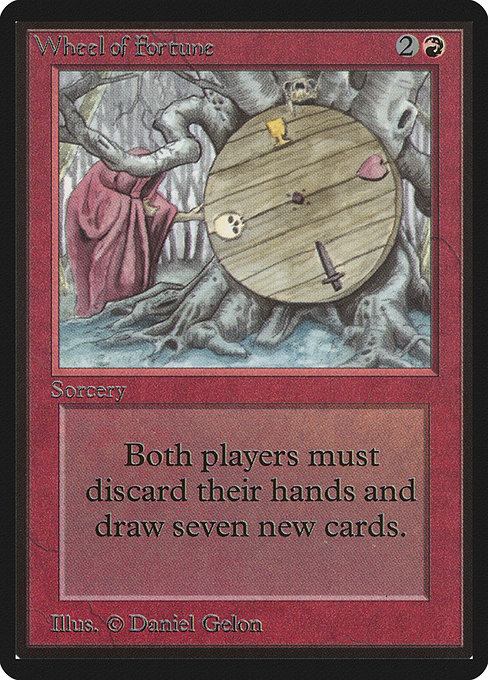
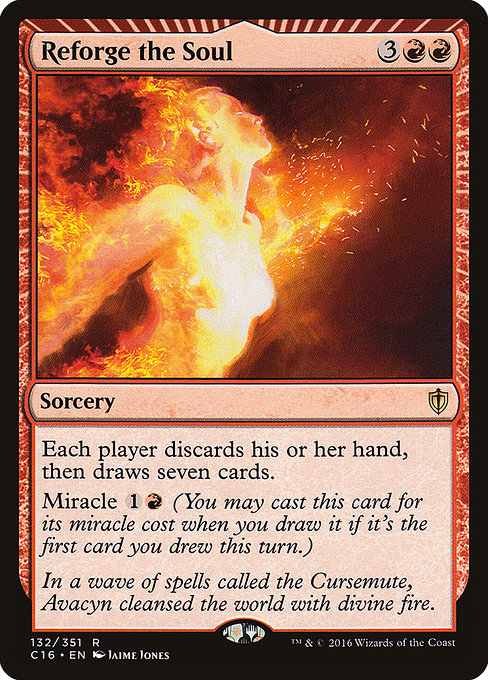
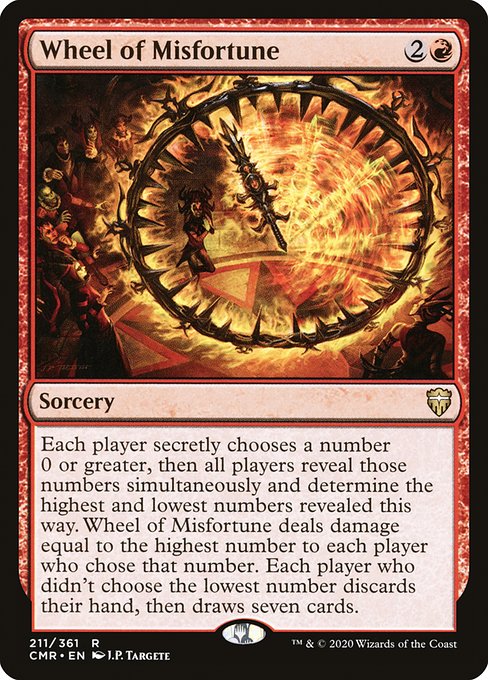
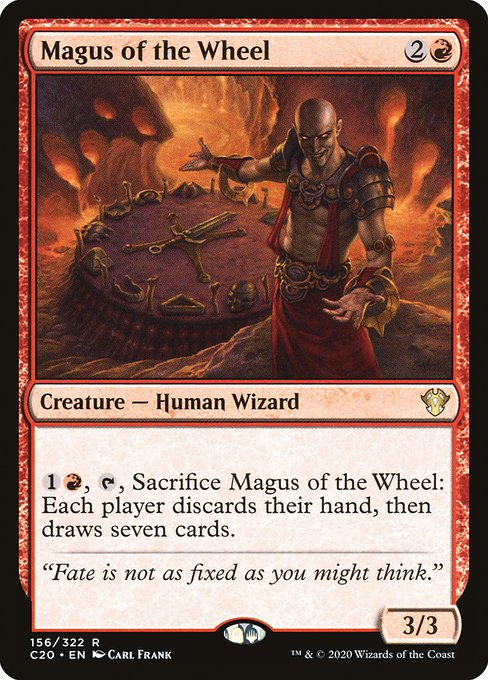
The wheels provide another important dimension. [cardname=”Wheel of Fortune”], [cardname=”Reforge the Soul”], and [cardname=”Wheel of Misfortune”] allow the deck to refill its hand while forcing opponents to discard theirs. This is particularly useful after a land-destruction spell has left everyone with reduced resources. The deck can reload while opponents are forced to rebuild from a much weaker position. [cardname=”Magus of the Wheel”] provides another repeatable option for this effect.
The result is a deck that is much more focused on punishment than precision. Fin Fang Foom wants to carefully choose lands as targets because those destroyed lands are part of the commander’s engine. Zo-Zu is less concerned with which lands disappear. What matters is that opponents lose access to mana, and that trying to replace those lands costs them life.
That distinction gives the deck a very different personality despite both lists being built around land destruction. This is a classic mono-red resource-denial strategy: accelerate ahead, establish punishment effects, destroy opposing lands when they become too developed, and then let the act of rebuilding finish the job. Once [cardname=”Zo-Zu the Punisher”] is backed by cards such as [cardname=”Ankh of Mishra”], [cardname=”Manabarbs”], [cardname=”Citadel of Pain”], and [cardname=”Sulfuric Vortex”], the table can reach a point where simply playing the game becomes dangerous.
For opponents, that is the real nightmare. Land destruction is already frustrating because it removes resources that players expect to have available. Zo-Zu makes the aftermath even worse: rebuilding those resources becomes another source of damage. The deck makes the entire process of recovering from that destruction part of its win condition.
Closing Thoughts
These two decks demonstrate why land destruction is such a complicated archetype in Commander. Both are built around the same fundamental mechanic, but they use that resource in dramatically different ways.
Fin Fang Foom is the more targeted approach. Its land destruction spells are tools that feed the commander, and the deck can use cards such as Crucible of Worlds to repeatedly turn those effects into value.
Neither approach is likely to gain any friends at the Commander table. Land Destruction has earned its reputation for a reason. Losing your lands can prevent you from participating in the game, and symmetrical destruction can create long stretches where everyone is waiting to draw the resources needed to start playing again.
But that is also what makes these decks interesting to examine. Done well, it is about understanding how much of Commander revolves around mana and finding ways to turn that fundamental resource into an advantage.
The real question, then, isn’t whether land destruction is powerful, the question is whether a deck can use it in a way that actually advances its own game plan, and whether the pilot can recognize the moment when destroying another land is more valuable than simply leaving it alone.
If you liked this article you might want to check out others where I wrote about some salt inducing strats: My article showcasing Braids and this other article explaining Infect.